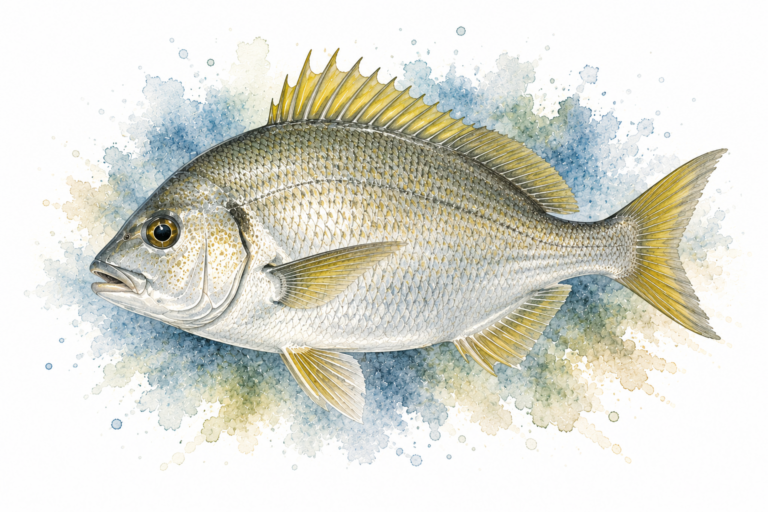
Giant Trevally (GT)
Scientific name: Caranx ignobilis
Common names: Giant Trevally, GT
Average size: 5–20 kg
Trophy size: 30–50 kg+
Activity pattern: Opportunistic apex predator
Distribution and key locations (Australia)
Giant trevally occur throughout tropical and subtropical Australia and are among the most powerful sportfish available to Australian anglers.
Prime regions
- QLD: Great Barrier Reef, offshore islands, northern estuaries
- NT: Coastal reefs, river mouths, offshore shoals
- WA (north): Kimberley, Pilbara, Ningaloo region
- Coral Sea: Remote reef systems and atolls
High-percentage areas
- Reef points and headlands
- Outer reef edges
- Channels between reefs
- Island drop-offs
- Tidal passes
- River mouths and coastal bars
If the current is moving hard and baitfish are present, giant trevally are rarely far away.
Habitat features to look for
GTs are highly mobile predators that patrol areas where current concentrates bait.
Key structure
- Reef points
- Current breaks
- Pressure edges
- Coral bommies
- Channel entrances
- Rocky headlands
- Deep drop-offs
Water conditions
- Clear to moderately coloured water
- Strong tidal flow
- High baitfish concentrations
- Well-oxygenated water
- Open access to deep water
The best GT locations combine structure, current, and trapped bait.
Seasonal patterns
Best seasons
- QLD: Spring → autumn
- NT: Dry season
- WA (north): Autumn → spring
- Coral Sea: Year-round
Why the warmer months?
- Increased bait activity
- Stable tropical weather
- Greater fish movement around reefs
- Spawning and feeding aggregations
GTs can be caught year-round, but warmer water generally produces more aggressive feeding behaviour.
Weather and tides (critical)
Ideal conditions
- Strong tidal movement
- Building seas
- Overcast conditions
- Trade wind periods
- Stable barometric pressure
Avoid
- Slack water
- Periods with little current
- Extended calm conditions
- Dirty floodwater runoff
Best bite windows
- Two hours before tide change
- Peak current flow
- Early morning
- Late afternoon
- Around bait aggregations
Current is everything. A mediocre reef with strong flow often out-fishes a perfect reef with none.
Bait – what actually works
GTs are aggressive predators and will attack surprisingly large prey.
Top natural baits
- Live fusiliers
- Live garfish
- Live mullet
- Live trevally
- Live yellowtail scad (‘yakkas’)
- Large live squid
- Fresh tuna strips
- Whole fish baits
Bait rules
- Big bait catches big GTs
- Live beats dead
- Fish where bait is naturally concentrated
- Keep presentations moving naturally
If your bait isn’t attracting attention from predators, move until you find active bait schools.
Tackle and rigs
Rod and reel
- Rod: 7–8 ft heavy spin rod
- Reel: 8000–18000 size spinning reel
- Line: 50–100 lb braid
- Leader: 80–170 lb fluorocarbon or mono
Terminal gear
- Heavy-duty live bait hooks 8/0–12/0
- Extra-strong split rings
- Heavy swivels
- Quality assist hooks
Common rigs
- Bridle-rigged live bait
- Heavy running sinker rig
- Unweighted live bait
- Suspended balloon rig
Everything must be overbuilt. GTs expose weaknesses instantly.
Lures (when and why)
Lure fishing is the most popular and exciting way to target giant trevally.
Effective lures
- Large cup-faced poppers
- Stickbaits
- Surface pencils
- Heavy casting metals
- Soft plastics (7–12 inch)
- Large swimbaits
When to use lures
- Working reef edges
- Island points
- Bait schools
- Current lines
- Surface-feeding fish
Few fishing experiences rival watching a giant trevally explode on a surface popper.
Time of day
- Best: Dawn and dusk
- Daytime: Excellent whenever bait and current align
- Night: Occasionally productive around lights and river mouths
GTs feed throughout the day but often become most aggressive during low-light periods.
Common mistakes
- Fishing slack water
- Using tackle that’s too light
- Stopping retrieves after follows
- Ignoring bait activity
- Fishing away from current
- Underestimating fish size and power
Most GT losses occur because anglers are not prepared for the speed and force of the initial run.
Final rule of giant trevally fishing
Find current + structure + bait + deep water — then fish aggressively.
Giant trevally are not subtle predators. When conditions align, they announce their presence with violence.
If baitfish are showering, birds are working, and current is pushing hard, keep casting. A GT is probably hunting nearby.