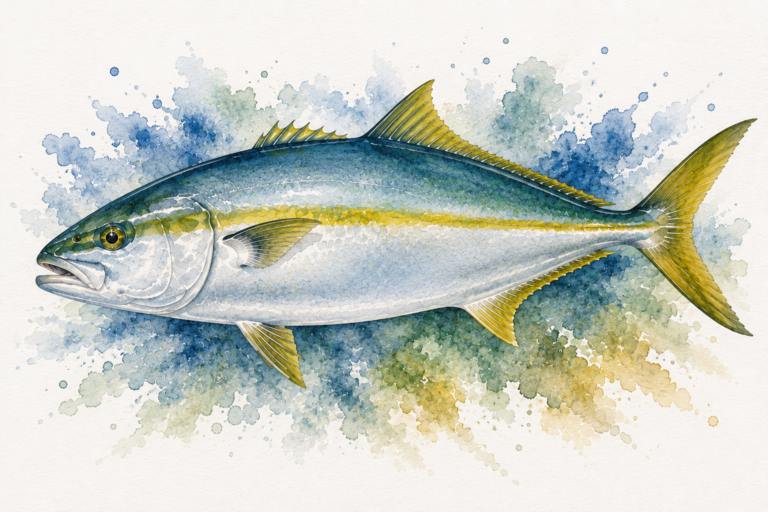
King George Whiting
Scientific name: Sillaginodes punctatus
Common names: King George whiting, KG whiting, Whiting
Average size: 30–45 cm
Trophy size: 50 cm+
Activity pattern: Bottom-feeding sand and weed flat specialist, tide and current-oriented
Distribution and key locations (Australia)
King George whiting are one of Australia’s premier table fish and are highly prized for their cautious feeding behaviour, exceptional eating quality, and accessibility to both boat and land-based anglers.
They are primarily a southern Australian species and thrive in clean coastal systems rich in seagrass, sand flats, and tidal movement.
Prime regions
- South Australia: Gulf systems and sheltered coastal bays
- Victoria: Large bays, estuaries and shallow reef edges
- Tasmania: Sandy coastal systems and channels
- Western Australia (south): Protected inshore flats and weed beds
High-percentage areas
- Ribbon weed beds
- Sand holes between weed
- Tidal channels
- Broken reef and sand transitions
- Shallow coastal flats
- Edges of seagrass meadows
Whiting spend much of their time feeding over sand adjacent to protective weed cover.
Habitat features to look for
King George whiting are highly structure-oriented despite commonly inhabiting shallow open water.
Key structure
- Weed-to-sand transitions
- Broken ribbon weed
- Shallow channels
- Clean sand patches
- Tidal drains and current lanes
- Reef edges tapering into sand
Food sources
- Marine worms
- Small crustaceans
- Prawns
- Shellfish
- Yabbies and nippers
Water conditions
- Clean moving water is critical
- Moderate tidal flow stimulates feeding
- Slight water colour often improves confidence
Productive whiting grounds usually combine sand, weed, and steady tidal movement.
Seasonal patterns
King George whiting movement changes heavily with water temperature, spawning cycles, and food availability.
Best seasons
- Spring through autumn: Peak shallow-water activity
- Summer: Exceptional flats fishing in many systems
- Autumn: Larger fish often concentrate before cooler conditions
Seasonal notes
- Warm water increases feeding aggression
- Fish commonly move shallower during stable weather
- Cooler months often push fish deeper into channels
Large whiting regularly patrol predictable feeding lanes over shallow sand.
Weather and conditions (critical)
Ideal conditions
- Light wind ripple
- Clean water with slight colour
- Stable barometric conditions
- Moderate tidal movement
Best fishing conditions
- Flooding and falling tides
- Low-light periods
- Calm mornings with moving water
Avoid
- Dead-still water
- Heavy dirty swell
- Extremely windy shallow conditions
Whiting feed most confidently when current delivers food naturally across sand.
Bait – what actually works
Fresh natural bait is absolutely critical for consistent whiting fishing.
Top natural baits
- Pipis
- Tube worms
- Bloodworms
- Beach worms
- Prawns
- Squid strips
- Mussel and cockle baits
Bait rules
- Fresh bait outfishes frozen bait dramatically
- Small neat presentations work best
- Keep bait moving naturally with current
Large whiting often reject oversized or poorly presented baits.
Tackle and rigs
King George whiting are cautious feeders and respond best to refined light tackle.
Rod and reel
- Rod: 1–4 kg light spin rod
- Reel: 1000–2500 size spin reel
- Line: 4–8 lb braid
- Leader: 4–10 lb fluorocarbon
Terminal gear
- Long-shank hooks
- Running sinkers
- Whiting-specific paternoster rigs
- Small swivels and light leader material
Common rigs
- Running sinker rig
- Twin paternoster rig
- Drift rig for covering flats
Minimal weight and natural presentation are critical.
Berley (massively important)
Berley is one of the biggest keys to consistent whiting fishing.
Effective berley
- Crushed pilchards
- Breadcrumb mixes
- Tuna oil
- Sand mixed with chopped bait
Key principle
- Create a light but constant food trail.
Whiting often move significant distances toward active berley trails.
Lures (when and why)
Although bait dominates traditional whiting fishing, modern lure techniques can be highly effective.
Effective lures
- Small soft plastics
- Crustacean imitations
- Light metal blades
- Surface walkers in shallow water
When to use lures
- Active fish on shallow flats
- Sight-fishing opportunities
- Covering ground quickly
Retrieval style
- Slow subtle hops
- Gentle rolling retrieves
- Pause-heavy retrieves close to bottom
Whiting commonly inspect lures multiple times before striking.
Boat vs land-based fishing
Boat fishing
Advantages:
- Ability to drift productive flats
- Better access to deeper channels and weed systems
- Easier coverage of large feeding areas
Land-based fishing
Excellent around:
- Sand flats
- Jetties
- Channels
- Coastal beaches and gutters
Moving regularly is often critical from shore.
Time of day
- Best: Dawn and dusk
- Daytime: Excellent with moving tide and light ripple
- Night: Productive in shallow protected systems
Whiting often feed hardest during tide changes.
Common mistakes
- Using old bait
- Fishing static dead water
- Overweighting rigs
- Ignoring weed edges
- Fishing too far above the bottom
- Remaining in unproductive water too long
Successful whiting anglers constantly refine presentation and location.
Final rule of whiting fishing
Fish clean moving water, use the freshest bait possible, and focus on weed-to-sand transitions.
Consistent King George whiting anglers succeed by understanding tidal movement, maintaining subtle natural presentations, and actively searching productive feeding lanes across shallow coastal systems.