

Introduction
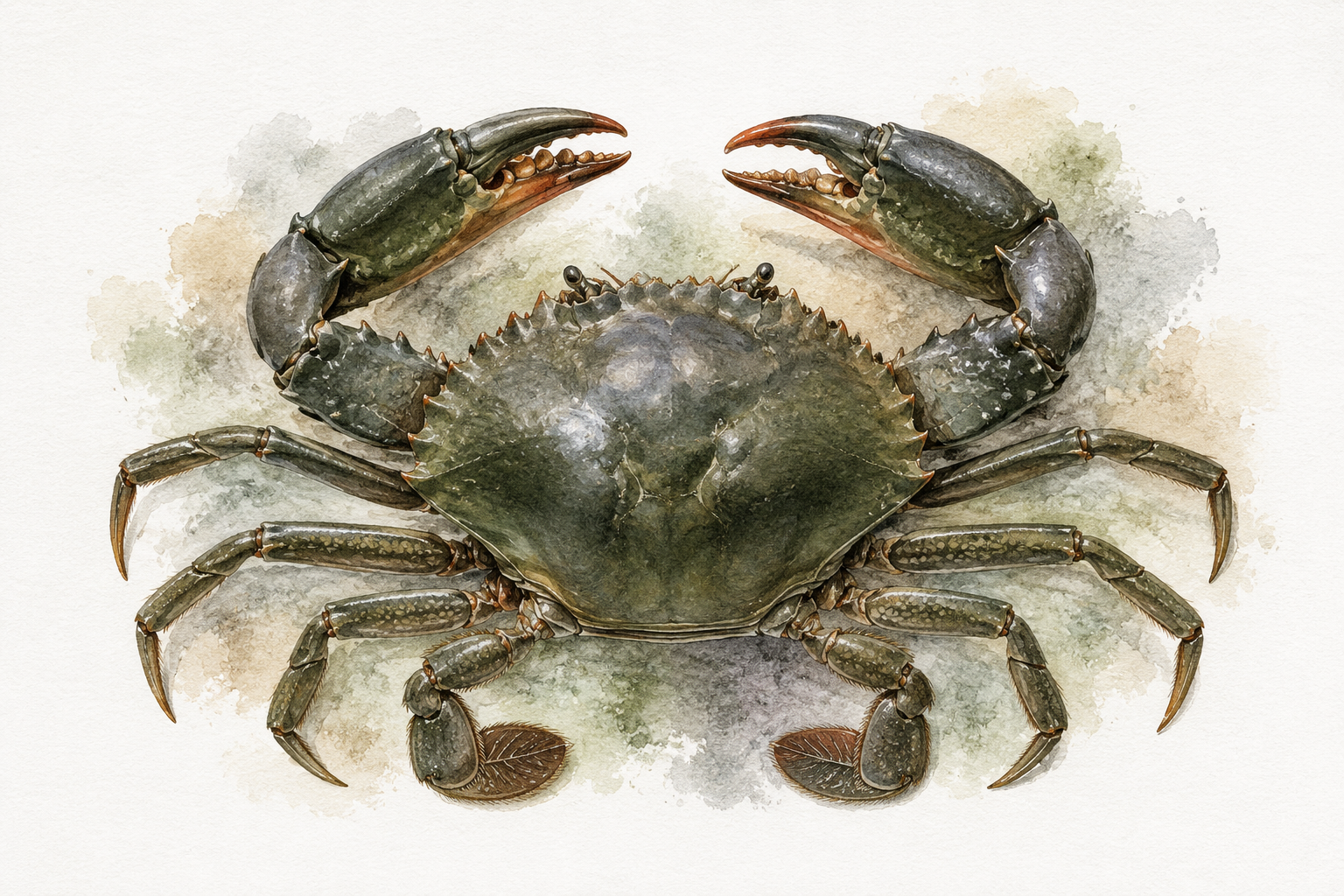
The Giant Mud Crab is one of Australia’s most sought-after crustaceans and a species that rewards local knowledge more than almost any other estuarine target. Unlike fish that can be actively searched for using electronics, lures or bait presentations, successful mud crabbing revolves around understanding habitat, tidal movement and crab behaviour.
Many newcomers view mud crabbing as a passive activity. Throw a pot overboard, wait a few hours, and hope for the best. The reality is that consistent catches come from reading an estuary correctly. Experienced crabbers often know exactly which creek bends, mangrove drains and channel edges are likely to hold quality bucks long before the first pot enters the water.
Mud crabs are opportunistic feeders. They consume fish, prawns, molluscs, worms, smaller crabs and carrion. Their powerful claws allow them to crush hard-shelled prey and tear apart larger food sources. This feeding behaviour explains why crabs are frequently found where tidal flow delivers food and concentrates scent.
The most successful mud crabbers think like hunters rather than trappers. They focus on movement corridors, feeding zones and seasonal conditions that influence crab activity.
Understanding these factors is the difference between occasionally catching a crab and regularly producing quality legal bucks.
Tackle and Rigs
Unlike most species featured in Oz Fish & Game guides, Giant Mud Crabs are generally targeted with traps or ‘pots’, rather than rod-and-reel tackle.
The most important piece of equipment is a legal, well-constructed crab pot suited to the regulations of your state. While pot designs vary, successful crabbers generally prioritise stability, durability and sufficient internal space for large crabs.
Heavy-duty collapsible pots and rigid-frame designs are commonly preferred because they remain effective in strong tidal flow and withstand repeated use around mangrove-lined waterways.
Pot placement matters far more than pot style.
A perfectly designed pot positioned in poor habitat will rarely produce consistent catches. Conversely, even a basic pot can perform extremely well when placed in the right location.
Productive locations commonly include:
- Mangrove creek mouths
- Tidal drains
- Undercut muddy banks
- Deep bends in tidal rivers
- Channel intersections
- Mangrove points exposed to current
- Drop-offs adjacent to mud flats
Large male mud crabs often maintain burrows beneath mangrove roots and eroded banks. While many anglers place pots directly against the mangroves, experienced crabbers frequently position pots slightly away from the structure along likely travel routes.
This approach intercepts crabs as they move between shelter and feeding areas.
Bait selection is equally important.
Mud crabs locate food primarily through scent. Strong-smelling oily fish baits create larger scent trails and generally outperform less oily alternatives.
Mullet frames, tuna heads, mackerel frames and salmon carcasses remain among the most reliable options throughout Australia.
Large bait pieces generally continue producing scent longer and withstand prolonged soaking better than smaller offerings.
Understanding Productive Habitat
Habitat selection is the single biggest factor influencing mud crab success. The most productive systems combine three essential ingredients:
- Shelter
- Food
- Tidal movement
Mangrove forests provide all three.
The complex root systems create protection during moulting, shelter from predators and ideal ambush locations. These same areas trap organic material, baitfish and prawns, creating a steady food supply.
Mud crabs show a strong preference for soft muddy substrates where they can dig burrows or seek cover beneath undercut banks.
One of the most productive features in many estuaries is the mangrove drain. As water falls from surrounding flats, prawns, baitfish and other food items are funnelled through narrow channels. Crabs often position themselves along these routes to intercept prey moving with the tide.
Creek junctions are another consistently productive feature. The convergence of two tidal flows often concentrates food and creates predictable movement corridors. Large bucks commonly patrol these intersections, particularly during periods of strong water movement.
Deep outside bends can also hold quality crabs. These areas frequently combine depth, current and bank structure, providing both shelter and feeding opportunities.
When exploring a new estuary, focus on identifying locations where multiple habitat features overlap rather than searching for a single characteristic.
Seasonal Behaviour
Water temperature plays a major role in mud crab activity. As temperatures rise, crabs become more active, feed more aggressively and move greater distances throughout an estuary. This is why catch rates often improve dramatically during spring and summer.
In tropical northern Australia, mud crabs remain active throughout much of the year. Seasonal changes still occur, but productive catches can be achieved during most months. Further south, particularly in northern New South Wales, cooler winter water temperatures often reduce feeding activity and movement.
Understanding rainfall patterns is equally important. Heavy freshwater inflows can temporarily alter salinity levels and redistribute crabs within a river system. During major runoff events, crabs often shift toward areas with higher salinity, including lower estuaries and creek mouths.
Mature females undertake offshore spawning migrations and may leave estuarine systems altogether. Large male crabs generally remain within the estuary and continue occupying productive habitat.
For recreational crabbers targeting legal bucks, stable warm-water periods often produce the most reliable catches.
Time of Day
Unlike many fish species, mud crabs are not strongly tied to dawn or dusk bite windows. They can enter pots throughout the day and night. However, mud crabs are naturally more active during low-light periods and commonly feed after dark. Many of their feeding movements occur overnight as they leave shelter and patrol mud flats, creek edges and mangrove margins. This is one reason overnight pot sets can be highly productive where regulations permit.
That said, time of day is usually less important than tidal movement. A strong tidal phase during daylight hours often outperforms a stagnant overnight period with minimal water movement.
Successful crabbers typically focus on tide timing first and daylight conditions second.
Reading the Tides
Tides influence mud crab behaviour more than almost any other environmental factor. Moving water carries scent downstream and stimulates feeding activity. It also encourages crabs to move through channels, drains and creek mouths. Moderate to strong tidal movement generally produces the best catches.
Many experienced crabbers favour the middle stages of both rising and falling tides, when water movement is strongest and food is being redistributed throughout the system.
Creek mouths often become particularly productive during falling tides. As water drains from surrounding flats, food sources are funnelled into narrow channels where crabs can feed efficiently.
During weak neap tides, catches frequently decline. Reduced water movement limits scent dispersal and often results in lower crab activity.
When planning a trip, tidal strength is often a more valuable consideration than moon phase or weather forecast.
Common Mistakes
The most common mistake is placing pots where access is easy rather than where crabs actually live. Boat ramps, public pontoons and highly trafficked waterways rarely produce the same results as remote mangrove-lined creeks with suitable habitat.
Another common error is fishing too much open water. Mud crabs rely heavily on structure. Pots set away from mangroves, creek edges and travel corridors often struggle to attract consistent catches.
Many beginners also underestimate the importance of bait quality. Old, degraded bait produces weaker scent trails and generally becomes less effective over time. Fresh oily fish frames almost always outperform poor-quality alternatives.
Ignoring seasonal conditions is another mistake. Cold water, major freshwater runoff and rapidly changing salinity can significantly reduce local crab activity.
Some anglers also leave pots in unproductive locations for repeated trips. Experienced crabbers treat every set as information. If an area consistently fails to produce, they relocate and continue searching until a productive pattern emerges.
The Bottom Line
Catching Giant Mud Crabs consistently is largely a matter of understanding estuarine structure and tidal movement. The best catches rarely come from random pot placements. They come from identifying habitat that combines mangroves, muddy substrate, food availability and reliable current flow.
Focus your efforts on creek mouths, mangrove drains, channel bends and tidal intersections. Use fresh oily baits, pay close attention to tidal strength and adapt your locations as conditions change.
Most importantly, learn to read an estuary. The anglers who consistently catch quality mud crabs are not necessarily using different gear or better bait. They simply understand where crabs live, why they are there and how tides influence their movements.
Once those patterns become clear, mud crabbing becomes far more predictable, and consistently finding legal bucks becomes significantly easier.