
Introduction
Bread is one of the most overlooked yet consistently effective baits available to Australian anglers. It doesn’t look like much sitting in a supermarket aisle, but in the water it becomes something entirely different: a soft, highly visible, slow-breaking food source that a wide range of fish will investigate without hesitation.
Unlike natural baits that rely on scent trails or movement, bread works on presentation and texture. It mimics loose food particles, fish scraps, and surface feed that many estuary and freshwater species are naturally tuned into. In the right conditions, it can outperform far more expensive bait simply because it behaves unpredictably in the water column.
It is not a universal bait. It has clear limits. But when used in the right places—especially shallow estuaries, urban waterways, and freshwater systems—it becomes surprisingly reliable.
Sourcing the Bait
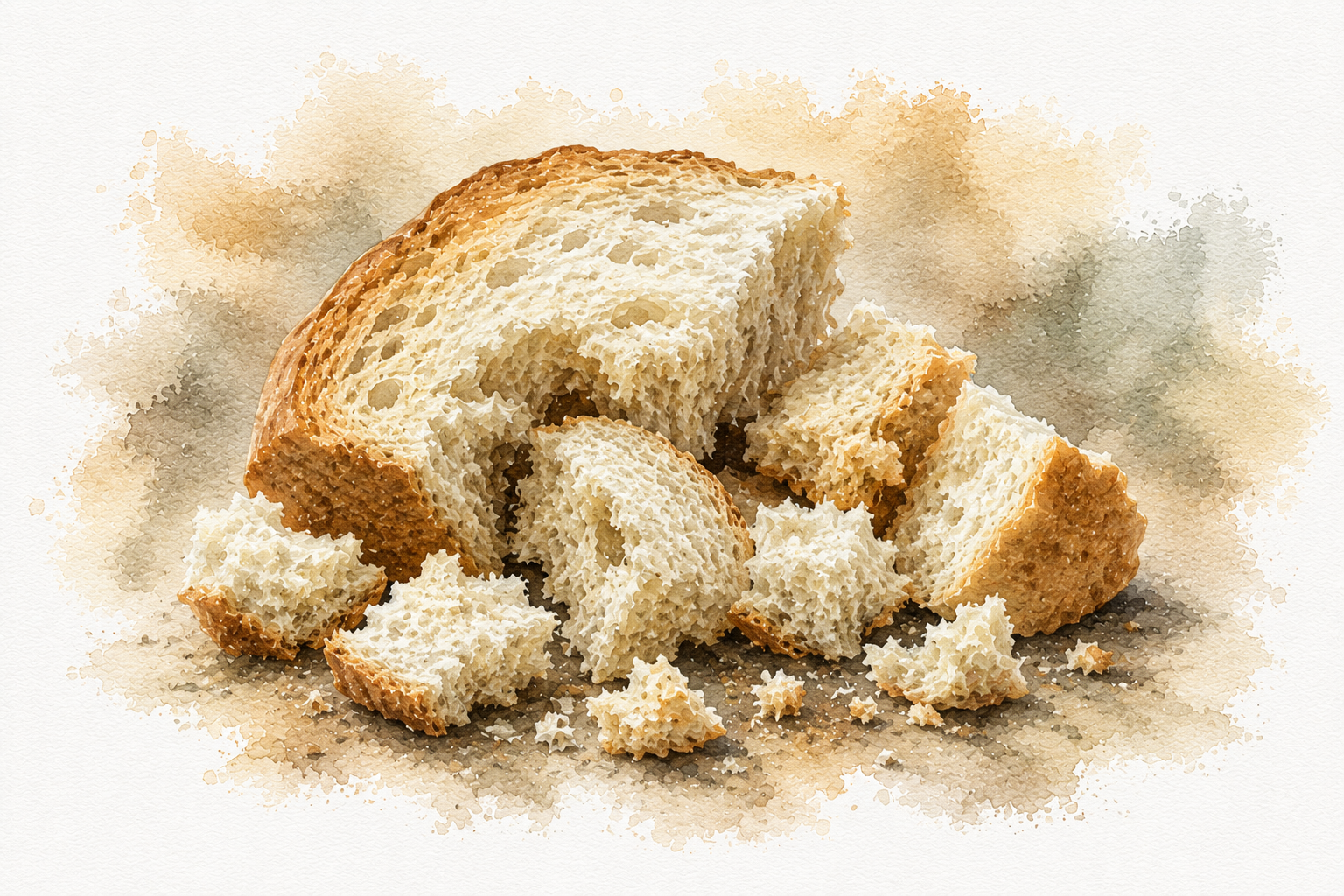
Sourcing bread is as simple as it gets, but quality still matters. Fresh white sandwich bread is the most versatile starting point. It breaks apart cleanly into flakes and traps air well, which helps it float longer when used on the surface. Slightly stale bread, however, is often preferred when making dough or paste. It holds together better and binds into a more durable hook bait. Avoid overly dry or crust-heavy loaves unless you are deliberately making a firmer bait for flowing water. In most cases, the soft inner crumb is what you want.
From an angling perspective, there is no advantage in specialty bread types. Seeded, rye, or heavily textured breads tend to break down inconsistently and reduce bait uniformity. The simplest rule holds: plain white bread gives the most predictable results.
Recognising Quality
Good bread bait quality is easy to judge but often overlooked. High-quality bait bread should be soft, compressible, and slightly elastic when pressed. When torn, it should form clean flakes rather than crumbling into dust. This is important because structure directly affects how long it stays on the hook.
For dough preparation, quality is judged by binding strength. If it can be rolled into a ball without cracking or falling apart, it is suitable. If it becomes sticky and unmanageable, it is too wet or too fresh.
A subtle but important detail: bread that has just begun to stale often produces the best balance between structure and softness. This middle stage gives anglers the most control.
Storage and Care
Bread is easy to store but equally easy to ruin for bait use if mishandled. Keep it sealed in a bag or container to prevent drying. Once exposed to air for too long, it loses its flexibility and becomes difficult to shape into effective bait forms.
If preparing dough bait ahead of time, store it in a sealed plastic bag with minimal air. Some anglers refrigerate it overnight to improve firmness, particularly for estuary fishing where small fish are a problem. Avoid freezing unless necessary, as thawing tends to break down structure and reduces binding strength.
Once bread is converted into flake or dough, its usable lifespan drops significantly. It is a bait best prepared fresh on the water.
Preparing the Bait
Bread preparation is where effectiveness is won or lost. Flake bait is the simplest form. Tear small sections from the soft inner crumb and compress lightly between fingers. The goal is irregularity—pieces that drift naturally and break apart slowly in the water.
Dough bait is more controlled. Add small amounts of water and knead until the bread forms a soft, elastic paste. Some anglers add flour or a pinch of salt to improve cohesion, but plain water is usually sufficient.
Paste bait is a thinner version used for smearing onto hooks. It is highly effective in still water where subtle presentation matters.
Each form behaves differently. Flake is best for surface feeding. Dough is best for mid-water or float fishing. Paste is best when fish are feeding cautiously or when bait theft is a problem.
How to Rig It
Bread requires light, precise rigging. Small hooks are essential. Oversized hooks destroy the natural presentation and cause bait to fall apart prematurely. Fine gauge hooks allow bread to sit naturally in the water without distortion.
For surface fishing, unweighted rigs or very light split shot rigs allow flakes to drift naturally with surface tension. This is where bread excels, especially when fish are actively feeding near structure.
In freshwater systems, float rigs are highly effective. Bread suspended under a float creates a slow, enticing presentation that triggers reaction bites from species such as carp and small native fish.
For dough bait, ensure the hook is fully embedded but not over-compressed. A light wrap or pinch is enough to hold it in place without crushing structure.
Best Fish to Target
Bread is most effective on opportunistic feeders that are accustomed to surface or detritus feeding. In Australian waters, the standout target is European carp, particularly in inland rivers and lakes. Carp actively seek soft carbohydrate-based food and respond extremely well to bread presented near the surface or bottom.
In estuarine systems, bream will readily take bread, especially around pontoons, jetties, and urban structures where natural feeding competition is high. Mullet are also consistent users of bread bait, particularly in shallow estuaries and harbour edges where they feed on fine organic matter. Occasionally, smaller native species such as juvenile fish or surface feeders will also take bread flakes, especially in calm, clear water.
Bread is not a high-value predatory bait. It is a surface and opportunistic feeding tool, not a deep-water or structure-hunting bait.
Common Mistakes
The most common mistake is over-compacting the bait. Bread should not be treated like clay. If it is squeezed too tightly, it loses its natural breakdown behaviour and becomes unattractive. Another frequent error is using too large a hook. Bread works because it is subtle. Oversized hardware destroys that advantage instantly.
Many anglers also fish it too deep. Bread is fundamentally a visual and drifting bait. Dropping it into deep or fast-moving water removes the key trigger: visibility and gentle movement.
Finally, over-soaking is a problem. Bread does not need long soak times. If it is left too long in current, it simply disappears.
The Bottom Line
Bread is not glamorous, but it is one of the most accessible and adaptable baits in Australian fishing. Its strength lies in simplicity. It is cheap, available everywhere, and easy to prepare in multiple forms depending on conditions. Used correctly, it becomes a highly effective bait for carp, bream, mullet, and other opportunistic feeders in both freshwater and estuarine systems. Its weakness is durability, but that is offset by how quickly it can be re-rigged and redeployed.
Bread rewards subtlety. Light hooks, careful presentation, and calm water conditions turn it from household food into a surprisingly effective fishing tool.