

Introduction
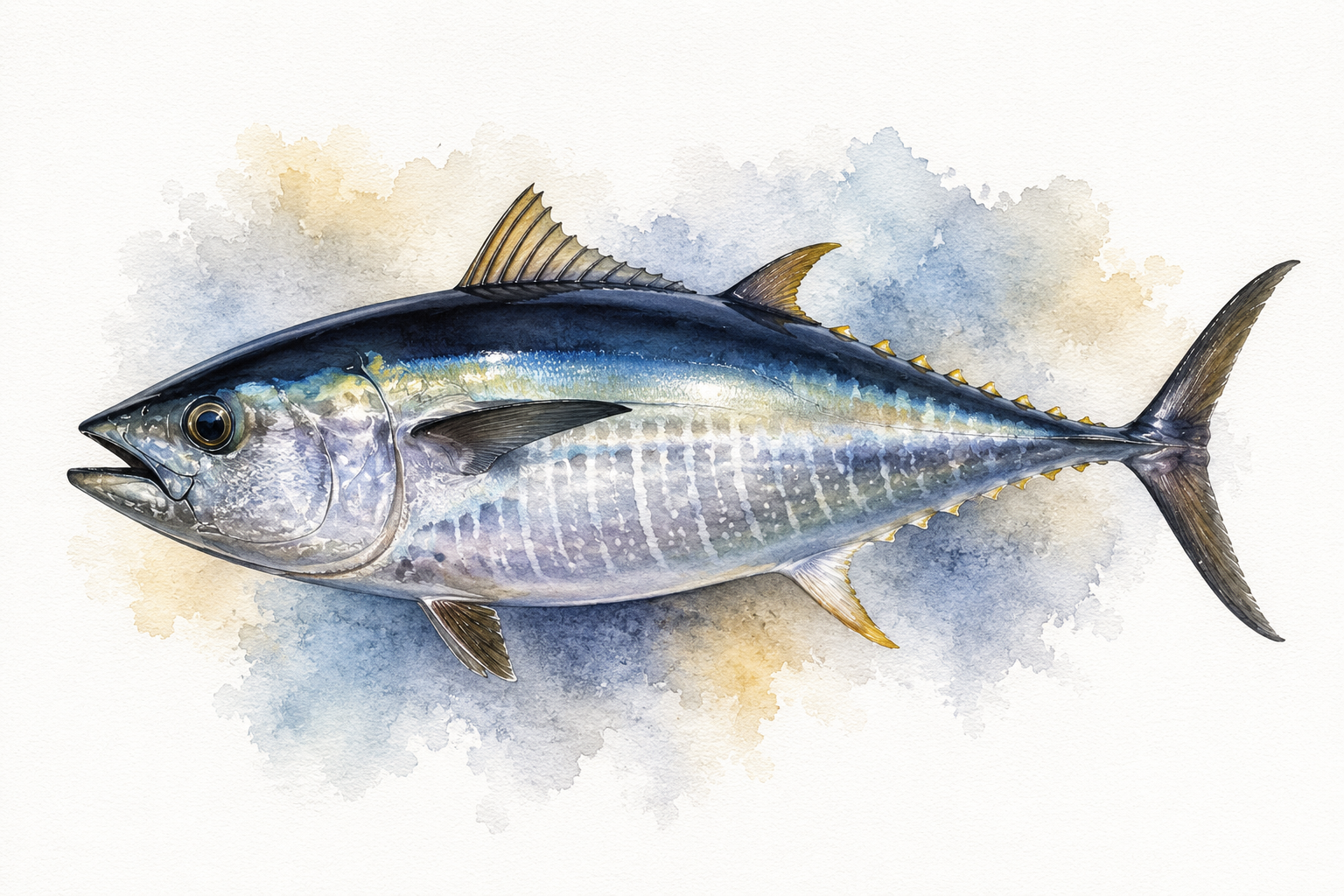
Southern bluefin tuna occupy a unique place in Australian offshore fishing. They are one of the few truly oceanic gamefish that many trailer-boat anglers can realistically target each year, yet they remain among the most challenging species to consistently locate.
Unlike many coastal pelagics that follow obvious seasonal patterns close to shore, southern bluefin spend most of their lives roaming vast sections of the Southern Ocean. Their movements are dictated by bait availability, water quality, current systems and large-scale migratory behaviour. As a result, success rarely comes from simply arriving at a GPS mark and dropping a bait.
The anglers who consistently catch southern bluefin are usually the anglers who become good at finding signs of life. Bait schools, bird activity, temperature breaks and current lines all provide clues about where fish are likely to be feeding. Once these clues start aligning, southern bluefin often appear surprisingly quickly.
One of the most important things to understand is that southern bluefin are rarely stationary. Schools may move several kilometres while feeding and can shift from surface activity to deep-water feeding behaviour within minutes. Productive days therefore require anglers to stay mobile while continuously monitoring the sounder, birds and ocean conditions.
Many recreational captures occur around offshore reefs, canyons and shelf edges. These features do not attract tuna directly. Instead, they concentrate bait. The bait attracts predators, and southern bluefin simply become part of that larger food chain. Understanding this relationship is often the key to shortening the learning curve.
When viewed through that lens, southern bluefin fishing becomes far less about luck and far more about interpreting what the ocean is telling you.
Tackle and Rigs
Tackle selection should reflect the size of fish commonly encountered in a particular fishery.
School fish in the 15–40kg class can be handled effectively on modern 15–24kg tackle. These outfits provide enough lifting power to pressure fish while remaining manageable during long fights.
In areas where larger fish are common, particularly parts of South Australia and Tasmania, many anglers step up to 24–37kg tackle. Heavy spin outfits have also become increasingly popular, especially when casting stickbaits and metals to surface-feeding fish.
A common mistake among anglers new to southern bluefin is underestimating how much pressure these fish can sustain. A tuna that weighs 25kg can feel substantially larger once it settles into deep circles beneath the boat. Smooth drag systems and quality reels are often more important than simply increasing line class.
Trolling remains the primary method for locating fish.
A typical spread may include a mixture of:
- Small to medium skirted lures
- Deep-diving minnows
- Bullet-head lures
- Jet-head lures
- Cedar plugs
The objective is not necessarily to trigger a bite immediately. The objective is to find fish. Once fish are located, many crews switch to more targeted techniques.
Live-baiting becomes extremely effective when schools are holding around a productive area. Slimy mackerel, yakkas and sauries are among the best options because they closely match the bait southern bluefin are already feeding on.
When bait fishing, presentation matters.
Southern bluefin often inspect a bait before committing. Excessively heavy leaders, oversized terminal tackle and unnatural bait presentation can reduce bites, particularly in calm conditions and clear water.
Cubing can also be extremely effective.
A steady stream of pilchard cubes drifting naturally through the water column creates a feeding trail that encourages fish to remain behind the boat. Many experienced tuna anglers believe cubing remains one of the most underutilised techniques in recreational fisheries.
When to Use Lures
Lure fishing works best when southern bluefin are actively hunting.
The first step is identifying feeding activity. Birds working low over the water, bait showering from the surface, foam patches and surface bust-ups all indicate fish that are feeding aggressively.
Once feeding fish are located, lure choice should be dictated by the size of the available bait.
This is where many anglers go wrong.
If southern bluefin are feeding on small pilchards or juvenile baitfish, throwing large stickbaits simply because they are popular can dramatically reduce success. Matching lure size to the bait often produces immediate improvements.
Stickbaits excel when fish are feeding near the surface.
Long sweeps followed by brief pauses create an erratic action that closely resembles an injured baitfish. Many strikes occur immediately after a change in direction rather than during constant movement.
Metal slices become particularly effective when fish are feeding aggressively on compact bait schools.
Their casting distance allows anglers to reach nervous fish without driving the boat directly into the school. Fast retrieves generally produce the best results when fish are actively feeding.
Knife jigs come into their own when fish disappear beneath the surface.
One of the most overlooked aspects of southern bluefin behaviour is how often they remain below visible feeding activity. Sounders frequently reveal schools sitting well beneath the boat despite no surface signs being present.
Dropping knife jigs through these fish can be remarkably effective, especially when tuna are holding beneath dense bait schools.
The biggest lesson with lure fishing is adaptability. Fish that refuse stickbaits may aggressively attack metals. Fish that ignore metals may respond instantly to a fast-worked jig. Successful anglers constantly adjust presentations until they discover what fish want on that particular day.
Time of Day
Southern bluefin can feed at any hour, but certain periods consistently provide advantages.
Early morning is often the most productive.
Bait schools tend to remain concentrated near the surface, offshore conditions are generally calmer and bird activity is easier to identify. Surface-feeding fish are also more common during the first few hours after sunrise.
This does not mean anglers should abandon an area once the morning bite slows.
Some of the best southern bluefin fishing occurs in the middle of the day, particularly when fish are feeding around offshore current lines and temperature breaks. Schools may simply move deeper before returning to the surface later.
Late afternoon can produce another feeding window.
As light levels decrease, bait often becomes more concentrated and predators become more active near the surface. This period can create excellent opportunities for casting lures and presenting live baits.
Ultimately, southern bluefin are less dependent on low-light conditions than many coastal species.
Finding active bait remains significantly more important than fishing a specific time of day.
Common Mistakes
Chasing temperatures instead of bait
Temperature charts are valuable tools, but they are often overemphasised.
Southern bluefin follow food. Areas containing large concentrations of bait consistently outperform areas that simply display favourable temperatures.
The best offshore anglers use temperature data as one piece of a larger puzzle rather than treating it as the answer.
Ignoring bird activity
Birds are among the most reliable tuna-finding tools available.
Gannets, shearwaters and albatross often locate feeding activity long before anglers do. Learning to distinguish actively feeding birds from birds merely travelling can dramatically improve search efficiency.
Covering productive water too quickly
Many anglers leave an area after a short quiet period.
Southern bluefin frequently cycle between feeding and resting behaviour. A school that disappears from the surface may still be holding beneath the boat.
If bait remains present, it often pays to remain patient.
Driving through feeding schools
Nothing shuts down surface activity faster than charging directly into fish.
Approaching from up-current or upwind allows anglers to position the boat more naturally and often creates significantly better casting opportunities.
Fishing too heavy
Heavy tackle has its place, but excessive leader sizes and oversized terminal tackle can reduce bites in clear offshore water.
Southern bluefin possess exceptional eyesight. Maintaining a natural presentation often becomes increasingly important as fishing pressure increases.
Neglecting the sounder
Many anglers spend too much time scanning the horizon and not enough time watching electronics.
Southern bluefin frequently hold beneath bait schools without showing any surface activity. Sounders often reveal fish that would otherwise go unnoticed.
The Bottom Line
Southern bluefin tuna are rarely caught consistently by accident.
The most successful anglers develop a systematic approach built around locating bait, interpreting current systems and understanding how tuna behave around offshore food sources.
Every productive day usually starts with the same question:
Where is the bait?
Once that question is answered, the remaining pieces often fall into place. Birds begin appearing, current lines become more meaningful, sounder marks start making sense and tuna become easier to predict.
Whether trolling skirted lures, deploying live baits, running a cube trail or casting stickbaits into surface-feeding fish, the common factor remains proximity to food.
Southern bluefin are powerful, intelligent and highly mobile predators. They can move from surface feeding to deep-water holding behaviour within minutes and may cover vast distances over the course of a day. Yet they remain remarkably predictable when bait concentrations, current flow and water quality align.
For Australian anglers willing to invest time learning offshore water rather than simply following reports, southern bluefin offer one of the most rewarding gamefishing opportunities available. Few species combine their speed, endurance and raw pulling power, and few fish provide the same sense of achievement when a carefully planned day offshore finally comes together.