
Introduction
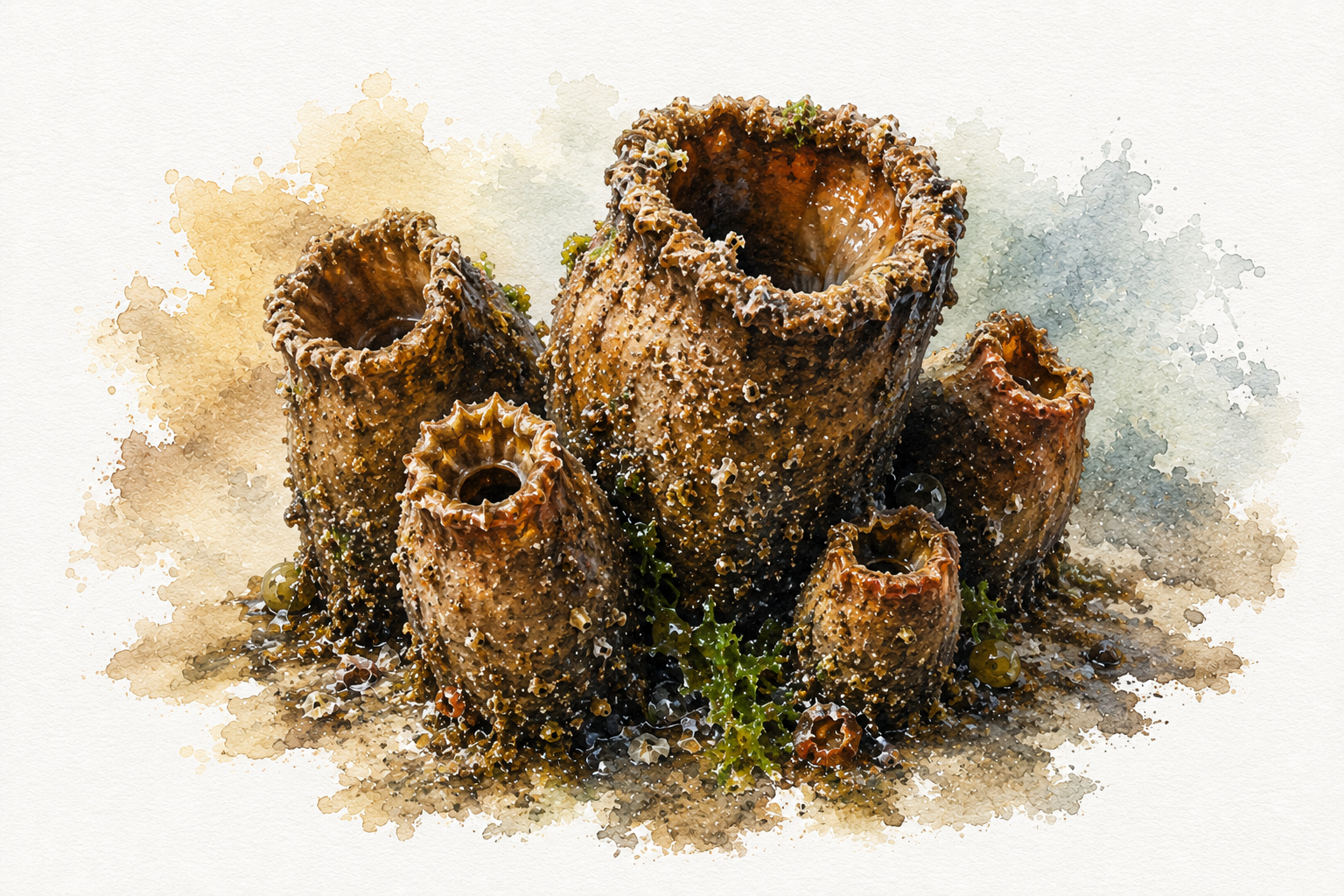
Cunjevoi (Pyura stolonifera), commonly called Cunjie, is a marine sea squirt found on rocky coastlines across southern and eastern Australia, from Western Australia through Tasmania to southern Queensland.
It forms tough, leathery, often irregularly shaped bodies attached firmly to rock. The upper surface has two siphon openings, while the interior contains soft, reddish-orange tissue that can be removed and used as fishing bait.
Cunjevoi is particularly effective for Black Drummer and is also used for Blue Groper, Bream and other fish feeding around coastal reefs and rock washes.
Its main advantage is that it provides a natural, locally occurring bait in the same environments where these fish feed. However, the soft internal tissue can tear easily, making careful preparation and hook placement important.
Sourcing the Bait
Cunjevoi grows attached to rocky surfaces in the lower intertidal zone and on submerged reef, sometimes forming dense clusters. It is commonly associated with wave-washed rock platforms, ledges and other firm marine surfaces.
Look for its thick, leathery exterior and two siphon openings on the upper surface. Individual animals may be partly obscured by other marine growth or clustered tightly together.
Low tide generally provides the best opportunity to locate accessible colonies. However, some Cunjevoi remains submerged even at low tide, and not every rocky platform supports suitable growth.
Calm conditions and low swell are particularly important when collecting from exposed coastal rocks. A location that provides easy access in settled weather may become inaccessible when the swell increases.
Cunjevoi remains attached throughout the year, so collection opportunities depend more on local populations, tidal exposure and sea conditions than on a particular season.
Where collection is permitted, use a sturdy knife or suitable cutting tool to separate an individual Cunjevoi from its attachment point, avoiding unnecessary damage to surrounding growth. Take only the amount needed for the session.
Recognising Quality
Fresh Cunjevoi should contain moist, reasonably firm internal tissue with a characteristic marine smell.
The outer tunic is naturally tough and may be covered in sand, shell fragments or other marine growth. Its rough appearance alone is not an indication that the bait is unsuitable.
Once opened, examine the internal tissue. Firmer portions are generally easier to attach to a hook, while very soft sections may require careful handling or additional support.
Avoid using material that has become excessively soft, discoloured through deterioration or developed a distinctly unpleasant, decomposing smell.
The most useful bait is not necessarily the largest Cunjevoi. Smaller, fresh specimens may provide suitable portions without requiring extensive trimming.
Storage and Care
Cunjevoi is best used fresh, particularly when fishing with the softer internal tissue.
Keep freshly collected bait cool and shaded, preferably in a sealed container or bag placed inside a cooler. Avoid leaving exposed tissue in direct sunlight, where it can deteriorate quickly.
If preparing the bait before fishing, separate the usable internal portions and refrigerate them promptly. Keeping the portions in a covered container helps retain moisture without leaving them soaking in excess liquid.
For longer storage, Cunjevoi can be frozen in fishing-sized portions. Freezing is useful when bait is collected ahead of a trip, although thawed tissue may be softer and less durable on the hook.
Thaw frozen portions in the refrigerator or cooler and use them without repeatedly freezing and thawing the same supply.
Preparing the Bait
The usable bait is contained inside Cunjevoi’s thick outer tunic.
Open the tunic with a sharp knife. Trapped seawater may escape when the body is opened; allow excess liquid to drain before separating the internal tissue into usable bait portions.
Work carefully around the firmer material associated with the siphon openings, as these tougher sections can help hold the bait on the hook.
For Black Drummer, cut the internal tissue into portions that can be presented naturally in a rock wash without forming an excessively large bundle.
Small pieces are generally sufficient for Bream and other smaller-mouthed fish, while larger portions may be appropriate when targeting Blue Groper or larger Drummer.
Very soft tissue can be difficult to keep attached during casting. Where possible, retain a firmer section within each portion rather than stripping away everything except the softest material.
Prepare only what is needed immediately and keep the remaining bait cool until required.
How to Rig It
Cunjevoi is commonly fished close to rocky structure, particularly in gutters, washes and deeper pockets alongside ocean rock platforms.
Its soft texture makes hook placement and the amount of weight used particularly important.
Attaching Cunjevoi to the Hook
Pass the hook through a firmer portion of the bait, preferably incorporating tougher tissue near the siphon area where available.
The hook should hold the bait securely without cutting through the softest tissue under its own weight.
Use a portion large enough to remain intact during the drift, but avoid completely burying the hook point inside a bulky piece.
Where the bait is particularly soft, a small amount of bait elastic can help retain it. This is optional rather than essential when suitable firmer tissue is available.
Fishing the Rock Wash
For Black Drummer, a lightly weighted or unweighted presentation is often effective where water movement can carry the bait naturally through a wash.
In deeper gutters or stronger water movement, a small running sinker can help carry the bait into the feeding zone. Use only enough weight to control the presentation without continually dragging the bait across the rocks.
Present the bait close to submerged ledges, rock faces and wash zones where fish are feeding. Allow it to move with the water rather than continually dragging it across the reef.
Adjusting the Presentation
In shallow, turbulent washes, a relatively small bait and minimal weight can help maintain a natural presentation.
In deeper water or stronger current, a larger bait portion and additional sinker weight may be needed to reach the feeding zone.
Check the bait after missed bites or contact with the rocks. Cunjevoi can be stripped from the hook without an obvious bite, particularly when only soft tissue has been used.
If the bait repeatedly comes off, reduce its size, change the hook placement or incorporate more of the firmer internal material.
Best Fish to Target
Black Drummer
Black Drummer are the principal target for Cunjevoi, particularly around ocean rock platforms where fish feed in turbulent water close to the rocks.
Present a compact portion in a gutter or wash, allowing the water movement to carry it towards submerged ledges and feeding areas.
A lightly weighted presentation is often suitable, although deeper gutters may require additional weight.
The bait should remain close enough to the structure to be encountered by feeding fish without being repeatedly dragged into snags.
Blue Groper
Blue Groper feed around rocky reefs and ledges, taking a variety of marine invertebrates. Cunjevoi is a useful alternative to more commonly selected baits such as crabs.
Use a substantial portion incorporating firmer tissue and present it close to rocky structure where Groper are feeding.
Because these fish are powerful and often remain close to cover, the tackle and presentation need to suit the structure being fished.
Yellowfin Bream
Yellowfin Bream will take Cunjevoi, particularly around rocky headlands, harbour entrances and coastal washes.
Use smaller portions that can be taken readily without leaving excessive bait hanging below the hook.
A lightly weighted presentation is suitable in shallow washes, while a running-sinker rig can help reach fish holding in deeper water.
Other Suitable Species
Silver Trevally, Snapper and Silver Drummer may also take Cunjevoi when fishing around coastal reef and rocky structure.
These are secondary applications rather than the bait’s principal purpose. Adjust the portion size and weighting to the fish being targeted and the depth or current at the location.
Common Mistakes
Using only the softest internal tissue: Loose tissue can tear away during casting or be stripped from the hook. Include a firmer section where possible and pass the hook through it securely.
Cutting oversized portions: Large, poorly supported pieces may fold over the hook or detach under their own weight. Trim the bait to a size appropriate for the hook and target species.
Using excessive sinker weight: Heavy rigs can hold Cunjevoi unnaturally against the bottom and increase snagging. Use the lightest weight that maintains the intended presentation.
Fishing too far from the structure: Cunjevoi is most useful where fish are already feeding around rocks, ledges and washes. Position the bait within reach of these feeding areas.
Allowing prepared bait to deteriorate: Warm, exposed internal tissue can soften and lose its ability to remain attached. Keep unused portions cool and remove only what is needed.
Failing to check the hook: Soft Cunjevoi can be removed by smaller fish or torn away in rough water. Inspect the bait regularly and replace it when little usable material remains.
The Bottom Line
Cunjevoi is an excellent specialist bait for Black Drummer and a useful option for Blue Groper, Bream and other fish feeding around coastal rock and reef.
Its soft internal tissue is attractive to fish but requires more careful hook placement than tougher baits. Retaining firmer material, particularly around the siphon area, helps improve durability.
For the best results, use fresh bait, keep portions appropriately sized and present them naturally through rocky gutters and washes where fish are actively feeding.