
Introduction
Few Australian seafood species are as highly regarded as the blue swimmer crab. Found in sheltered bays, estuaries and coastal waterways around much of the Australian coastline, these striking blue crabs are prized not only for their outstanding eating quality but also for the enjoyable challenge of catching them.
Unlike many recreational fishing pursuits, targeting blue swimmer crabs is less about casting lures or baits and more about understanding tides, habitat and crab behaviour. Anglers who consistently locate productive seagrass beds, sandy channels and feeding areas often enjoy excellent catches with relatively simple equipment.
Blue swimmer crabs are also one of Australia’s most family-friendly fishing opportunities. Setting drop nets from a jetty, checking hoop nets from a small boat or lifting crab pots from a quiet estuary provides an exciting and accessible introduction to recreational fishing for anglers of all ages.
Although they are widespread, successful crabbing is rarely random. Knowing when crabs move, what attracts them and how changing weather and tides influence their behaviour can make the difference between an empty pot and a memorable day on the water.
Identification
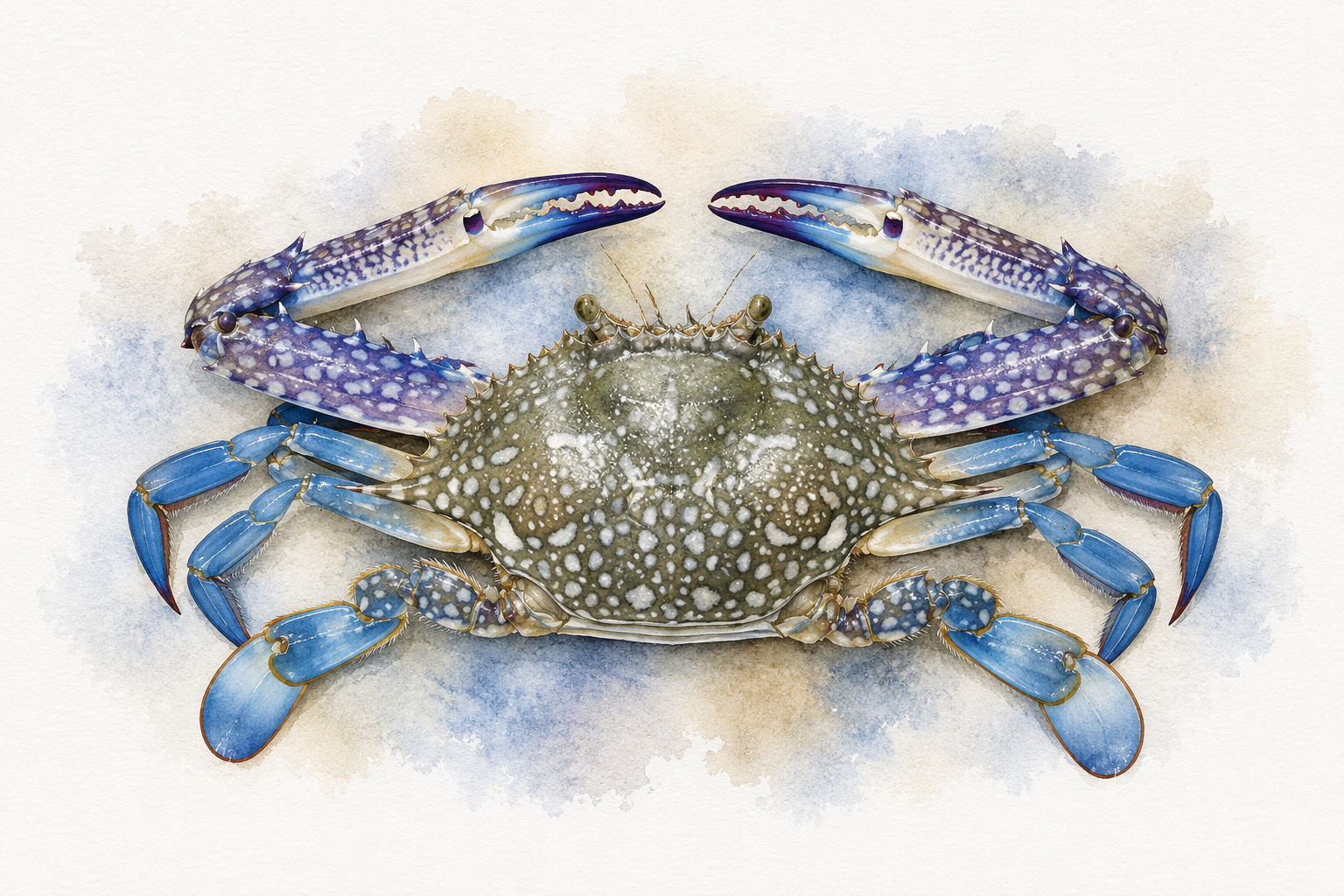
Blue swimmer crabs are easily recognised by their broad, flattened shell, long paddle-shaped rear swimming legs and brilliant blue colouring on the legs and claws of mature males.
The carapace is generally olive-green to sandy brown across the back, helping the crab blend into the seabed, while the legs often display vivid blue highlights. Females are typically duller in colour, with brown to olive claws marked by reddish tips.
One of the easiest identifying features is the final pair of legs. Unlike mud crabs and many other crab species, blue swimmer crabs have broad, flattened paddles that allow them to swim efficiently through open water. They are surprisingly fast and can quickly bury themselves in sand or dart away when disturbed.
The shell is noticeably wider than it is long, with prominent pointed spines along each side of the carapace. These side spines give the crab a wider appearance and should be handled carefully.
Blue swimmer crabs are occasionally confused with sand crabs and other swimming crabs, but their distinctive blue legs, broad swimming paddles and elongated side spines usually make identification straightforward.
Habitat
Blue swimmer crabs thrive in sheltered marine environments where clean water, tidal movement and healthy seagrass beds provide abundant food and protection.
Large estuaries, coastal lakes, protected bays and tidal rivers all support productive populations. Within these systems, crabs spend much of their time moving between seagrass meadows, sandy flats and deeper channels in search of food.
Seagrass is particularly important. These underwater meadows support small fish, molluscs, worms and crustaceans that form a significant part of the crab’s diet while also providing shelter from predators.
Sandy gutters winding through extensive seagrass beds are often overlooked by beginners but regularly produce excellent catches. These natural travel corridors allow crabs to move between feeding areas with changing tides.
Crabs also concentrate around channel edges, drop-offs, oyster lease boundaries and areas where tidal flow naturally carries food. Rather than remaining stationary, they actively patrol these locations, particularly during periods of moving water.
Following heavy rain or large freshwater inflows, blue swimmer crabs often retreat toward saltier water near river mouths, bays and deeper estuary channels. Understanding these seasonal movements helps anglers relocate productive crabbing areas as conditions change.
Tackle and Rigs
Unlike conventional fishing, specialised tackle for blue swimmer crabs is remarkably simple.
Crab pots remain the most effective option where permitted. Rigid entrance funnels allow crabs to enter easily while making escape more difficult. Pots should be securely weighted so they remain stable on the seabed during changing tides.
Drop nets are another popular choice, particularly from jetties, bridges and small boats. These flat nets are baited in the centre and periodically lifted to capture feeding crabs before they can escape.
Hoop nets provide another effective alternative in states where they are permitted. Their open design makes them particularly useful in shallow estuaries and protected bays.
Strong rope, clearly marked surface floats and durable bait holders are essential regardless of the equipment used. Poorly secured bait or inadequate rope frequently results in disappointing catches or lost gear.
Most successful crabbers also carry a long-handled landing net, measuring gauge and sturdy gloves. Gloves provide additional protection when handling large, active crabs, while a measuring gauge allows undersize crabs to be released immediately with minimal handling.
When to Use Baits
Fresh bait is the single biggest factor influencing blue swimmer crab catches.
Blue swimmer crabs locate food primarily through scent rather than sight. Strong-smelling oily fish create a dispersing scent trail that crabs can detect over surprisingly long distances, particularly during periods of steady tidal flow.
Fish frames are among the most productive baits available because they remain intact for extended periods while continually releasing scent into the surrounding water. Salmon, mullet, tailor, tuna, mackerel and other oily species all produce excellent results.
Pilchards and squid are also reliable choices, although softer baits may be stripped more quickly by small fish or pickers. Securing bait firmly inside the pot helps maximise soak time and reduces unnecessary bait loss.
Many experienced crabbers avoid replacing bait too frequently. Allowing a quality fish frame to soak through an entire tidal cycle often produces better catches than repeatedly disturbing pots.
Positioning is just as important as bait selection. Even the freshest bait cannot compensate for poorly placed gear. Setting pots beside seagrass edges, channel drop-offs or natural travel routes consistently produces better results than placing them randomly across open sand flats.
When to Use Lures
Blue swimmer crabs are not intentionally targeted using conventional fishing lures. Unlike predatory fish, they rely heavily on their sense of smell to locate food and spend much of their time scavenging along the seabed rather than chasing moving prey.
Soft plastics, hard-bodied lures and metal jigs are therefore ineffective methods of targeting blue swimmer crabs. While a crab may occasionally grab a lure out of curiosity or in defence, these encounters are accidental rather than a practical fishing technique.
Instead, recreational crabbers should focus on presenting fresh, scent-producing baits inside legal crab pots, drop nets or hoop nets. Understanding where crabs naturally travel and feed will always have a greater influence on success than experimenting with artificial presentations.
Time of Day
Blue swimmer crabs can be caught throughout the day, but tidal movement generally has a greater influence on activity than the time shown on the clock.
Periods of moving water encourage crabs to leave shelter and actively patrol seagrass beds, sandy channels and tidal flats in search of food. The first few hours of both the incoming and outgoing tide are often particularly productive, especially where moderate current carries food through established feeding areas.
Early morning and late afternoon can provide excellent results during warmer months, especially when combined with a building tide and light winds. These periods often coincide with increased movement by baitfish and other prey that attract feeding crabs.
During very hot summer afternoons, crabs frequently remain active provided water temperatures remain suitable and tidal flow continues. Conversely, prolonged periods of slack water often produce noticeably slower catches regardless of the time of day.
Rather than planning trips around sunrise or sunset alone, successful crabbers usually schedule their outings to coincide with favourable tides and stable weather conditions.
Common Mistakes
One of the most common mistakes is setting pots in unsuitable habitat. Open featureless sand flats may appear attractive, but areas adjacent to seagrass beds, tidal channels or drop-offs generally hold far more actively feeding crabs.
Poor bait choice is another frequent cause of disappointing catches. Old, dried or poorly secured bait releases far less scent than fresh oily fish and is often removed quickly by smaller fish before crabs have time to locate it.
Many anglers also check pots too frequently. Every lift interrupts the scent trail and reduces the amount of time crabs have to find the bait. Allowing pots to soak for an appropriate period—while remaining within local attendance requirements—usually produces better results.
Ignoring tidal movement can also be costly. A pot placed in an excellent location may fish poorly during slack water but become highly productive once tidal flow increases.
Finally, inexperienced crabbers sometimes handle live crabs carelessly. Grasping a crab from the front almost guarantees a painful pinch. Always pick blue swimmer crabs up from the rear of the carapace, keeping fingers well clear of the claws.
Alternative Capture Methods
Drop Nets
Drop nets are one of the simplest and most effective methods for targeting blue swimmer crabs from jetties, bridges and small boats. Fresh bait is secured in the centre of the net before it is lowered to the bottom and periodically lifted to capture feeding crabs before they escape.
Hoop Nets
Hoop nets are widely used in several Australian states and can be extremely productive in shallow estuaries and sheltered bays. They are easy to deploy, simple to retrieve and well suited to family crabbing trips.
Crab Pots
Purpose-built crab pots are the preferred option for anglers fishing from boats or setting gear for longer soak periods. Correct placement is often more important than the design of the pot itself, with seagrass edges, tidal gutters and channel margins consistently producing the best catches.
Hand Collection
During exceptionally clear, shallow conditions, blue swimmer crabs can occasionally be collected by hand or with a landing net while wading. This method requires care, quick reflexes and a thorough understanding of local regulations, as collection methods vary between jurisdictions.
Bait Fishing Applications
Although blue swimmer crabs are primarily retained as table fare, smaller legal crabs or sections of larger crabs are occasionally used as bait by experienced anglers.
Why They Make Effective Bait
The firm flesh and strong natural scent make crab an attractive bait for species that naturally feed on crustaceans. It withstands pickers better than many soft fish baits and remains securely attached to larger hooks.
Best Target Species
Crab baits are particularly effective for species such as mulloway, snapper, large estuary cod, mangrove jack and some tropical reef species. They may also tempt larger rays and sharks in suitable locations.
Preparing the Bait
Crab can be used whole when small enough or cut into sections to expose fresh flesh and increase scent. Removing the shell from selected pieces allows more natural presentation while still retaining enough firmness to stay on the hook.
Always ensure the use of crab as bait complies with local fisheries regulations.
Eating Quality & Preparation
Blue swimmer crab is widely regarded as one of Australia’s finest seafood species, prized for its delicate, sweet flesh and versatility in the kitchen.
The highest-quality crabs are typically those that feel heavy for their size, indicating they are full of meat. Recently moulted “empty” crabs often contain considerably less flesh and are generally less desirable for the table.
Keeping captured crabs cool and alive until dispatch helps maintain eating quality. Once prepared, prompt cooking preserves the sweetness and texture of the meat.
The flesh is found primarily in the claws, body chambers and swimming legs. Although extracting the meat requires some effort, the reward is a rich, sweet flavour that suits everything from simple chilled seafood platters to pasta, curries and stir-fries.
Because of its delicate flavour, blue swimmer crab is best paired with ingredients that complement rather than overpower the meat.
Conservation, Stewardship & Release
Blue swimmer crabs are an important recreational and commercial fishery throughout Australia, making responsible harvest essential for maintaining healthy populations.
Always measure crabs carefully before retaining them and release undersize individuals immediately with minimal handling. In jurisdictions where egg-bearing females are protected, they should be returned to the water promptly and carefully.
Avoid leaving pots unattended for extended periods beyond legal requirements, as prolonged soak times can increase crab mortality and create unnecessary risks to marine wildlife.
Lost or abandoned crab pots may continue trapping marine life long after they have been forgotten. Clearly marking equipment, checking gear regularly and retrieving all pots at the end of each trip helps minimise unnecessary impacts.
Respecting habitat is equally important. Seagrass meadows are critical nursery areas for blue swimmer crabs and many other marine species. Avoid damaging these sensitive habitats with anchors, propellers or careless boating.
Safety Considerations
Targeting blue swimmer crabs often involves boating, wading across tidal flats or working around jetties and oyster leases where several hazards deserve attention.
Blue swimmer crabs possess surprisingly powerful claws capable of delivering painful pinches. Handle all live crabs from the rear of the shell and keep fingers well clear of the claws during measuring and storage.
Soft mud, slippery rocks and submerged holes can make estuary shorelines hazardous, particularly on falling tides. Wear suitable footwear and remain aware of changing tidal conditions to avoid becoming stranded.
When retrieving pots by boat, remain alert to other vessels and avoid wrapping ropes around hands or wrists. Sudden tension from currents or passing boat wash can create serious entanglement hazards.
For detailed advice on boating safety, estuary fishing safety and responsible use of crab pots, refer to the relevant Oz Fish & Game Safety Hub articles.
The Bottom Line
Blue swimmer crabs combine accessibility, outstanding table quality and enjoyable fishing into one of Australia’s most rewarding coastal pursuits. Whether you’re dropping a net from a local jetty or working a line of pots across a sheltered bay, success comes from understanding the relationship between habitat, tides and crab behaviour.
Fresh bait, productive locations and patience consistently outperform expensive equipment. Anglers who focus on seagrass edges, tidal channels and periods of steady water movement will usually enjoy the most reliable catches.
Equally important is fishing responsibly. Measuring every crab, respecting local regulations, protecting sensitive seagrass habitat and retrieving all fishing gear ensures this iconic Australian fishery remains productive for future generations.