
Introduction
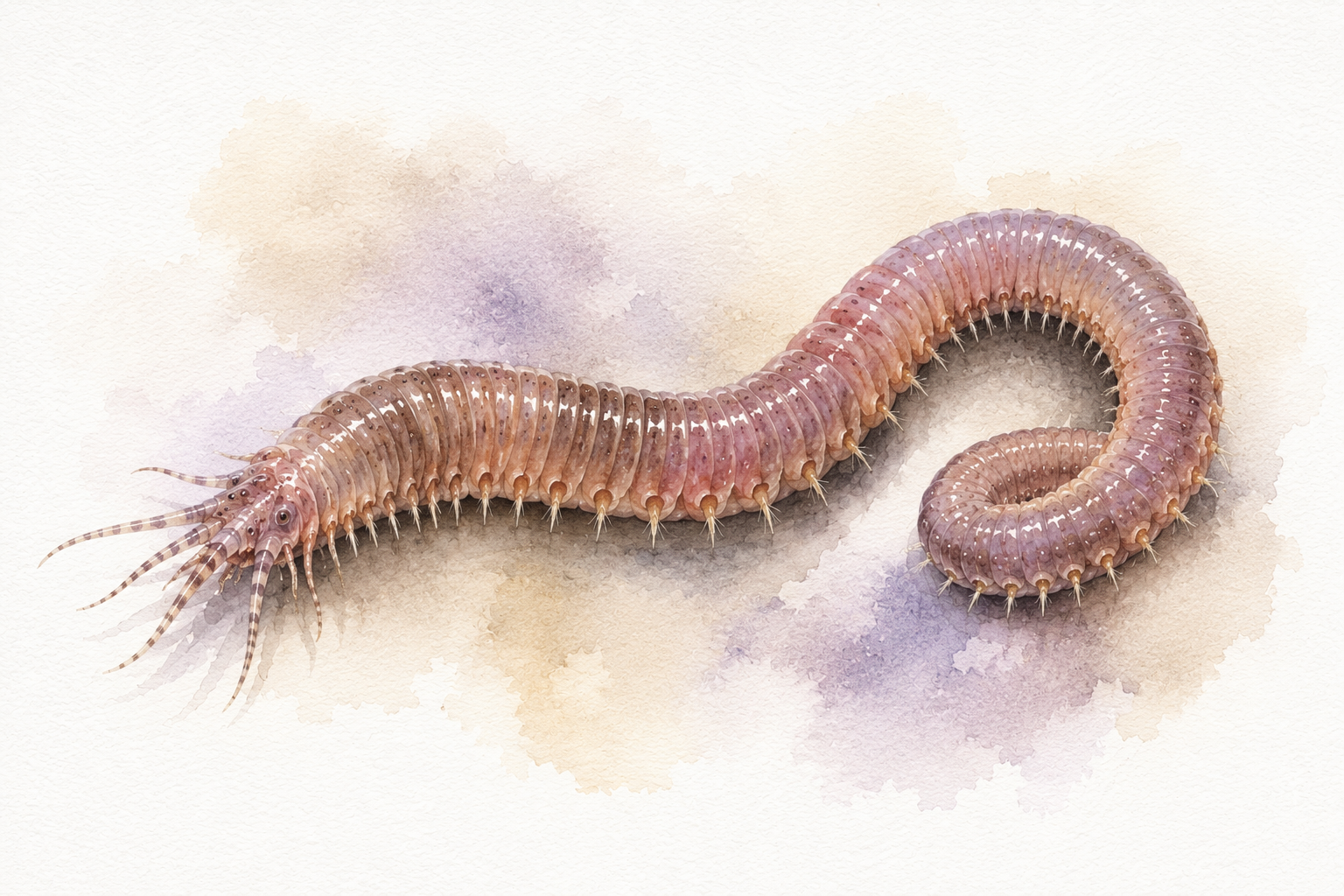
Australian beach worms (Australonuphis spp.) are among the most effective natural baits for surf fishing, particularly when targeting sand whiting, bream and dart. They inhabit sandy ocean beaches from Queensland through New South Wales and Victoria to South Australia, where they remain buried beneath the sand and extend the front of their bodies to investigate food carried through the wash.
Beach worms have long, muscular, segmented bodies. Their heads can range from reddish to greenish, while the body is generally pale, often with a pearly or iridescent appearance.
Two principal species are encountered by Australian bait collectors:
- Kingworm (Australonuphis teres): Also known as the stumpy, particularly when referring to smaller or younger specimens. Typically shorter and more robust than the slimy, although size varies with maturity.
- Slimy (Australonuphis parateres): Also known as the giant beach worm. A longer, more slender species that can reach approximately 3 m.
Both are valued as fishing bait, although their distribution and preferred positions along the beach differ. Kingworms are particularly associated with more exposed surf conditions, while slimies are often found on gently sloping surf-beach flats and spits.
Their elongated bodies can be threaded along a hook to produce a secure, natural-looking bait. Larger worms can also be divided into several usable portions.
Sourcing the Bait
Beach worms can be purchased live, fresh or preserved from selected bait suppliers, but collecting them directly from the beach is a useful skill for anglers who regularly fish the surf.
Where to Find Beach Worms
Look for open ocean beaches with gently sloping sand, broad wash zones and areas where waves run up the beach before draining back towards the sea.
Sand spits and flatter sections of the lower beach can be productive, particularly where the receding water creates a long, shallow wash.
Beach worms live in burrows beneath the sand. When they detect food, they extend their heads and part of their bodies towards the surface before retreating if disturbed.
Their distribution can be patchy. A productive stretch may contain numerous worms, while another apparently similar section of beach may produce very few.
A falling tide approaching low water generally provides the most practical access. Collection can continue around low tide and into the early incoming tide where sufficient shallow wash remains.
Larger kingworms may occupy lower sections of the beach and become accessible only during particularly low tides.
Equipment for Collecting Beach Worms
The basic equipment is inexpensive:
- Berley bag: A fine-to-medium mesh bag containing fish frames, pilchards or other fish scraps. The mesh should retain the scraps while allowing water, scent and small food particles to pass through.
- Hand bait: A small, firm piece of fish flesh or pipi meat used to entice an individual worm.
- Worming pliers: Optional specialised pliers for gripping worms as they emerge. They should be used with controlled pressure to avoid crushing or severing the worm.
- Bait container: A bucket or shallow container for holding collected worms.
- Clean beach sand: Useful for temporarily holding worms during collection.
Experienced collectors often prefer their thumb and forefinger to pliers, although both methods are established.
How to Collect Beach Worms
Step 1 — Locate a suitable wash zone
Choose a gently sloping section of beach near low tide. Work where a thin layer of water washes across the sand and drains back towards the sea.
Step 2 — Introduce the berley
Move a mesh bag containing fish scraps through the shallow wash, allowing the receding water to carry scent and small food particles across the sand.
Step 3 — Watch for movement
Look closely for a small head appearing through the sand, often accompanied by a slight disturbance in the receding water.
The worm may emerge only briefly before retreating.
Step 4 — Offer the hand bait
Once a worm has been located, hold a small piece of fish or pipi flesh just in front of its head.
Keep the bait slightly above the sand and allow the worm to reach towards it.
Avoid pushing the bait directly against the worm, which can cause it to retreat.
Step 5 — Position your fingers or pliers
As the worm extends from its burrow and grips the bait, carefully position your thumb and forefinger, or worming pliers, around the exposed section immediately behind the head.
Timing matters. Grabbing too early may cause the worm to withdraw, while gripping too far along the body can damage or break it.
Step 6 — Extract the worm
Once the worm is securely gripped behind the head, maintain a firm but controlled hold. The worm may initially resist extraction by anchoring itself inside the burrow.
Avoid pulling forcefully against this resistance. As the worm relaxes its grip, gradually draw it from the sand, adjusting your hold if necessary.
Patience is particularly important with larger worms, which can break if excessive force is applied before they release.
Seasonal Collection
Beach worms can be collected throughout the year on suitable beaches, although their activity and accessibility vary with local conditions.
Collection opportunities are generally more favourable during warmer months, particularly in NSW and Queensland, although local conditions can be more important than the season.
Light winds, manageable surf and suitable tides usually make collecting easier than rough conditions that obscure the sand and wash.
Recognising Quality
Live beach worms should be responsive to handling, with a firm, flexible body and no obvious deterioration.
Healthy worms generally retain their characteristic muscular texture and natural colouration. The body may appear pale or iridescent, while the head varies from reddish to greenish depending on the species.
Colour alone is not a reliable measure of quality.
When purchasing worms, look for specimens that remain reasonably intact. A worm broken during collection can still provide effective bait, but damaged sections generally deteriorate more quickly than undamaged worms.
Freshly collected worms are particularly valuable when their bodies remain firm enough to thread onto a hook.
Preserved worms can also be effective, although their texture and durability depend on the preservation method.
Avoid judging quality purely by size. A smaller, firm worm may provide a better presentation for whiting than a large worm that has become soft or damaged.
Storage and Care
Beach worms are best used live or as fresh as practical, particularly when targeting whiting and other fish feeding close to the beach.
Temporary Holding
During collection, place beach worms temporarily in a clean container with damp sand from the collection area, protected from direct sunlight and excessive heat. Transfer them to an appropriate fresh-bait storage or preservation method as soon as practical.
This is a short-term holding method, not a guarantee of prolonged survival. Avoid overcrowding and unnecessary handling.
Refrigeration
For use as fresh bait, collected worms can be kept chilled in a suitable container with clean, lightly damp material to prevent excessive drying.
Refrigeration is intended to help preserve bait condition; it should not be assumed to maintain the worms alive for extended periods.
Keep the container chilled without allowing the worms to freeze unintentionally.
Storage life depends on the worms’ condition when collected and how they are handled. Check them regularly rather than assuming they will remain usable for a fixed number of days.
Freezing and Preserving Beach Worms
Beach worms can be frozen for later use, although untreated worms may become soft after thawing, making them more difficult to thread securely onto a hook.
Some Australian anglers briefly treat freshly collected beach worms with methylated spirits before freezing. This traditional method is used to help retain a firmer texture after thawing, although results depend on the treatment and subsequent storage.
Methods vary in the concentration of methylated spirits used and the duration of treatment. Anglers should follow a proven preservation method rather than assume that longer immersion produces better results.
After treatment, drain away excess liquid, divide the worms into manageable bait portions and package them securely for freezing. Separating portions before freezing makes it easier to remove only the amount required for a fishing session.
Salt-curing is another preservation option. It produces a firmer bait, although excessive curing can leave the worms unnaturally tough.
Methylated spirits is flammable and contains denaturants. Handle it away from ignition sources, avoid unnecessary skin contact and keep treated bait separate from food. Preserved worms are for fishing bait only.
Preparing the Bait
Beach worms require very little preparation before use.
Smaller worms may be fished whole, while larger specimens can be cut into lengths suited to the target species and hook size.
For whiting and bream, a section that can be threaded neatly along the hook is usually sufficient. Larger sections can be reserved for mulloway or other fish where a more substantial bait is appropriate.
Use a clean knife or scissors to divide long worms into manageable portions.
A firm, intact section is generally easier to rig than one that has been crushed or badly torn.
Whole Worms
Smaller beach worms can be used whole when their length suits the intended presentation.
Longer worms may also be threaded along the hook and partly onto the leader, although there is usually no need to use an exceptionally long worm for ordinary whiting fishing.
Cut Sections
Cut sections are the most practical choice when using larger beach worms.
Select a length that provides enough body to cover the hook shank while leaving the point clear.
If the bait is particularly long, it can be threaded further up the leader rather than left hanging loosely below the hook.
Preserved Worms
Frozen or commercially preserved worms can generally be prepared in the same way as fresh worms, although softer pieces may need more careful handling.
Use the firmness of the bait to determine how much can be threaded onto the hook without tearing.
How to Rig It
Beach worms are commonly fished on long-shank hooks, particularly for whiting, bream and dart.
The most important consideration is securing the worm along the hook while leaving the point exposed.
Threading a Beach Worm onto the Hook
- Select a worm section suited to the hook size.
- Insert the hook point into the cut end of the worm section.
- Carefully work the worm lengthwise over the hook bend and shank.
- Continue threading until the bait is reasonably straight and secure.
- Leave the hook point exposed.
- If using a longer section, carefully work the excess bait onto the leader where appropriate.
Threading the worm lengthwise generally produces a neater and more secure presentation than repeatedly piercing it across the body.
For whole live worms, the entry point and exact method may differ according to the size of the worm and the angler’s preferred technique.
Avoid leaving an unnecessarily long section hanging beyond the hook, where smaller fish can bite at the bait without contacting the hook point.
Whiting Rigs
A light running-sinker rig is a practical choice for sand whiting.
A small ball or bean sinker runs along the main line above a swivel, with a suitable trace connecting the swivel to a long-shank hook.
A light running sinker can allow the bait to move naturally through a gutter, while a heavier sinker may be needed to hold position in stronger wash.
A paternoster rig is another established option, particularly where anglers want the bait presented slightly above the bottom or need greater control in moving water.
Bream and Tarwhine
Beach worms can be presented on a running-sinker rig around beach gutters, sandy channels and the edges of submerged structure.
Use a bait portion large enough to remain secure but not so bulky that it obscures the hook point.
Bream and tarwhine often forage in the wash and along gutters, making beach worms a suitable natural bait in these areas.
Larger Fish
For mulloway, longer or more substantial beach-worm sections can be presented on appropriately sized hooks.
The bait should remain securely threaded, particularly when casting into surf.
Larger baits are not automatically more effective. Match the portion to the fish being targeted and the size of the hook.
Fishing the Surf
Beach worms are especially useful in shallow gutters, channels and wash zones where fish forage over sandy bottom.
Look for areas where waves break over a sandbank and water drains into a deeper gutter.
Allow the bait to move naturally where conditions permit, while using enough weight to maintain an effective presentation.
In stronger surf, a heavier sinker or more stable rig may be necessary to prevent the bait from washing out of the intended fishing area.
Best Fish to Target
Sand Whiting
Sand whiting are one of the principal targets for beach worms.
They actively forage across sandy surf beaches, feeding on worms and other small invertebrates.
A fresh section of beach worm threaded along a small long-shank hook is a highly effective presentation.
Match the bait portion to the relatively small hook sizes typically used for whiting. An oversized section can make it harder for fish to take the hook cleanly.
Fish shallow gutters, the edges of sandbanks and areas where the wash exposes food.
Light tackle and minimal sinker weight are useful where conditions allow.
Yellowfin Bream
Yellowfin bream readily take beach worms while feeding through gutters, shore breaks and sandy areas near structure.
Use a moderately sized worm section on a suitable hook, presented close to the bottom.
A running-sinker rig works well where the current is manageable.
Tarwhine
Tarwhine forage over sandy and mixed-bottom areas, taking worms and other benthic invertebrates.
Beach worms are a credible choice when fishing gutters and sandy areas adjacent to reef or other structure.
A presentation similar to that used for bream is appropriate.
Surf Dart
Surf dart are strongly associated with sandy surf beaches and actively forage in the wash.
Beach worms are a natural bait choice, particularly when fishing shallow gutters and the edges of breaking waves.
Smaller worm sections are generally sufficient, and a simple running-sinker or paternoster rig can be effective.
Dusky Flathead
Dusky flathead may take beach worms when feeding over sandy areas and along the edges of gutters.
Although larger baitfish and other offerings are often used when specifically targeting flathead, beach worms remain a practical option where they are readily available.
Use a substantial worm section and fish it near the bottom.
Mulloway
Mulloway can be targeted with larger beach-worm presentations, particularly in surf gutters and deeper channels.
Longer worm sections can be threaded along the hook and leader to produce a substantial bait.
Beach worms are one of several established mulloway baits, rather than a universal first choice. Fresh fish, squid and live baits may be preferable in other situations.
Common Mistakes
Grabbing the worm too early
Beach worms can retreat quickly when disturbed. Allow the worm to extend towards the hand bait before attempting to grip it.
Pulling too aggressively
Beach worms can remain anchored inside their burrows. Avoid pulling forcefully against this resistance; maintain control and allow the worm to release before gradually extracting it.
Working unsuitable beach conditions
Heavy surf and turbulent wash make emerging worms difficult to see and collect. Look for manageable conditions and a gently sloping section of beach.
Using oversized bait portions
An excessively long section can allow smaller fish to remove bait without contacting the hook. Match the worm length to the hook and intended target.
Poor hook placement
Repeatedly piercing or bunching the worm can create a bulky presentation and leave the hook point obstructed. Thread the bait neatly along the shank.
Allowing collected worms to deteriorate
Heat, overcrowding and poor storage can reduce the condition of freshly collected worms. Keep them cool and use appropriate short-term storage methods.
Using too much sinker weight
Excessive weight can restrict a natural presentation in light surf. Use only enough weight to maintain the bait in the intended fishing area.
The Bottom Line
Australian beach worms are a premium natural bait for surf fishing, particularly when targeting sand whiting, bream and dart.
Their main advantage is a firm, elongated body that can be threaded securely onto a hook, providing a natural presentation for fish feeding over sandy bottom.
Collecting them requires practice. A suitable beach, falling tide, manageable surf and an effective berley technique provide the best starting point for learning to collect them.
Fresh worms are especially valuable, while frozen or preserved sections remain useful when live bait is unavailable.
For anglers regularly fishing Australia’s surf beaches, learning to collect and rig beach worms is a worthwhile skill that can reduce reliance on purchased bait and provide an effective option across several popular target species.