
Introduction
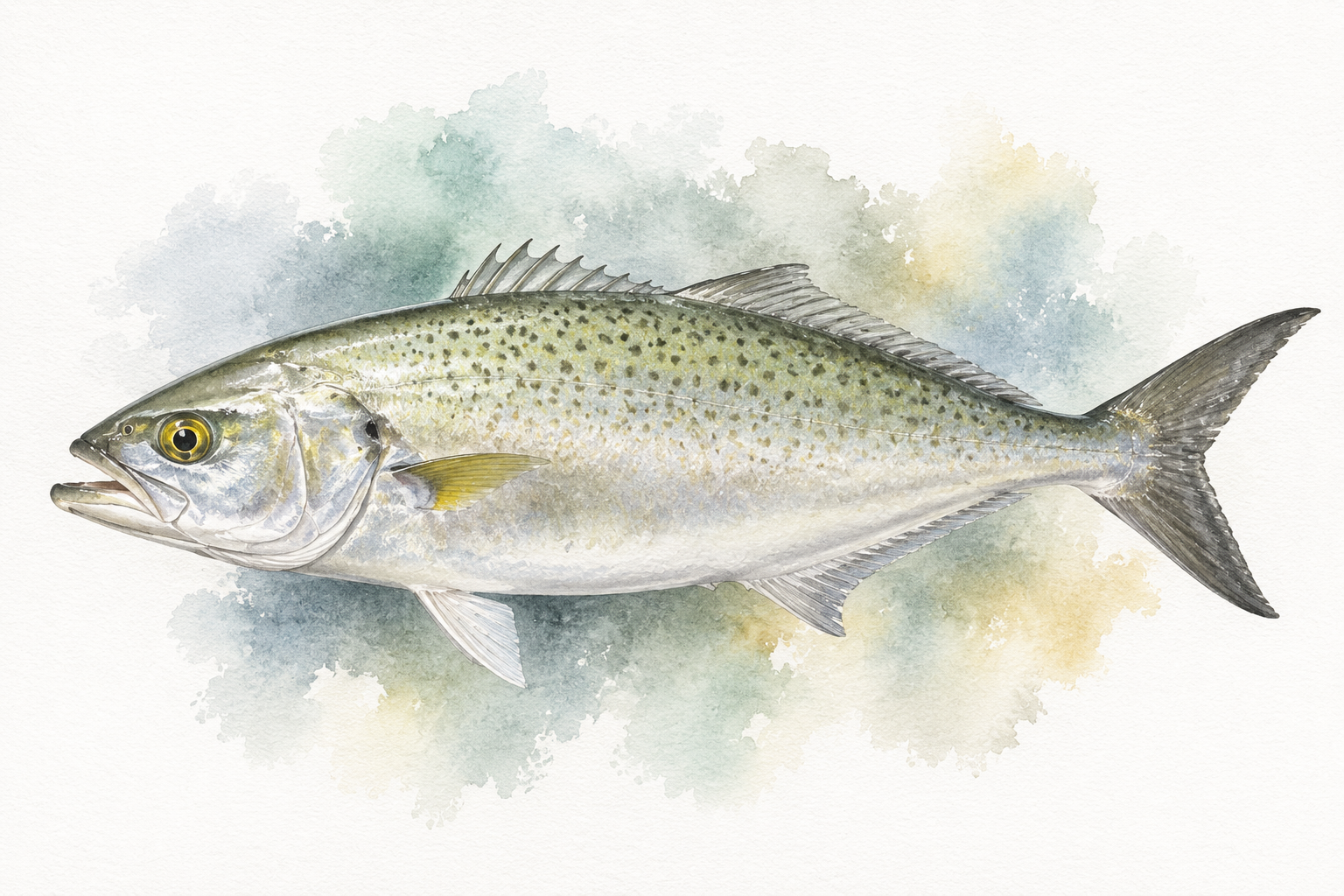
Australian salmon are one of the most accessible high-performance sportfish available to Australian anglers. Despite the misleading common name, they are not related to true salmonids; they belong to the family Arripidae and are a fast-growing marine fish found throughout southeastern Australian waters.
Their appeal comes from a combination of behaviour and availability. Australian salmon are aggressive schooling predators that regularly push baitfish into shallow coastal environments, placing them within reach of beach anglers, rock fishers, estuary anglers and boat anglers. A school of feeding salmon can appear almost anywhere bait is concentrated, from surf gutters and headlands to open bays and offshore current lines.
The key to consistently catching Australian salmon is understanding that they are not primarily structure-oriented fish. Unlike many reef species that hold tightly to specific locations, salmon are highly mobile hunters that follow food. The most productive anglers do not simply fish likely areas; they locate the baitfish, birds, current seams and water movement that indicate active feeding.
Australian salmon feed heavily on small pelagic fish, making them particularly responsive to lure presentations that imitate fleeing bait. However, they are equally willing to take natural baits, especially when schools are moving through deeper water or when conditions make lure fishing difficult.
Tackle and Rigs
Australian salmon are powerful swimmers capable of long, fast runs, particularly when hooked in open water. The best tackle balances casting distance, lure control and fighting ability rather than simply matching the fish’s size.
For beach and rock fishing, a 9–11 ft spinning rod rated around 3–6 kg or 4–8 kg provides the casting range required to reach offshore schools while still allowing accurate lure presentation. A 4000–5000 size reel loaded with 10–20 lb braid is suitable for most situations.
Leader strength depends heavily on location. In open beaches with clean water, 10–20 lb fluorocarbon or monofilament leader allows natural lure movement. Around rocks, pylons or heavy structure, heavier leaders are appropriate because the salmon itself is not the only challenge; abrasion from the environment often causes more failures.
Metal lures are among the most reliable salmon presentations because they cast long distances and imitate the small baitfish salmon commonly chase. Casting distance is often more important than lure size, particularly when schools are feeding beyond the breakers.
For bait fishing, simple running sinker rigs, paternosters and float rigs are effective depending on depth and location. Salmon are aggressive feeders and do not generally require complicated presentations, but matching bait size to the local forage often improves results.
Circle hooks are useful when fishing whole pilchards, garfish or other natural baits, particularly when allowing fish time to move away with the bait before applying pressure.
When to Use Baits
Although Australian salmon are most commonly associated with lure fishing, natural baits remain highly effective, especially when fish are holding deeper or when conditions make casting difficult.
Pilchards, blue bait, garfish strips, squid strips and fillets from small baitfish species are commonly used. Whole pilchards are particularly effective when salmon are feeding aggressively in berley trails, while strips provide better durability when smaller fish are present.
Bait fishing becomes especially useful from stationary platforms such as rock walls, jetties and breakwalls where anglers can establish a feeding trail. Salmon are naturally attracted to injured baitfish, so a steady flow of small pieces can bring travelling schools within casting range.
One advantage of bait is that it allows anglers to continue fishing when salmon become selective toward small prey. During periods when salmon are focused on tiny baitfish, matching the size and profile of natural prey can outperform larger artificial presentations.
However, bait fishing is generally less efficient than lure fishing when actively searching for schools. Because salmon are mobile predators, covering water with artificial lures is usually the faster method of locating feeding fish.
When to Use Lures
Lures are the dominant method for targeting Australian salmon because their feeding behaviour naturally suits active presentations.
Metal slugs remain the benchmark salmon lure because they combine distance, flash and speed. Salmon frequently chase small pelagic baitfish such as whitebait, pilchards and juvenile Australian anchovy, and a rapidly retrieved metal lure closely imitates this fleeing behaviour.
The most effective retrieve depends on what the fish are doing.
When salmon are actively feeding on the surface, a fast, continuous retrieve often triggers immediate strikes. Fish chasing bait rarely require subtle presentations; they are usually competing with other members of the school.
When salmon are deeper or less aggressive, varying the retrieve becomes more important. Allowing metals to sink before beginning a medium-speed retrieve can place the lure below surface-feeding fish.
Soft plastics are useful when salmon are feeding on smaller prey or when fish become wary of larger presentations. Smaller paddle tails and jerk shads worked through bait schools can be extremely effective.
Surface lures can also produce exciting results when salmon are actively pushing bait toward the surface. Small stickbaits and poppers are particularly effective around calm mornings when fish are visibly hunting.
The most common mistake with salmon lures is using presentations that cannot reach the fish. A perfectly matched lure that falls short of the feeding school is ineffective. Casting distance and lure control are often more important than lure colour.
Time of Day
Australian salmon can feed throughout the day, but certain periods consistently produce better opportunities.
Early morning is often productive because baitfish are active near the surface and lower light conditions allow predators to hunt effectively. Calm dawn periods frequently reveal surface activity, bait schools and bird activity that may disappear as the sun rises.
Late afternoon can also produce strong feeding periods, particularly around beaches and headlands where baitfish move into shallower water.
During the middle of bright, calm days, salmon often become more difficult to approach in shallow clear water. They may continue feeding, but schools can become harder to reach and more selective.
Overcast conditions can extend surface activity because reduced light allows baitfish to remain higher in the water column for longer.
The most important factor is not the clock itself, but whether salmon are actively feeding. A midday session with baitfish and current can outperform a dawn session with empty water.
Common Mistakes
Chasing birds instead of reading the water
Bird activity is one of the easiest ways to locate salmon, but birds alone do not guarantee feeding fish. Diving birds may indicate baitfish, but anglers should also assess current direction, water colour and whether predators are actively pushing bait.
Retrieving lures too slowly
Australian salmon are built for speed. Many anglers underestimate how aggressively these fish chase prey and retrieve lures below the speed required to trigger a reaction.
Using oversized presentations
Large lures can work, but salmon often feed on very small baitfish. When fish ignore larger offerings, downsizing the lure to match the dominant prey frequently improves results.
Ignoring wind direction
Wind can determine whether schools are accessible from shore. A strong onshore breeze can push baitfish into the surf zone, but excessive wind can make lure control and bite detection difficult.
Fighting fish too aggressively
Salmon are powerful swimmers, and heavy-handed fights often result in pulled hooks. Maintaining steady pressure and allowing the fish to run usually produces better landing rates.
The Bottom Line
Australian salmon are a species where understanding behaviour matters more than memorising locations. They are mobile predators that follow food, meaning the best opportunities come from finding bait concentrations, current movement and active feeding behaviour.
Their willingness to attack fast-moving lures makes them one of Australia’s premier light-tackle sportfish, but their aggressive feeding habits should not be mistaken for simplicity. Successful salmon anglers learn to read the conditions that create feeding opportunities.
From surf beaches and rock platforms to estuary entrances and offshore waters, Australian salmon reward anglers who cover water, match the local baitfish and adapt quickly when conditions change.
The most consistent approach is straightforward: locate the bait, identify the feeding fish, choose a presentation that matches the prey, and keep moving until you find active schools.