
Introduction
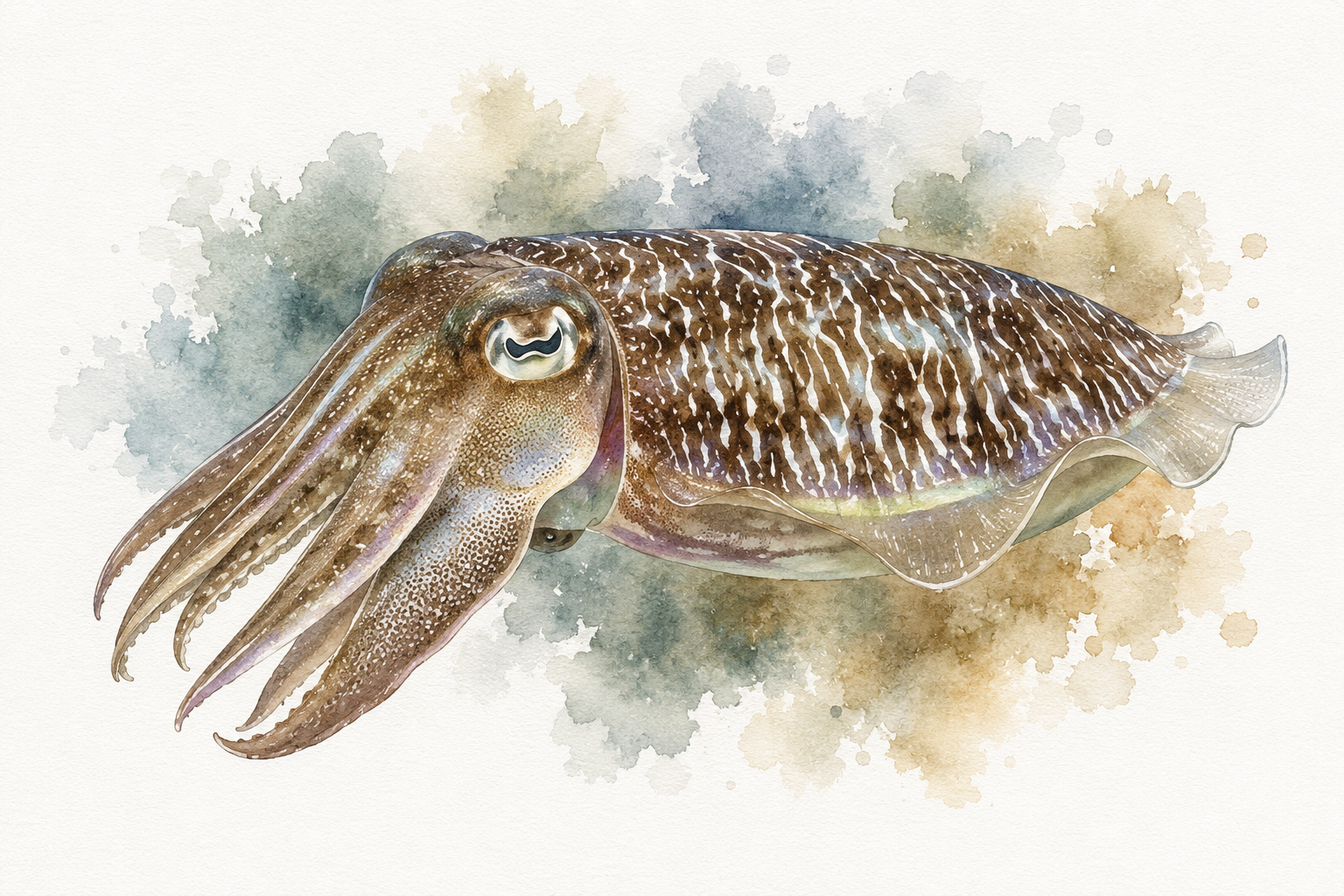
The Mourning Cuttlefish (Ascarosepion plangon), also known as the Striking Cuttlefish, is a small cuttlefish found in sheltered coastal waters of eastern and northeastern Australia. Although rarely collected specifically for bait, it offers many of the same practical fishing applications as larger cuttlefish species.
Its mantle provides firm, durable strips, while the arms and tentacles can be used as smaller baits or retained on a whole presentation. These qualities make Mourning Cuttlefish a useful natural bait for Snapper, Mulloway and Yellowtail Kingfish.
The species can be recognised by its flattened body, surrounding fin and distinctive colour patterns, which may include two dark bands and prominent eyespots towards the rear of the mantle. Like other cuttlefish, it possesses an internal cuttlebone.
Sourcing the Bait
Mourning Cuttlefish favour sheltered bays, harbours, seagrass beds and rocky reefs. They are often found close to the seabed, particularly around transitions between seagrass, rock and sand.
Juveniles are frequently associated with seagrass, while adults are commonly observed around rocky reef and low-growing kelp.
Catching Mourning Cuttlefish
Prawn-style squid jigs provide a practical way to target cuttlefish in suitable habitat.
Cast beyond a likely holding area and allow the jig to sink towards the bottom. Work it back using short lifts and pauses, maintaining enough control to keep it close to the seabed without repeatedly snagging reef or weed.
Cuttlefish may follow a jig before seizing it with their feeding tentacles or arms. When one takes the jig, maintain steady pressure rather than striking aggressively.
Smaller prawn-style squid jigs are a sensible starting point when targeting Mourning Cuttlefish, given their relatively small size. Choose a jig that can be worked close to the seabed without repeatedly snagging weed or reef, adjusting its weight and sink rate to suit the depth and current.
Light winds and moderate water movement make it easier to control the jig and search shallow habitat. Strong winds, disturbed water and excessive current can make presentation more difficult.
Availability and Seasonality
Mourning Cuttlefish occur throughout the year in suitable habitat, but they are not commonly marketed as a separately identified bait species. Anglers are more likely to obtain them through incidental capture or by deliberately targeting cuttlefish in suitable areas.
Mourning Cuttlefish reproduce throughout the year in subtropical eastern Australian waters, with no pronounced annual spawning peak established. Sydney Harbour studies have documented seasonal changes in breeding behaviour and group composition, particularly between winter and spring. These observations may influence local encounters but do not establish a consistent statewide pattern of recreational sourcing opportunities.
Cuttlefish sold by bait suppliers are often not identified to species, so purchased bait should not automatically be assumed to be Mourning Cuttlefish.
Recognising Quality
Fresh cuttlefish should have firm, intact flesh and a mild marine smell.
The mantle is particularly useful for strips because it can be cut into consistent portions that hold securely on a hook. The arms and tentacles are also usable, provided the connecting tissue remains firm.
Colour is not a reliable freshness test on its own. Live cuttlefish change their appearance rapidly, while dead specimens may lose or alter their markings.
Avoid bait that has become excessively soft, slimy or noticeably unpleasant-smelling.
Frozen cuttlefish can remain effective, but poor storage or repeated thawing may reduce the firmness needed for secure hook placement.
Storage and Care
Keep freshly caught cuttlefish chilled and out of direct sunlight. An esky with ice or frozen cooling packs is suitable for transporting bait, provided the flesh is kept out of accumulated meltwater.
For longer storage, freeze the cuttlefish whole or divide it into portions beforehand. Separate mantle strips and arm portions are convenient when preparing smaller quantities of bait.
Pack portions in sealed freezer bags or containers, removing excess air where practical.
Thaw frozen bait in the refrigerator or a suitably chilled container rather than leaving it exposed to warm conditions.
Good-quality cuttlefish generally requires no special curing or salting before use.
Preparing the Bait
Mourning Cuttlefish can be prepared whole, as mantle strips, or as separate arm-and-tentacle portions.
Whole Cuttlefish
A small specimen can be retained largely intact for use as a whole bait.
The cuttlebone may be removed when a softer, more flexible presentation is preferred, but removal is not essential for every whole-bait application.
Keep the mantle and head connected where possible so the bait retains its natural profile.
Mantle Strips
Separate the mantle from the head and arms, then open it along one side. Remove the cuttlebone and unwanted internal material.
Lay the mantle flat and cut lengthwise into strips suited to the intended hook and target species.
Leave the skin attached if desired. There is generally no need to remove it when preparing fishing bait.
A strip should have enough length to move naturally in the water without becoming so long that it twists around the leader or folds back over the hook.
Arms and Tentacles
The arms and tentacles can be used together as a compact bait or divided into smaller portions.
Retaining some of the firmer tissue around their base makes them easier to secure to a hook.
Remove the hard beak when cleaning the head section for a prepared bait.
How to Rig It
Mourning Cuttlefish can be fished on conventional running-sinker or paternoster rigs. The hook arrangement should suit the size of the bait rather than the species name alone.
Mantle Strips
For a narrow strip, insert a single hook through the thicker end of the mantle.
A second pass through the upper portion can help secure a slippery strip, but leave the lower section free to move in the current.
Position the strip so it hangs below the hook bend rather than folding back across the point.
For a larger strip, a two-hook arrangement may provide better coverage. Space the hooks along the bait without stretching or bunching the flesh.
Whole Cuttlefish
Small whole cuttlefish can be presented on a single appropriately sized hook, secured through firm mantle or head-base tissue.
For larger specimens or presentations requiring longer casts, a two-hook arrangement can provide additional support. Position the hooks to suit the length of the bait, keeping the points exposed and avoiding unnecessary damage to the flesh.
Where additional security is needed, a small amount of bait-securing thread can help prevent the cuttlefish from tearing free during casting. Avoid wrapping the bait so tightly that it loses its natural shape.
Running-Sinker Rig
A running-sinker rig is useful for presenting whole cuttlefish or mantle strips close to the bottom.
It is particularly suitable for fishing coastal gutters, deeper estuary channels and reef edges where a bait can be allowed to settle or move with the current.
Use enough sinker weight to maintain the intended position without unnecessarily restricting movement.
Paternoster Rig
A paternoster rig is useful when fishing deeper water or broken reef where suspending the bait above the sinker helps reduce contact with bottom obstructions.
Shorter mantle strips and arm portions are well suited to this presentation.
Choose sinker weight according to depth and current, keeping the bait reasonably controlled rather than allowing it to wrap around the main line.
Best Fish to Target
Snapper
Snapper regularly feed on cephalopods, making cuttlefish a suitable natural bait.
Mantle strips and small whole cuttlefish can be used around coastal reefs, broken ground and deeper reef edges. Their relatively firm flesh is particularly useful when fishing where smaller or softer baits are easily damaged.
Mulloway
Mulloway consume fish and cephalopods, making Mourning Cuttlefish a credible alternative to commonly used squid baits.
Whole small cuttlefish or larger mantle portions can be presented around deeper estuary channels, entrances and coastal gutters.
Its durable flesh is useful when a bait needs to remain in position for an extended period, although freshness and presentation remain important.
Yellowtail Kingfish
Yellowtail Kingfish are capable predators of fish and cephalopods, and cuttlefish can be used as a natural bait around coastal reefs, headlands and deeper structure.
Whole small cuttlefish or substantial mantle strips provide suitable presentations when fishing with dead bait.
Cuttlefish should be regarded as an alternative to established squid and live-fish baits, rather than assumed to be consistently more effective.
Common Mistakes
Retrieving the jig too far above the seabed
Mourning Cuttlefish frequently occupy bottom-associated habitat. Keep the jig within the likely feeding zone using controlled lifts and pauses.
Using oversized bait strips
An unnecessarily long strip can twist around the leader or fold across the hook point. Cut portions to match the hook and intended target.
Attaching whole bait through weak tissue
A heavy bait secured through a thin arm or tentacle may tear free during casting. Use firmer mantle or head-base tissue.
Overhandling the bait
Repeatedly thawing, refreezing or leaving cuttlefish exposed to warm conditions can reduce flesh quality and hook durability.
Assuming breeding activity guarantees better fishing
Seasonal breeding observations from Sydney Harbour do not establish a reliable statewide collection peak. Suitable habitat and practical conditions remain more useful considerations.
The Bottom Line
Mourning Cuttlefish are a practical but relatively uncommon bait species for Australian saltwater anglers.
Their firm mantle, usable arms and tentacles, and suitability for whole or cut presentations make them a credible bait for Snapper, Mulloway and Yellowtail Kingfish.
The main limitation is obtaining this particular species consistently, rather than any inherent lack of bait value. When available, Mourning Cuttlefish can be prepared and fished using the same established techniques applied to comparable cuttlefish species.