
Introduction
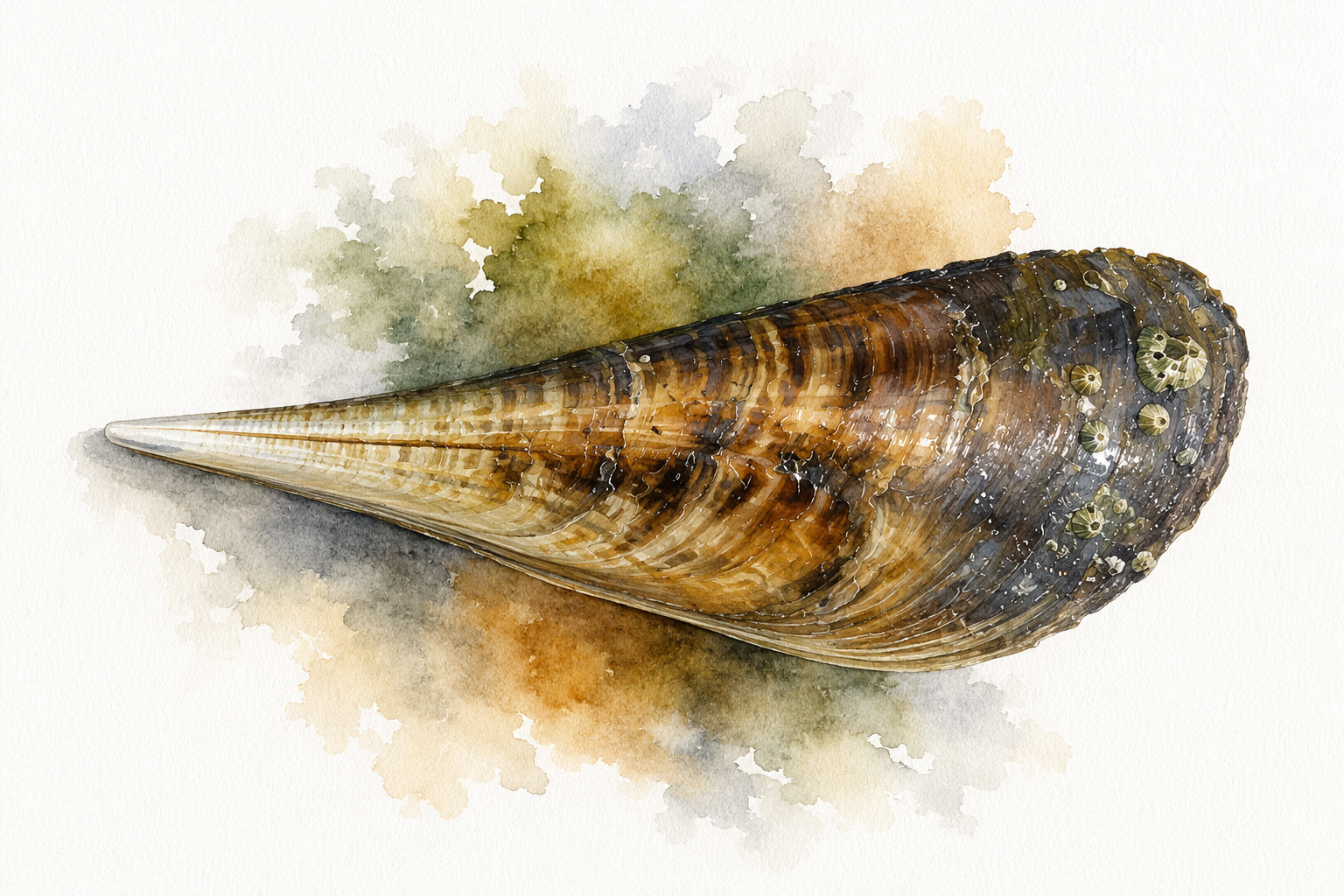
Razorfish are large, wedge-shaped bivalve molluscs found in sheltered Australian coastal waters. This guide covers Pinna menkei and Pinna dolabrata, two Australian pen shells commonly referred to as Razorfish.
Their distinctive shells taper towards a narrow, buried end, while the broad upper margins project above the seabed. The shells are generally brown, often with a rough or ribbed surface, and larger specimens can reach approximately 50 cm in length.
Razorfish live partially buried in sandy or muddy sediment, including sheltered bays, estuaries and seagrass-associated areas. They remain anchored to the seabed by strong, thread-like fibres.
For anglers, the main attraction is the flesh inside the shell. The firm adductor muscle can be cut into durable strips, while the softer surrounding tissues provide additional bait for lighter presentations.
Razorfish are useful for targeting Snapper, Bream, King George Whiting and other fish that feed on molluscs and bottom-dwelling invertebrates. Their main limitation is availability, as they are generally collected rather than purchased from bait retailers.
Sourcing the Bait
Razorfish are primarily obtained from established populations in sheltered coastal waters.
Look for the broad upper edges of their shells projecting from sandy or muddy sediment. In shallow water, they may be visible among seagrass or across relatively open sections of seabed.
Unlike pipis, Razorfish remain anchored in the sediment. Their narrow ends are buried, with strong fibres attaching them to material beneath the surface.
Locating Razorfish
Sheltered bays, estuarine flats and shallow coastal areas with suitable sediment are the main environments worth examining.
Low tides can make shallow populations easier to locate, particularly where falling water levels expose more of the seabed. Many Razorfish remain submerged even at low tide.
Calm weather and good water clarity are especially useful when locating shells underwater. Strong winds and disturbed sediment can make them difficult to see.
Razorfish are relatively sedentary, so established populations may remain in the same general areas throughout the year. There is no reliable basis for assuming a predictable summer increase in abundance.
Collecting Razorfish
Razorfish are anchored in the seabed and cannot simply be picked up like loose shells.
Where collection is permitted, carefully clear sediment from around the buried portion of the shell to expose more of its length. Avoid pulling or twisting the exposed upper edges, as these can break and leave sharp fragments.
Continue loosening the surrounding sediment until the shell can be freed without excessive force. The narrow end may remain attached to buried material by strong anchoring fibres.
Collect only what you intend to use. Living Razorfish provide structure and shelter for other marine organisms, and removing them also removes that habitat.
Collection Precautions
Razorfish shells have sharp, rigid edges that can cause deep cuts, particularly when partially concealed by sand or seagrass.
Wear sturdy enclosed footwear when wading and protective gloves when handling or collecting Razorfish. Avoid walking barefoot through areas where their shells protrude from the seabed.
Empty shells can also provide shelter for octopuses and other marine animals, including blue-ringed octopuses. Never reach blindly into a shell or assume an apparently empty shell is unoccupied.
Recognising Quality
Fresh Razorfish should contain firm, moist flesh without a strong unpleasant odour.
The adductor muscle is generally the firmest and most useful portion for hook bait. It should retain its structure when cut into strips or pieces.
The surrounding tissues are softer and may vary in colour and texture. This is normal, although badly deteriorated flesh will be difficult to keep on a hook.
Avoid using flesh that has become excessively mushy, discoloured through deterioration or developed a strong ammonia-like smell.
An intact shell does not guarantee the animal is alive or fresh. Empty shells can remain embedded in the seabed long after the mollusc has died.
For bait purposes, the condition of the flesh matters more than the appearance of the shell.
Storage and Care
Fresh Razorfish
Once removed from the shell, Razorfish flesh should be kept chilled.
Place the flesh in a sealed container or bag and store it in an ice-filled esky, separated from melting ice water.
If the bait will be used during the same session, prepare only the quantity needed and keep the remainder chilled until required.
Freezing Razorfish
Razorfish flesh can be frozen in portions for later fishing trips.
Separate the firm muscle from the softer tissues if you intend to use them for different presentations.
Cutting the muscle into suitable bait-sized strips before freezing can make preparation more convenient.
Pack portions securely, remove excess air and freeze promptly.
Thaw the bait while chilled and avoid repeatedly freezing and thawing the same portions. This is particularly important for the softer tissues, which can lose their structure.
Keeping Whole Razorfish
For ordinary recreational bait use, processing and chilling the flesh promptly is generally more practical than attempting to keep collected Razorfish alive.
Their large shells and dependence on suitable seawater conditions make live storage inconvenient compared with smaller bait organisms.
Preparing the Bait
Razorfish contain several types of tissue, but the firm adductor muscle is generally the most practical part for durable hook bait.
Opening the Shell
Place the Razorfish on a stable, non-slip surface and wear protective gloves.
Using a sturdy, short-bladed knife, carefully work into the shell near the hinge along its narrow end, much like opening an oyster. Apply controlled pressure to create a small opening, then slide the blade inside to sever the adductor muscle holding the shell closed.
Avoid levering against the broad outer shell margins. These are sharp and brittle and can break under pressure.
Once opened, remove the flesh and separate the firm adductor muscle from the softer surrounding tissues for different bait presentations.
Adductor Muscle Strips
The firm muscle can be sliced into strips or compact pieces to suit the hook and target species.
Longer strips are useful when fishing for Snapper or larger estuary fish, while smaller sections suit Bream and Whiting.
Avoid cutting the flesh excessively thin, as very narrow strips may tear during casting.
Softer Flesh
The softer tissues can be cut into smaller portions and used where a less durable bait is acceptable.
These portions are better suited to gentle casting and lighter presentations.
Where necessary, combine a small amount of softer flesh with a firmer section of muscle to improve attachment.
Mixed Portions
A bait containing both firm muscle and softer tissue can provide a combination of durability and exposed flesh.
Keep the portion compact enough to suit the hook rather than loading on excessive material.
How to Rig It
Razorfish are particularly suited to bottom-fishing presentations using strips or pieces of flesh.
Rigging the Firm Muscle
Cut a strip to suit the length of the hook shank.
Pass the hook through one end of the strip, then thread or secure the flesh along the shank, leaving the hook point exposed.
For longer strips, allow a short section to extend beyond the hook bend.
The firm muscle generally holds better than the softer tissues and is more suitable for casting.
Rigging Softer Flesh
Use smaller portions of the softer flesh on appropriately sized hooks.
Pass the hook through the firmest available section and avoid repeated piercing, which can cause the bait to break apart.
For longer casts or stronger currents, a small amount of bait elastic can help secure softer portions.
Running-Sinker Rig
A running-sinker rig is a practical choice for fishing Razorfish around estuary channels, sandy bottoms and sheltered coastal structure.
Use sufficient weight to maintain contact with the intended fishing area.
This presentation suits Bream, Whiting and smaller Snapper in relatively moderate conditions.
Paternoster Rig
A paternoster rig is useful when fishing deeper water, reef edges or areas with stronger current.
It can hold a strip of Razorfish flesh above the bottom while maintaining control of the sinker.
The firm muscle is particularly suitable where the bait must withstand casting, current or repeated contact with smaller fish.
Lightly Weighted Presentations
Small portions of Razorfish can also be fished with minimal weight in sheltered water.
This approach is suitable when targeting Bream around structure or Whiting over shallow sand.
Keep the bait compact and avoid excessive weight where a natural presentation is possible.
Best Fish to Target
Snapper
Snapper feed on a range of molluscs and other bottom-dwelling invertebrates, making Razorfish a credible natural bait.
Use firm muscle strips or compact mixed portions around reef edges, rubble grounds and coastal structure.
A running-sinker or paternoster rig can be selected according to depth and current.
The firm muscle is particularly useful when fishing deeper water where softer baits may be stripped from the hook.
Yellowfin Bream
Yellowfin Bream readily investigate shellfish flesh around estuary structure.
Small strips of Razorfish muscle or compact portions of softer flesh can be presented around rocky edges, oyster-covered structure and tidal channels.
Use relatively small hooks and enough weight to maintain control without unnecessarily restricting the bait.
Black Bream
Black Bream feed on molluscs and other invertebrates in southern estuaries.
Razorfish flesh can be presented in small portions around submerged timber, rocky areas and channel margins.
A lightly weighted running-sinker rig is suitable where conditions allow.
King George Whiting
King George Whiting feed on small benthic invertebrates over sand, seagrass and adjacent bottom habitats.
Small, narrow portions of Razorfish flesh can be used on fine hooks.
Keep the bait compact and use light tackle where practical.
The firmer muscle can be useful when smaller fish repeatedly attack softer offerings.
Silver Trevally
Silver Trevally readily feed on small crustaceans, molluscs and other marine invertebrates.
Small strips or pieces of Razorfish flesh can be effective around coastal structure, deeper channels and sheltered reef areas.
A lightly weighted presentation is useful where fish are feeding close to the bottom, while a paternoster rig may be more practical in deeper water.
Mulloway
Mulloway will take a variety of natural baits, including mollusc flesh.
Larger Razorfish strips can be presented around estuary channels and deeper holes.
However, Razorfish is a secondary option rather than a principal bait for anglers specifically targeting large Mulloway.
Fresh fish, squid and suitable live baits are generally more conventional choices for that purpose.
Common Mistakes
Using excessively large bait portions
Oversized strips can overwhelm smaller hooks and make it difficult for Bream or Whiting to take the bait cleanly. Match the portion to the target species.
Cutting the muscle too thin
Very narrow strips can tear during casting or when smaller fish attack the bait. Retain enough thickness for the hook to hold securely.
Rigging only through soft tissue
Soft Razorfish flesh can pull away from the hook. Where possible, pass the hook through a firmer section or use bait elastic when necessary.
Using excessive sinker weight
Heavy sinkers can reduce presentation quality in sheltered water. Use enough weight to control the bait without unnecessarily anchoring it.
Failing to replace damaged bait
Repeated attacks from smaller fish can leave little usable flesh on the hook. Replace the bait once it becomes loose or badly damaged.
The Bottom Line
Razorfish are a useful natural bait for Australian estuary and coastal fishing, particularly when targeting Snapper, Bream and King George Whiting.
Their main advantage is the firm adductor muscle, which can be cut into durable strips and withstand casting and bottom-fishing presentations. The softer flesh also provides usable bait, although it requires more careful handling.
Limited retail availability and the effort involved in collection make Razorfish less convenient than many common baits.
Where they can be obtained, careful preparation and appropriately sized portions make good use of this distinctive Australian shellfish.