
Introduction
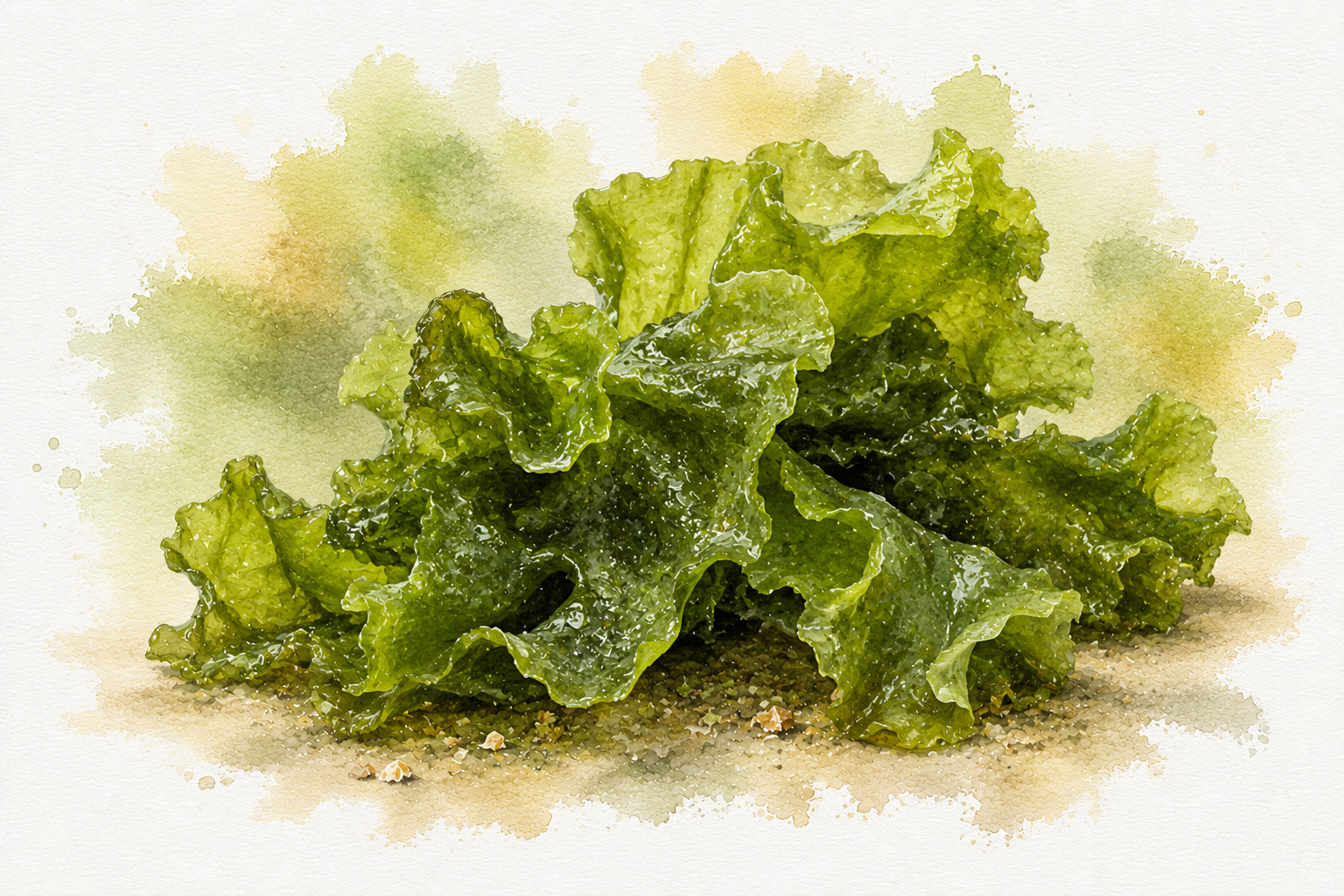
Sea Cabbage is a traditional natural bait for Luderick, particularly along ocean rock platforms, breakwalls and harbour entrances where these fish graze on marine algae.
The broad, flexible blades of leafy Ulva species can be folded onto a small hook and presented beneath a float. Unlike fine green weed commonly used in estuaries, Sea Cabbage is particularly associated with rocky coastal environments.
Its effectiveness depends largely on bait condition, secure hook attachment and presenting the cabbage at the depth where Luderick are feeding.
Sourcing the Bait
Sea Cabbage grows attached to rocks and other hard surfaces in the intertidal and shallow subtidal zones. Look for it on ocean rock ledges, in tidal rock pools, along breakwalls and on suitable harbour structures.
Low tide generally provides the best opportunity to locate accessible growth. Broad green blades may be exposed on rock surfaces or remain submerged in shallow pools.
Growth varies between locations. Exposed ocean rocks can support cabbage that is firmer and better able to withstand casting, while sheltered areas may produce thinner, more delicate blades. Neither is automatically superior; the best choice is material that can be secured reliably to a hook.
Collect directly from healthy, attached growth rather than relying on loose cabbage washed into pools or stranded along the shoreline. Take only what is needed and leave the remaining growth intact.
Recognising Quality
Good Sea Cabbage has a fresh green colour and flexible blades that can be folded without immediately tearing apart.
Texture matters as much as appearance. Slightly firmer blades generally hold better on a hook, while very thin cabbage may require several folds to create a secure bait.
Avoid material that is bleached, dried out, decomposing or breaking apart with minimal handling. Loose cabbage that has spent an extended period in stagnant water may also have lost much of its strength.
Select portions that are large enough to fold but not so thick or coarse that they become difficult to present naturally.
Storage and Care
Sea Cabbage is best used fresh, preferably on the day it is collected.
Keep it cool, shaded and damp without leaving it submerged in warm, stagnant seawater. A loosely wrapped damp cloth or a suitable container that retains moisture can help prevent the blades from drying out.
During longer sessions, keep the main supply in a cooler and remove small amounts as needed.
For overnight storage, refrigerate the cabbage in a container that prevents excessive drying while allowing surplus moisture to drain away. Check its flexibility and condition before use.
Freezing is generally unsuitable when the bait needs to retain its natural texture and strength on the hook.
Preparing the Bait
Tear a narrow strip from a fresh blade, choosing a portion appropriate to the hook size and the fish being targeted.
Fold the strip over itself to create a compact bait. Thin cabbage may need several folds, while thicker material can often be presented with fewer layers.
The aim is to create enough substance for secure hook attachment without forming an oversized bundle.
Prepare small amounts as required rather than repeatedly handling the entire supply.
Sea Cabbage can also be finely chopped for use in berley, allowing small fragments to drift through the fishing area.
How to Rig It
Sea Cabbage is most commonly presented beneath a float using a traditional Luderick rig.
A light, sensitive float, appropriately weighted line and small hook provide the basis of the setup. Hooks around sizes 6–10 are commonly suitable, although the best size depends on the hook pattern and the amount of cabbage being presented.
Attaching the Cabbage
Fold a strip of cabbage into a compact section and pass the hook through the folded layers. Piercing the material more than once can help secure thicker blades.
Softer cabbage may benefit from an additional half-hitch around the hook shank to prevent it slipping during casting or drifting.
Whichever method is used, keep the hook point exposed and avoid covering it with an excessive amount of weed.
Setting the Float Depth
Establish the approximate water depth before fishing. A small sounding weight can help determine where the bottom lies and identify the depth of nearby submerged structure.
Start with the bait drifting close to the weed-covered rocks or ledges where Luderick are likely to feed, without repeatedly dragging the hook into the bottom.
Adjust the float depth in small increments according to the current, the position of the structure and the response from fish.
If the bait continually snags, shorten the fishing depth. If fish are visible feeding deeper than the bait, increase it.
Managing the Drift and Bites
Allow the float to travel naturally with the current while maintaining enough line control to respond to a bite. Excessive tension can pull the bait away from its intended path or make it rise unnaturally.
Luderick bites can range from slight float movements to a clear, sustained disappearance beneath the surface.
A brief dip does not always mean a fish has taken the hook. Watch for a more definite movement or sustained submergence, then lift the rod firmly rather than relying on an exaggerated strike.
If fish repeatedly remove the cabbage without being hooked, experiment with bait size, hook exposure and float depth.
Best Fish to Target
Luderick
Luderick are the primary target for Sea Cabbage and one of the few common recreational species for which it is a specialist bait.
Sea Cabbage is particularly useful where Luderick are grazing on leafy algae attached to ocean rocks, breakwalls and harbour entrances.
Fish may move along submerged rock faces and ledges, feeding as water movement exposes or dislodges small pieces of algae. Presenting cabbage through these areas allows the bait to resemble material already available in the fish’s feeding environment.
Where Luderick are predominantly feeding on fine filamentous weed in sheltered estuaries, that bait may be a better match than leafy cabbage.
A small amount of finely chopped Sea Cabbage can be introduced into the current as berley, helping draw attention to the feeding area without overwhelming it with loose material.
Common Mistakes
Using cabbage that is too delicate: Extremely thin or deteriorating blades may fall apart during casting or be stripped from the hook before a proper bite develops. Try firmer material or additional folds.
Concealing the hook point: Too much cabbage can interfere with hooking fish. Reduce the size of the folded portion and check that the hook point remains clear.
Failing to establish the fishing depth: Repeatedly fishing above the feeding zone or dragging through the bottom can prevent an otherwise suitable bait from working effectively. Sound the depth and make small adjustments.
Poor float control: Allowing excessive slack or holding the float back too firmly can make bite detection difficult and distort the bait’s drift. Maintain controlled contact without unnecessarily restricting the float.
Misreading float movement: Current, turbulence and contact with submerged structure can imitate bites. Learn how the float behaves through each drift before responding to every movement.
Ignoring the fish’s preferred food: Sea Cabbage is effective where Luderick are feeding on leafy marine algae, but it will not always outperform fine green weed in estuarine locations.
The Bottom Line
Sea Cabbage is an excellent natural bait for Luderick around coastal rocks, breakwalls and other saltwater structures where leafy marine algae grow.
Fresh, flexible blades, secure hook attachment and accurate float depth are the foundations of an effective presentation.
Match the cabbage to the fish’s feeding environment, keep the bait compact and allow it to drift naturally through the areas Luderick are grazing.