
Introduction
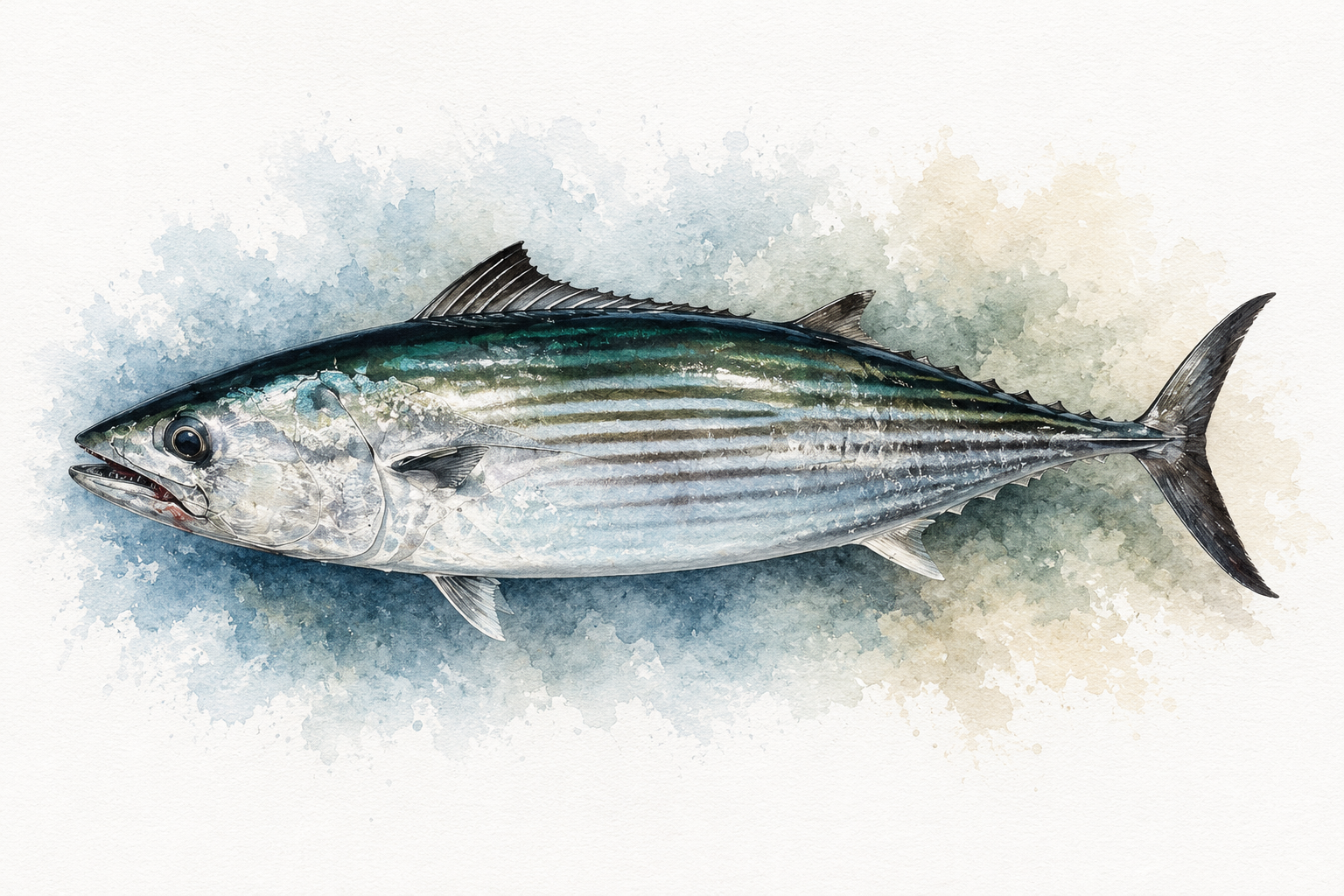
Australian bonito are a fast, schooling pelagic that sit in an interesting middle ground for anglers: small enough to be overlooked by some offshore fishers, but important enough that once they turn up in numbers, they change how everything else in the water behaves. They are most often encountered around headlands, beaches, and nearshore reef systems along the east coast, where bait concentrations and current lines bring them within casting range.
They’re a fish that rewards timing more than technique. When they are in, they are usually very accessible. When they’re not, you can fish the same ground with the same gear and not touch one. Understanding that pattern is the difference between consistent captures and random hookups.
The core of bonito fishing in Australia is simple: match their speed, match their food source, and fish where current, bait, and structure converge.
Tackle and Rigs
Bonito are built for speed and resistance in open water, so tackle needs to reflect that. Light spinning gear works, but not finesse gear. A typical setup sits in the 4–8 kg class, with a fast taper rod capable of casting metal slices or small stickbaits long distances into wind or current.
Main line is best run in braid for casting distance and direct contact. A fluorocarbon leader in the 20–30 lb range is standard around reefy headlands, not because bonito are leader shy, but because their runs often track through structure and wash zones where abrasion becomes the limiting factor.
The most reliable rigs are simple:
- Unweighted pilchard on ganged hooks
- 20–40 g metal slice lures
- Small stickbaits and poppers (surface feeding schools)
- Weighted bait for deeper current lanes
A common mistake is underestimating how quickly bonito move through an area. Gear that allows fast repositioning and immediate recasting consistently outperforms anything that requires slow presentation or setup.
Hook strength matters more than finesse. Bonito hit hard, often at speed, and multiple hook-ups in a school are common. Weak hooks cost fish more often than leader choice.
When to Use Lures
Lures are the primary method for targeting Australian bonito when they are actively feeding or moving along structure.
Metal slices remain the most consistent option because they match the speed and flash of escaping baitfish. Retrieval should be fast, but not mechanical—vary speed and add brief pauses. Bonito often strike on the pause rather than the retrieve itself, especially when bait is pressured.
Stickbaits and small poppers become effective when fish are feeding higher in the water column or pushing bait into surface schools. The key is not the action alone, but placement: cast slightly ahead of moving schools and retrieve across their path rather than into the centre of them.
Avoid slow rolling retrieves. Bonito are visual predators with a strong reaction to erratic movement. A steady retrieve often gets followed but not eaten. Speed change is what triggers the strike.
When bonito are feeding under birds or working bait balls, casting accuracy becomes more important than lure selection. A well-placed average lure will outperform a premium lure that misses the zone.
Time of Day
Bonito activity is closely tied to baitfish movement rather than light level alone.
Early morning is consistently productive when bait schools push into shallow reef edges or headland points overnight. Late afternoon can also produce short, sharp feeding windows as bait repositions before dusk.
Midday fishing is not ineffective, but it becomes more condition-dependent. On overcast days with steady current movement, bonito will continue feeding throughout the day. On bright, calm days, activity tends to concentrate around current lines and pressure edges.
They are not strictly low-light feeders in the way some pelagics are. Instead, they respond more strongly to bait visibility and current positioning.
Common Mistakes
The most common mistake is fishing too slow. Bonito are not ambush feeders sitting in structure waiting for bait to come past. They are active, mobile feeders that track bait schools. Static presentations or slow retrieves miss the majority of feeding fish.
Another frequent issue is poor coverage of water. Anglers often stay fixed on one point, when bonito schools are moving constantly along gutters, reef edges, or current lines. If you are not getting strikes within a short window, the fish have usually moved on rather than shut down.
Leader failure is also common, not because of line class, but because fish are fought through wash zones and reef edges. Short leaders combined with tight drag settings lead to pulled hooks or cut-offs.
Finally, anglers often underestimate how quickly bonito schools can be pressured. Once a school is hooked and released several times, they can become cautious for short periods, dropping deeper or moving wider off structure before reappearing.
Bait Fishing Applications
Why Australian Bonito Make Excellent Bait
Australian bonito sit in the upper tier of pelagic bait species because they combine three things that consistently trigger predatory response: high oil content, strong swimming action when alive, and a firm flesh structure that holds well under pressure.
Their natural behaviour as fast-moving baitfish translates directly into effectiveness once deployed. Predators respond to both the vibration of a struggling live bonito and the strong scent trail produced when cut or damaged. Compared to softer baitfish, bonito maintain integrity in current and do not immediately wash out, which keeps them effective for longer drifts or extended bottom deployments.
They are particularly effective in situations where larger pelagics are actively hunting schooling bait, rather than scavenging.
Best Target Species
Australian bonito consistently perform as bait for mid-to-large offshore and inshore predators that key in on fast-moving pelagic prey.
They are most effective for:
- Yellowtail kingfish around reefs, headlands, and pinnacles
- Mulloway in coastal gutters and estuary mouths
- Spanish mackerel and school mackerel in current lines and reef edges
- Cobia around structure, floats, and bait aggregations
- Large snapper in deeper reef systems where bait is actively moving
- Tuna species when fish are feeding on small pelagics in open water
- Samson fish and amberjack around offshore structure
Their strength lies in situations where predators are actively tracking bait rather than holding tight to structure. In those conditions, bonito outperform softer-bodied baitfish that break down too quickly or lose swimming action.
Live Bait Techniques
Live bonito are highly effective but require deliberate rigging due to their strength and constant movement.
Recommended approaches:
- Nose-hooking through the hard cartilage for free-swimming presentations
- Bridle rigging for extended survival and natural swimming action
- Single hook through shoulder for controlled depth fishing
- Balloon or float presentation when fishing surface-feeding predators
- Downrigger or weighted balloon systems for mid-water targeting kingfish and tuna
Hook placement changes behaviour significantly. Nose-hooked fish swim strongly but can tire faster in heavy current. Bridle rigging preserves natural movement longer and is preferred for extended drifts or slow presentations.
They are best deployed into active fish zones rather than used as search baits.
Dead Bait Applications
Dead bonito remain highly effective due to their oil content and flesh density.
Key presentations include:
- Whole butterfly fillet for bottom species like snapper and mulloway
- Whole strip bait for drifting reef edges and current lines
- Chunked sections for berley trails and shark fishing
- Whole dead bait for trolling or slow drifting in pelagic zones
Freshness is critical. Bonito lose effectiveness once flesh softens or oils dissipate. Immediate icing after capture dramatically improves bait performance.
For offshore bottom fishing, butterflied bonito often outperforms many premium reef species because it releases a sustained scent trail while remaining intact long enough for multiple bait-eating interactions.
Preparing the Bait
The effectiveness of bonito as bait is heavily influenced by how it is handled immediately after capture.
Best practice includes:
- Immediate bleeding to reduce blood clotting and preserve flesh quality
- Rapid icing in saltwater slurry to maintain firmness
- Avoiding bruising during handling, which accelerates breakdown
- Cutting only when required rather than pre-preparing large volumes
- Keeping fillets intact where possible for maximum oil retention
Freshness directly correlates with strike rate, particularly for kingfish and pelagic species that respond to strong oil dispersal.
Transport and Storage
Bonito degrade faster than many other pelagic bait species if not properly stored.
Recommended methods:
- Salt ice slurry for short-term use
- Drainage-friendly eskies to prevent waterlogging
- Vacuum sealing for frozen storage (best for strip baits and chunks)
- Whole freezing only when necessary, as structure breaks down on thaw
Live transport is rarely practical due to their oxygen demand and constant swimming pressure.
Collecting Bait
Bonito are typically not collected as bait using dedicated methods, but are instead captured incidentally while targeting other pelagics or deliberately caught on small metal lures, pilchards, or trolling feathers.
Most common capture scenarios include:
- Casting metal slices into surface feeding schools
- Trolling small lures along current lines and headlands
- Hooking up during mackerel or tuna encounters offshore
Once located, multiple fish are often taken quickly, which allows anglers to convert part of the school into high-quality bait for larger target species.
Practical Advice
Bonito are most valuable when treated as a time-sensitive resource rather than a general-purpose baitfish.
The biggest difference between average and effective use comes down to timing: using them immediately after capture while flesh and oils are at peak condition.
They excel when predators are actively feeding on moving bait, and they lose value quickly when stored poorly or allowed to break down.
In most offshore and coastal systems, a fresh bonito will consistently outperform frozen or older bait species when targeting fast-moving pelagics or structure-oriented predators.
The Bottom Line
Australian bonito are a reaction fish. They respond to movement, speed, and positioning more than subtle presentation. Success comes from reading bait activity and current lines rather than trying to hold fish in a fixed location.
If you find feeding birds, bait pushed tight to structure, or clean current seams along headlands and reefs, you are in the right area. From there, fast-moving lures, accurate casting, and constant repositioning will consistently outfish static approaches.
They are not a complicated species, but they are an unforgiving one if you fish too slowly or stay in the wrong spot for too long.