
Introduction
The Australian Beach Pipi (Plebidonax deltoides) is a surf-dwelling bivalve mollusc and an excellent natural bait for beach fishing. Found along exposed sandy coastlines of eastern and southern Australia, pipis are particularly useful for targeting Sand Whiting, Yellowfin Bream, Tarwhine and Surf Dart.
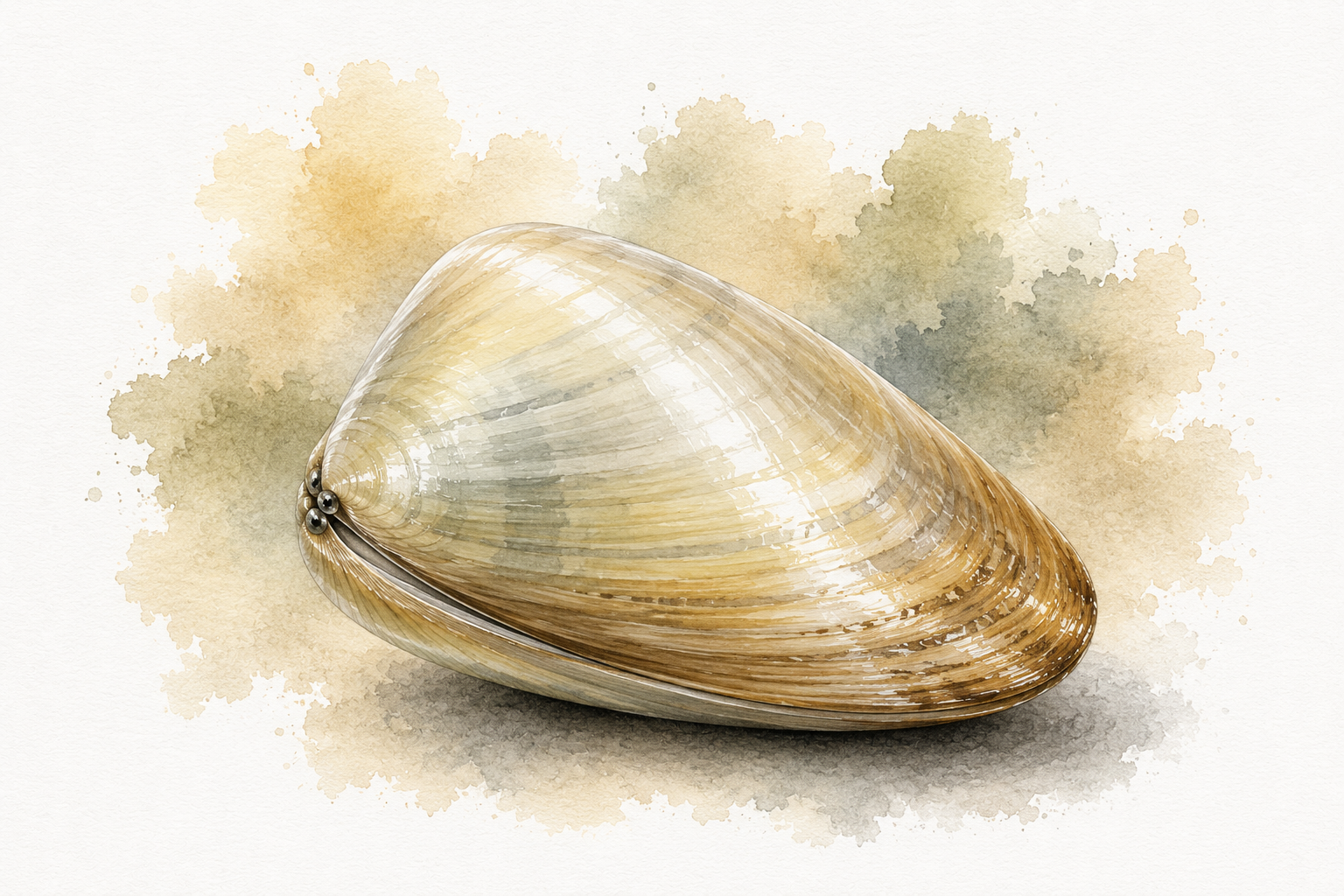
Pipis have a smooth, wedge-shaped shell, typically cream, yellowish, grey or brown, often with darker bands or patterns. Commonly encountered adults measure approximately 40–60 mm in shell length.
Unlike shellfish that attach themselves to rocks or other hard surfaces, pipis live buried in mobile beach sand. Their muscular foot allows them to burrow rapidly and reposition themselves as waves and tides reshape the shoreline.
For anglers, pipis provide a natural shellfish bait that many surf-zone fish encounter while feeding. Their soft flesh is readily accepted, although it requires more careful hook placement than tougher baits such as beach worms or squid.
Sourcing the Bait
Pipis inhabit exposed ocean beaches with mobile sand and regular wave action. They are generally associated with the intertidal surf zone, particularly areas of wet sand regularly covered and uncovered by breaking waves.
Productive pipi beds may occupy particular sections of a beach, while other areas within the species’ distribution contain few or none.
Finding and Collecting Pipis
A falling tide towards low water is often a practical time to search because it exposes more of the lower beach and provides access to damp sand near the wash.
Pipi twisting is a common collection technique on suitable surf beaches. Standing in the shallow wash, gently twist or shuffle your feet through the saturated sand until you feel a firm shell beneath the surface. Once located, uncover the pipi by hand.
Work progressively along the beach, adjusting your position as the tide changes. Pipis may be buried at different depths or concentrated in different parts of the surf zone depending on local conditions.
Pipis may also be located by carefully searching the damp sand with the hands.
A small bucket or suitable container is useful for carrying collected pipis. Keep the catch shaded and cool rather than leaving it exposed on the beach.
Understanding Seasonal Movement
Research on NSW beaches has documented seasonal changes in where pipis occupy the surf zone. During warmer periods, some populations may be concentrated lower in the swash zone, while winter observations have recorded pipis farther up the intertidal beach.
Consequently, pipis can remain present even when they are difficult to locate in areas accessible to collectors.
Collection opportunities also vary with beach shape, wave conditions and the position of established pipi beds. Seasonal ratings describe broader collection conditions rather than guaranteeing pipis at a particular beach.
Buying Pipis
Where local collection is impractical, fresh or frozen pipis may be available from bait suppliers.
Whole pipis retain their shells until preparation, while pre-shucked pipi meat provides a convenient alternative.
Availability varies between suppliers and regions.
Recognising Quality
Fresh pipis should have intact shells and flesh that is firm enough to handle without immediately breaking apart.
For live pipis, shells that close when disturbed are generally a useful sign of responsiveness. A shell that remains open is not automatically proof that the animal is spoiled, but pipis that are unresponsive or show obvious deterioration should be rejected.
Once opened, the flesh should have a mild marine smell rather than a strong sour or putrid odour.
The muscular foot is normally firmer than the surrounding soft tissue. This is particularly useful for fishing because it provides a stronger point for securing the bait to a hook.
Colour can vary naturally, so it should not be used as the sole indicator of quality.
Frozen pipi meat can remain effective as bait, although thawing may soften the flesh and reduce its durability during casting.
Storage and Care
Pipis intended for immediate use should be kept cool and protected from direct sunlight.
For short-term transport, keep live pipis cool, shaded and protected from drying out. A ventilated container with clean, seawater-dampened material can help maintain moisture during the trip home or to the fishing location.
This is a short-term transport method, not a reliable long-term holding system. Avoid freshwater, stagnant water and direct contact with melting ice.
Refrigerate pipis intended for prompt use, or prepare and freeze the flesh if they will not be used soon. Live pipis should not be sealed in an airtight container.
Freezing Pipi Meat
Shucked pipi meat can be frozen in small portions suitable for individual fishing sessions.
Remove excess liquid before packing, use suitable sealed containers or freezer bags, and label the contents with the freezing date.
Dividing the meat into smaller portions avoids repeatedly thawing a large supply.
Thaw frozen pipi meat in the refrigerator or a cool insulated container rather than leaving it in direct sunlight.
Fresh pipi flesh is generally easier to secure to a hook. Frozen and thawed flesh may become softer, making smaller portions or a few turns of bait elastic useful when preparing it for fishing.
Preparing the Bait
Pipis are generally fished without their shells.
To remove the flesh, carefully insert a suitable shellfish knife between the shell halves near the edge. Work the blade gently to separate the shells and release the flesh without unnecessarily damaging it. Tightly closed shells may require some patience rather than force.
Once opened, lift out the flesh, retaining the firmer muscular foot where possible.
The entire soft body can be used as bait. There is generally no need to remove individual organs or trim away substantial portions of usable flesh.
Whole Pipi
A whole pipi refers to the entire soft body removed from its shell.
This presentation is suitable when a larger bait is required, particularly for bream, tarwhine or larger surf fish.
The flesh can be folded around the hook so that the firmer muscular foot helps anchor the softer tissue.
Cut Pipi
For smaller hooks or more cautious fish, cut the flesh into portions appropriate to the hook size.
A smaller piece is often sufficient for whiting and dart, particularly when fish are feeding on small shellfish fragments in the wash.
Try to retain some of the firmer muscular tissue in each portion, as this improves the bait’s ability to remain attached.
Bait Elastic
Pipi flesh is comparatively soft. For longer casts or stronger surf, a few light turns of bait elastic can help hold the flesh together.
Avoid wrapping the bait so heavily that it becomes a compact, unnatural lump.
How to Rig It
Pipis work well on conventional beach-fishing rigs, including running-sinker rigs and paternoster arrangements.
The most important consideration is securing the soft flesh without creating an oversized bait that conceals the hook.
Hook Placement
For smaller portions, pass the hook through the firmer muscular foot before folding the softer flesh along the shank. If the bait is large enough, a second pass through the flesh can help secure it.
Keep the hook point exposed and avoid bunching too much flesh around the bend. Where the bait is particularly soft, a few light turns of bait elastic can help it withstand casting.
Match the amount of flesh to the hook size and target species. A compact piece is generally preferable for whiting and dart, while larger portions can be used for bream and tarwhine.
Running-Sinker Rig
A running-sinker rig is a practical choice for whiting and bream in manageable surf.
Present a small portion of pipi flesh close to the sandy bottom, using enough sinker weight to maintain an effective presentation.
This arrangement is particularly useful in shallow gutters and sandy channels where fish are searching for natural food.
Paternoster Rig
A paternoster rig is useful when fishing gutters or stronger surf, particularly where keeping the bait in position is important.
It also allows anglers to present two smaller pipi baits at different positions above the sinker, where permitted.
Pipi flesh can tear away during forceful casts, so secure larger or softer portions with a small amount of bait elastic when necessary.
Fishing the Surf Zone
Pipis are particularly suited to fishing gutters, shallow channels and areas where breaking waves disturb the sand.
Fish often patrol these areas looking for dislodged shellfish and other food washed out of the substrate.
Long-distance casting is not always necessary. A productive gutter close to shore can be more useful than deeper water beyond the feeding zone.
Inspect the bait regularly, as small fish and repeated wave action can strip soft flesh from the hook without producing an obvious bite.
Best Fish to Target
Sand Whiting
Sand Whiting are among the most suitable targets for pipi bait.
They feed over sandy substrates and readily take small portions of natural shellfish.
Use a small, neatly presented piece of pipi flesh on a suitable fine-wire hook. A light running-sinker rig is effective when fishing shallow gutters and sandy channels.
Avoid covering the hook with an unnecessarily large mass of flesh. A compact presentation is generally easier for whiting to take.
Yellowfin Bream
Yellowfin Bream readily feed on molluscs and other invertebrates around surf beaches, estuary entrances and sandy coastal environments.
A whole small pipi or a substantial portion of a larger one provides a useful bait.
A running-sinker rig allows the bait to settle naturally along the bottom, particularly around the edges of gutters and areas where waves expose food.
Bream can pull apart soft baits, so secure the flesh through the firmer muscular section and check it regularly.
Tarwhine
Tarwhine are well suited to pipi bait because they naturally feed on bottom-dwelling invertebrates, including molluscs.
They are commonly encountered around sandy surf beaches and adjacent coastal habitats.
A whole small pipi or a generous cut portion can be fished close to the bottom using a running-sinker or paternoster rig.
The bait should be large enough to remain securely attached without completely concealing the hook.
Surf Dart
Surf Dart actively feed in the turbulent wash of exposed beaches, taking small invertebrates and food dislodged by wave action.
Pipi flesh is a suitable bait when presented in the shallow surf zone.
Smaller portions are generally practical, particularly when dart are feeding aggressively in gutters or along the edges of breaking waves.
Use enough sinker weight to keep the bait fishing effectively without unnecessarily compromising bite detection.
Other Species
Dusky Flathead and Mulloway may also take pipi bait opportunistically, particularly when feeding around sandy gutters or estuary entrances.
However, pipis are not generally the first-choice bait for deliberately targeting larger predatory fish. Larger fish are more commonly pursued using suitable fish, squid or other substantial bait presentations.
Common Mistakes
Searching the wrong part of the beach
Pipis can shift their position within the surf zone. Searching only the dry upper beach or repeatedly working an unproductive section may miss accessible populations elsewhere along the wash.
Concentrate on suitable damp sand and adjust your search with the tide and prevailing beach conditions.
Using oversized portions
A large lump of soft pipi flesh can overwhelm a small hook and make it difficult for whiting or dart to take the bait cleanly.
Match the portion to the hook and target species rather than using an entire pipi automatically.
Poor hook placement
Hooking only the softest tissue can allow pipi flesh to tear away during casting. Anchor the bait through firmer tissue where possible.
Casting too aggressively
Pipi flesh can tear away under the sudden acceleration of a forceful cast.
Where longer casts are necessary, secure the bait with a small amount of bait elastic and use a smooth casting action.
Leaving stripped bait in the water
Small fish can remove pipi flesh quickly, particularly in active surf.
Check the bait when bites stop or after a period of repeated small taps.
Allowing bait to deteriorate
Warm temperatures and poor storage can quickly reduce the quality of soft shellfish bait.
Keep unused pipis cool and prepare only the amount required for the immediate fishing session.
The Bottom Line
Australian Beach Pipis are an excellent natural bait for surf fishing, particularly when targeting Sand Whiting, Yellowfin Bream, Tarwhine and Surf Dart.
Their main advantages are their natural association with sandy surf habitats, their appeal to bottom-feeding fish and their suitability for straightforward beach-fishing rigs.
The principal limitation is durability. Pipi flesh is soft and can be stripped from the hook or damaged during forceful casting, making careful hook placement and appropriately sized portions important.
Where established populations occur, pipis can provide anglers with an effective locally sourced bait. Fresh or frozen pipi meat is also a practical alternative when collection is not possible.