
Introduction
Few freshwater fish divide opinion among Australian anglers quite like the European carp. Introduced to Australia during the 1800s, carp have since spread through many of the country’s inland waterways, becoming one of the most successful—and controversial—freshwater fish species in Australia.
While they’re widely recognised for their impact on native ecosystems, carp also offer surprisingly accessible fishing. They occur in everything from suburban lakes and irrigation channels to major inland rivers, are readily caught on simple tackle and provide an excellent opportunity for beginners to develop fundamental freshwater fishing skills. Larger specimens are also remarkably powerful, capable of long, sustained runs that can quickly expose weaknesses in tackle or technique.
Understanding where carp live, how they feed and how environmental conditions influence their behaviour will dramatically improve your success. Although they have a reputation for feeding almost anywhere, consistently catching larger fish requires observation, patience and an understanding of their daily movements.
Identification
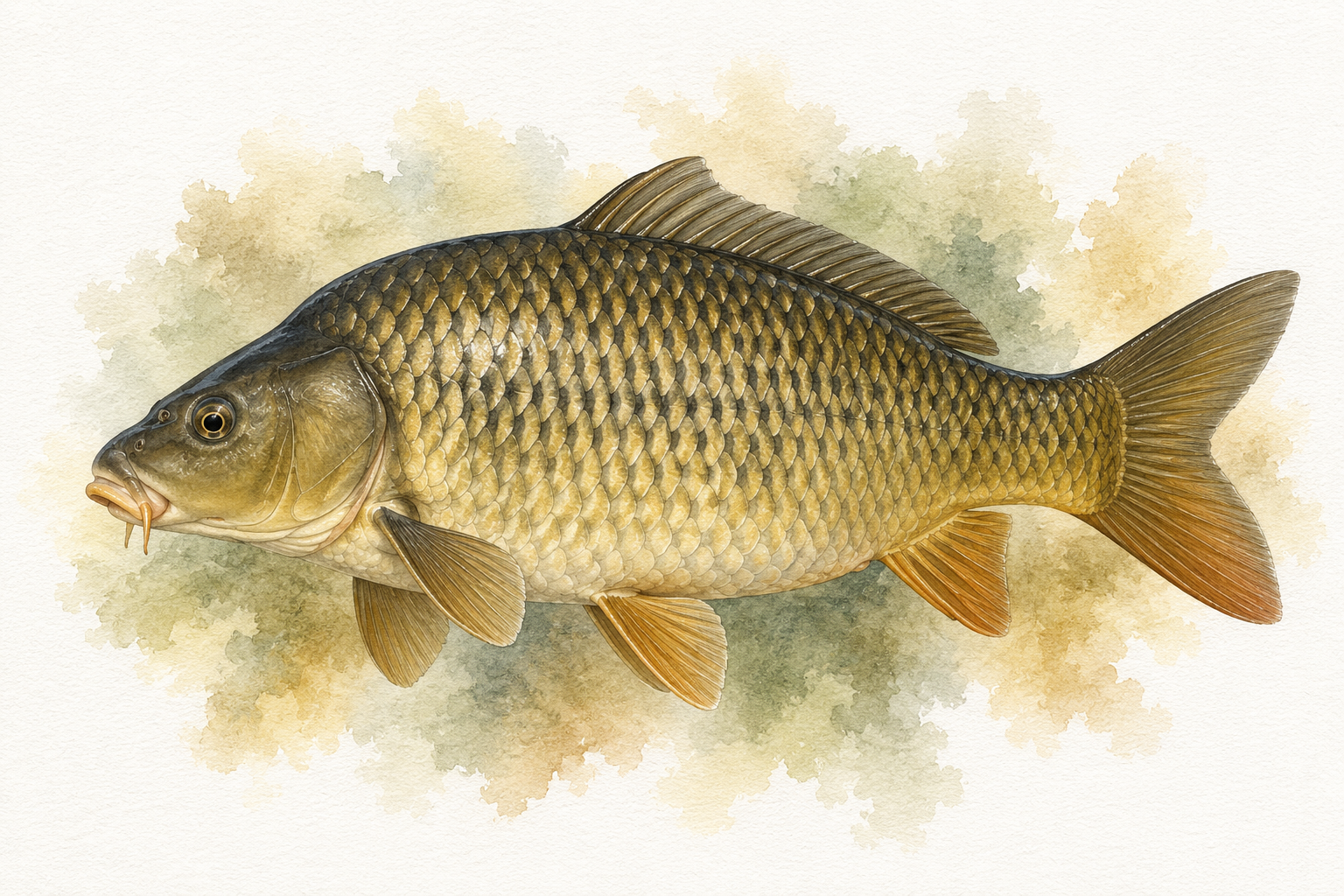
European carp are deep-bodied freshwater fish with large bronze to olive scales, a pale yellow or cream belly and a long dorsal fin running much of the length of the back. One of their most distinctive features is the pair of fleshy barbels on either side of the mouth, which they use to locate food while feeding along the bottom.
Their mouth is highly specialised for vacuum-feeding. Rather than biting prey, carp extend their lips and suck up mud, gravel and organic material before sorting edible items from debris. This feeding behaviour often creates muddy plumes or patches of bubbling water that reveal actively feeding fish.
Several domesticated forms exist, including mirror carp and leather carp, which have reduced or irregular scale patterns. Anglers may also encounter escaped ornamental koi, which are simply colourful domesticated varieties of the same species. Bright orange, white or mottled fish occasionally appear alongside wild bronze-coloured carp in Australian waterways.
Carp are sometimes mistaken for native species such as Murray cod or golden perch by inexperienced anglers, particularly when viewed from above in muddy water. The combination of a deep body, long dorsal fin and unmistakable barbels quickly separates carp from Australia’s native freshwater fish.
Habitat
One of the reasons European carp have become so widespread is their remarkable adaptability. They thrive in habitats that would challenge many native fish, including slow-flowing rivers, floodplain wetlands, irrigation channels, reservoirs, farm dams and urban lakes.
Carp show a strong preference for areas with soft muddy bottoms where they can easily forage for worms, insect larvae, freshwater mussels, crustaceans and plant material. Weed beds, reed edges, flooded grasses and submerged timber provide both food and security, making these areas consistent places to begin searching.
During calm conditions, carp frequently move into very shallow water, sometimes feeding in less than half a metre of depth. These fish can often be located by the characteristic clouds of stirred-up mud, patches of bubbles rising to the surface or the occasional flash of a broad bronze back as they cruise along the bank.
As the day becomes brighter or when disturbed by heavy foot traffic, boating activity or sudden changes in water levels, larger carp commonly retreat into nearby deeper water before returning to feed once conditions settle again.
Seasonal changes also influence habitat selection. Spring and early summer see large numbers of fish moving into shallow vegetated areas for spawning, while winter often finds them holding in deeper, slower-moving water where temperatures remain more stable.
Rather than wandering aimlessly, carp generally move along predictable feeding routes between resting areas and productive feeding grounds. Anglers who spend time observing these movements often enjoy far more success than those who continually cast into random sections of water.
Tackle and Rigs
One of the greatest advantages of carp fishing is that expensive equipment is rarely necessary. A light to medium freshwater spinning outfit matched with 4–8 kg line is capable of handling the vast majority of Australian carp while still allowing enjoyable fights.
Longer rods provide improved casting distance when fishing open lakes or reservoirs, while shorter outfits are easier to manage around heavily vegetated riverbanks and small creeks.
Running sinker rigs remain one of the most reliable presentations. Allowing the fish to move away with minimal resistance helps cautious carp confidently take the bait before the hook is set. Light leaders and appropriately sized hooks generally produce better results than oversized tackle, particularly in clear water where larger fish can become surprisingly wary.
Float fishing is another highly effective technique, especially when targeting shallow feeding carp along reed beds, weed edges and flooded grasses. Suspending bread, corn or worms naturally above the bottom allows anglers to present baits directly in the path of cruising fish.
Many experienced carp anglers also reduce unnecessary terminal tackle. Smaller swivels, lighter sinkers and finer leaders often produce noticeably more bites without significantly increasing the risk of losing fish.
Patience is equally important. Carp commonly inspect a bait several times before committing, and striking too early is one of the most common reasons anglers miss opportunities.
When to Use Baits
Although carp can occasionally be caught using artificial presentations, bait fishing remains by far the most productive and consistent approach in Australian waters.
Sweetcorn has earned its reputation as one of the most reliable carp baits available. Its bright colour, natural sweetness and ability to remain securely on the hook make it an excellent option for both beginners and experienced anglers.
Bread is another proven bait, particularly in ponds, canals and urban lakes where carp regularly feed near the surface. Floating crusts can produce exciting visual fishing when fish are actively cruising shallow margins, while compressed bread fished on the bottom remains effective in rivers and reservoirs.
Worms provide a natural presentation that works throughout the year. Garden worms, scrub worms and tiger worms all appeal to carp feeding along muddy bottoms and are especially useful following rain when natural food becomes more abundant.
Commercial coarse fishing pellets, boilies and grain-based baits have become increasingly popular among dedicated carp anglers, particularly where larger, more cautious fish have become accustomed to natural food sources.
Successful bait presentation is usually more important than the bait itself. Carp often feed by slowly vacuuming food from the bottom, so lightly weighted rigs that allow baits to move naturally with minimal resistance consistently outperform heavy, rigid presentations.
Berleying can significantly improve results when used carefully. Small amounts of sweetcorn, soaked wheat, breadcrumbs or crushed pellets help establish a feeding area without satisfying the fish before they reach the hook bait.
Avoid the temptation to introduce excessive quantities of berley. A modest but regular approach generally attracts fish while keeping them actively searching for additional food.
When to Use Lures
Lure fishing for European carp remains a niche technique in Australia, but under the right conditions it can be surprisingly effective. Unlike predatory species that actively chase baitfish, carp generally feed by browsing the bottom or grazing on aquatic vegetation, insects and other small food items. That means conventional lure fishing techniques rarely produce consistent results.
The best opportunities usually occur when fish can be seen actively feeding in shallow, clear water. Sight-fishing allows anglers to place a lure or fly directly in front of an individual fish rather than relying on a reaction strike.
Small, naturally coloured soft plastics, lightly weighted nymphs and shrimp-style flies can all tempt feeding carp when presented with minimal movement. Rather than retrieving the lure continuously, allow it to settle naturally on the bottom before making subtle lifts or short hops that imitate disturbed aquatic invertebrates.
Surface presentations occasionally work when carp are feeding on floating bread or insects beneath overhanging trees, although these situations are relatively uncommon.
For most Australian anglers, lure fishing should be viewed as an enjoyable challenge rather than the most productive method. If the goal is simply to catch carp consistently, bait fishing remains the better option.
Time of Day
European carp can be caught throughout the day, but their feeding activity is strongly influenced by water temperature, light levels and fishing pressure.
During spring, summer and early autumn, the most productive periods are often early morning and late afternoon when water temperatures are comfortable and fish move confidently into shallow margins to feed.
On cooler days, particularly during winter, the opposite can be true. Waiting until the middle of the day allows the sun to warm shallow water slightly, encouraging carp to become more active after cold nights.
Cloud cover can also improve fishing by giving carp greater confidence to remain in open shallows for longer periods. Light winds that push warmer surface water and natural food into sheltered bays or reed-lined banks frequently create productive feeding zones.
Rapid weather changes often have the opposite effect. Strong cold fronts, sudden drops in water temperature or significant fluctuations in water levels can reduce feeding activity for several days.
Rather than focusing solely on the clock, successful carp anglers learn to recognise favourable conditions. Stable weather, warming water and actively feeding fish are far more reliable indicators than any particular hour of the day.
Common Mistakes
One of the biggest mistakes anglers make is assuming carp will bite anywhere simply because they are abundant. Even in heavily populated waterways, carp spend much of their time moving between feeding areas, and choosing poor locations often results in long periods without action.
Another common mistake is using tackle that is unnecessarily heavy. While large carp are powerful fish, oversized hooks, thick leaders and bulky sinkers can reduce bite rates, particularly in clear or heavily fished waters.
Many beginners also strike too quickly. Carp often mouth a bait, reject it and then return several times before committing. Allowing the fish time to properly take the bait usually leads to more secure hook-ups.
Poor observation costs anglers countless fish. Muddy plumes, bubbling water, waving reed beds and the occasional tail breaking the surface all provide valuable clues that carp are actively feeding nearby. Spending a few minutes watching the water before making the first cast is often more productive than casting immediately.
Finally, avoid constantly moving between locations. If signs of feeding fish are present, patience is often rewarded. A well-presented bait placed quietly in the right location usually outperforms dozens of casts into unproductive water.
Alternative Capture Methods
Bowfishing
In jurisdictions where it is lawful, bowfishing can be an effective method of controlling European carp populations. Success depends on clear water, calm conditions and accurately judging the refraction of light through the water’s surface. Because regulations differ between states and waterways, anglers should always confirm local laws before attempting bowfishing.
Eating Quality & Preparation
Although carp have a poor culinary reputation in Australia, that reputation is not always deserved.
Fish taken from clean rivers, reservoirs or cool freshwater impoundments can provide acceptable table fare when handled correctly. Carp from stagnant, muddy or heavily polluted waterways are generally far less desirable due to their stronger flavour.
Bleeding and icing fish immediately after capture improves eating quality. Removing the darker lateral flesh and trimming excess fat beneath the skin can also reduce the earthy flavour that many people associate with carp.
Carp contain numerous fine intermuscular bones, making filleting more challenging than many Australian freshwater species. For this reason they are often better suited to minced fish dishes, fish cakes or traditional European and Asian recipes where careful preparation removes much of the inconvenience.
Pest Species Management
European carp are recognised as one of Australia’s most damaging freshwater pest fish. Their feeding behaviour disturbs bottom sediments, increases water turbidity, uproots aquatic vegetation and can reduce habitat quality for native fish, frogs and aquatic invertebrates.
While recreational fishing alone will not eliminate carp from Australian waterways, anglers can still contribute to responsible pest management. Where permitted by local regulations, retaining captured carp rather than returning them to the water may assist broader control efforts.
Captured carp should never be transferred alive between waterways or released into dams, ponds or other catchments. Doing so risks establishing new populations and may breach biosecurity or fisheries legislation.
Anglers occasionally encounter escaped ornamental koi or other domestic carp varieties in the same waterways. Although visually striking, these fish are the same species and should never be relocated or released elsewhere.
Dispose of unwanted fish responsibly in accordance with local council or fisheries advice. Leaving fish on riverbanks, boat ramps or public areas creates unnecessary environmental and public amenity issues.
Conservation, Stewardship & Release
Unlike Australia’s native freshwater fish, stewardship for European carp centres on responsible pest management rather than catch-and-release.
Every angler can play a role by preventing the spread of carp into uninfected waterways. Never use live carp as bait, transport live fish between catchments or release unwanted fish into farm dams, lakes or rivers.
Equally important is protecting native fish habitat while targeting carp. Avoid damaging riverbanks, trampling sensitive vegetation or leaving discarded fishing line and rubbish behind. Healthy waterways benefit native species regardless of whether carp are present.
Responsible fishing is about more than catching fish—it also involves helping maintain the health of Australia’s freshwater environments for future generations.
Safety Considerations
European carp are often targeted in rivers, reservoirs and wetlands where slippery mud, steep banks and changing water levels can create hazards.
Take care when fishing from muddy edges, particularly after rain or during periods of high water, as unstable banks can collapse without warning. Remote inland locations may also involve long travel distances, limited mobile phone coverage and extreme summer temperatures.
If fishing from boats, kayaks or canoes, wear an appropriate personal flotation device and remain aware of submerged timber, shallow banks and changing weather conditions.
For more detailed advice on freshwater fishing safety, boating safety and planning trips into remote areas, refer to the relevant Oz Fish & Game Safety Hub articles.
The Bottom Line
European carp may never enjoy the reputation of Australia’s iconic native sportfish, but they remain one of the country’s most accessible and rewarding freshwater species to target. They are widespread, readily available, fight well on balanced tackle and provide an excellent opportunity for anglers to develop core freshwater fishing skills.
Consistent success comes from understanding carp behaviour rather than relying on luck. Learning to identify feeding signs, selecting productive habitat, presenting natural baits carefully and fishing during stable weather conditions will consistently outperform simply casting into open water.
At the same time, carp remind us that responsible angling extends beyond catching fish. Understanding their ecological impacts, preventing their spread and caring for the waterways they inhabit are all part of being a responsible Australian recreational angler.