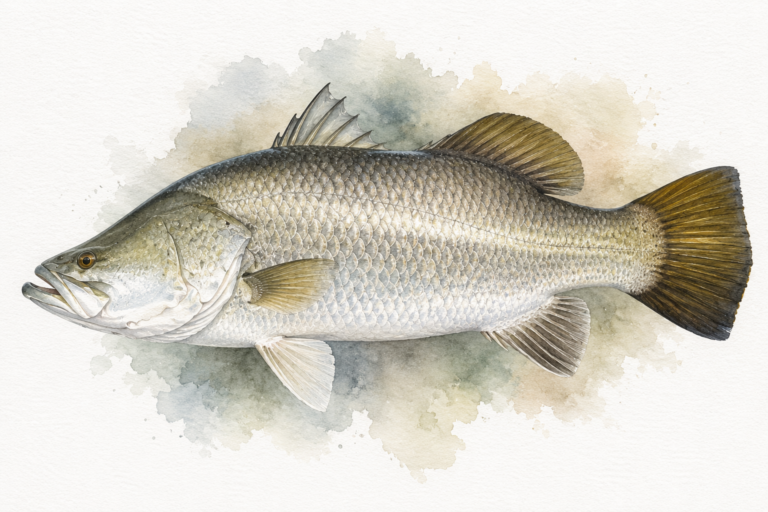
Murray Cod
Scientific name: Maccullochella peelii
Common names: Murray Cod, Cod
Average size: 60–90 cm (3–10 kg)
Trophy size: 100–140 cm+ (15–40 kg+)
Activity pattern: Ambush predator, most active during low light and after dark
Distribution and key locations (Australia)
Murray Cod are Australia’s largest freshwater fish and are found throughout the Murray–Darling Basin.
Prime regions
- NSW: Murray, Murrumbidgee, Macquarie and Lachlan systems
- VIC: Murray River, Goulburn, Ovens and Campaspe rivers
- SA: Lower Murray system
- QLD (southern): Border rivers and connected Murray-Darling tributaries
High-percentage areas
- Large timbered river systems
- Deep outside bends
- Rock bars and ledges
- Undercut banks
- Weir pools
- Reservoirs containing stocked cod
- Junctions where tributaries enter larger rivers
If there is heavy structure and slow-moving water, cod are usually nearby.
Habitat features to look for
Murray Cod are structure addicts. They rarely sit in open water unless actively feeding.
Key structure
- Large fallen trees
- Log jams
- Root balls
- Undercut clay banks
- Rock walls
- Boulder fields
- Deep timber-lined holes
Water conditions
- Slow to moderate flow
- Slightly coloured water
- Stable river levels
- Oxygenated water during warmer months
The biggest cod often occupy the biggest piece of structure available.
Seasonal patterns
Best seasons
- Spring: September–November
- Summer: December–February
- Early autumn: March–April
Why spring and summer?
- Water temperatures increase activity
- Fish feed aggressively after winter
- Surface lure fishing becomes effective
- Cod move further from structure to hunt
Winter fish can still be caught, but they are generally less active and more structure-bound.
Weather and tides (critical)
Unlike mulloway, cod are not controlled by tides. They respond more strongly to river conditions.
Ideal conditions
- Stable barometer
- Slight water colour
- Warm water temperatures
- Light winds
- Consistent river flows
Avoid
- Rapid rises in river level
- Extremely muddy floodwater
- Sudden cold fronts
- Heavy fishing pressure on small stretches
Best bite windows
- Dawn
- Dusk
- First few hours after sunset
- Overcast days
Many trophy cod are caught in complete darkness.
Bait – what actually works
Cod are opportunistic predators that eat fish, yabbies, shrimp, birds, frogs and anything else they can overpower.
Top natural baits
- Large yabbies
- Bardi grubs
- Scrub worms
- Live shrimp
- Cheese (where legal)
- Large baitfish (check local regulations)
Bait rules
- Bigger baits generally attract bigger cod
- Present bait tight to structure
- Keep rigs simple
- Fresh bait consistently performs best
If your bait is sitting in open water, you’re probably not fishing where cod live.
Tackle and rigs
Rod and reel
- Rod: 5’6″–7′ baitcaster or spin rod
- Reel: 200–300 size baitcaster or 4000–6000 spin reel
- Line: 30–65 lb braid
- Leader: 40–100 lb fluorocarbon or mono
Terminal gear
- Strong octopus or circle hooks
- Heavy-duty swivels
- Minimal terminal hardware
Common rigs
- Running sinker rig
- Paternoster rig in deep holes
- Unweighted yabby presentation around timber
Cod hit hard and immediately head for cover. Heavy tackle is often essential.
Lures (when and why)
Lure fishing is arguably the most popular method for Murray Cod.
Effective lures
- Surface paddlers
- Wakebaits
- Surface crawlers
- Large spinnerbaits
- Chatterbaits
- Swimbaits
- Deep-diving hardbodies
When to use lures
- Dawn and dusk
- Night sessions
- Around timber
- Searching new water
- During warmer months
Accuracy is everything. A lure that lands beside structure will usually outfish one that lands a metre away.
Time of day
Best
- Dawn
- Dusk
- Night
Daytime
Large fish can still be caught during the day, particularly from deep timber, shaded banks, or during overcast conditions.
Many of the biggest cod feed under the cover of darkness.
Common mistakes
- Fishing away from structure
- Using tackle that is too light
- Retrieving lures too quickly
- Moving spots too often
- Ignoring shaded areas
- Not casting tight enough to cover
Most cod anglers lose fish because they give them too much room to reach timber.
Final rule of Murray Cod fishing
Find structure + shade + depth + food. Then put your lure or bait as close to the snag as possible.
Murray Cod are not roamers like pelagic fish. They are ambush predators that spend much of their lives around the same pieces of structure. If you can consistently place presentations into the heaviest cover, you’ll find the fish that most anglers never reach.