
Introduction
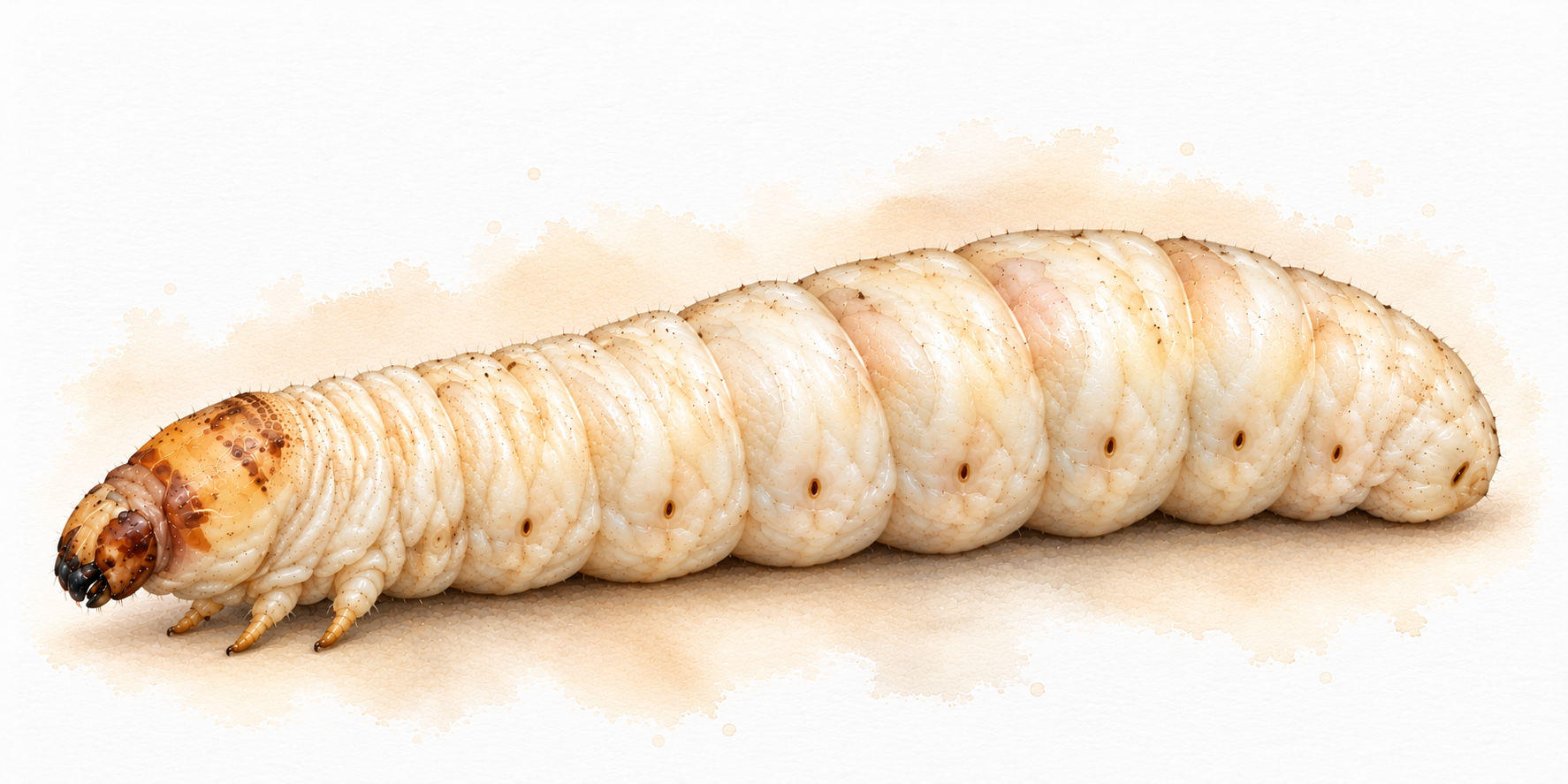
The Witchetty Grub is a large, pale, soft-bodied insect larva found in the roots of certain native Australian shrubs. The true Witchetty Grub is the larval stage of the wood moth Endoxyla leucomochla.
Large, fleshy grubs are highly regarded as natural bait for Murray Cod. Witchetty Grubs provide a substantial bait presentation, particularly when fishing around submerged timber, rocky structure and deeper holes.
Witchetty Grub or Bardi Grub? These names are sometimes used interchangeably, but they can refer to different wood moth larvae with different habitats and collection methods. See our Bardi Grub Guide for the related bait and its fishing applications.
Sourcing the Bait
True Witchetty Grubs are associated with the roots of suitable native shrubs, particularly Witchetty Bush (Acacia kempeana) and Small Cooba (Acacia ligulata).
Collection involves locating suitable host plants, exposing sections of their root systems and carefully extracting larvae from occupied root tunnels. The grubs are associated with the roots rather than living freely in the surrounding soil.
Finding a suitable shrub does not guarantee finding grubs. Collection can be time-consuming, particularly in hard, dry ground, and excavation may damage the host plant.
Witchetty Grubs are rarely sold by general tackle retailers, making direct collection the main practical sourcing option.
Recognising Quality
Choose grubs with a full, intact body and no obvious signs of deterioration.
A typical specimen has a pale, fleshy body and darker head. Larger, well-developed larvae provide a substantial bait, but an intact smaller grub is preferable to one damaged during collection.
Avoid badly crushed or ruptured specimens, which can be difficult to secure and may not withstand casting.
Storage and Care
Keep collected grubs in a secure, ventilated container away from direct sunlight and excessive heat.
Avoid overcrowding or crushing them during transport. Minimise handling and use fresh specimens where practical.
Preparing the Bait
Witchetty Grubs are generally best used whole.
Remove loose soil or plant material and select a grub suited to the hook being used. There is normally no need to cut or otherwise process the bait before fishing.
How to Rig It
A simple running-sinker rig is a practical option for presenting Witchetty Grubs to Murray Cod.
Carefully pass the hook through the tail end of the grub, leaving the hook point and barb exposed. Choose a hook suited to the size of the bait and avoid unnecessary damage to its soft body.
For larger grubs or when additional security is needed during casting, one or more loose half-hitches around the tail can help retain the bait. Avoid tightening the line enough to cut into the grub.
Use only enough sinker weight to reach and maintain the intended fishing position.
Rivers
In flowing water, adjust the sinker weight to account for current and depth.
Present the bait near submerged timber, deeper holes, rocky structure or current breaks where Murray Cod may hold. Position it close enough to the structure to be encountered by fish without unnecessarily increasing the risk of snagging.
Impoundments
In still water, a lightly weighted presentation may be sufficient.
Concentrate on submerged timber, rocky edges and changes in depth. Match the rig to the conditions rather than automatically using a heavy sinker.
Use controlled casts to avoid damaging the bait, and inspect it after missed bites or contact with structure.
Best Fish to Target
Murray Cod
Murray Cod are the primary target for Witchetty Grubs.
Large, soft-bodied grubs are a recognised natural bait type for cod, particularly when fished around submerged structure and deeper holding areas.
A whole grub presented on a simple bait rig provides a substantial offering. Suitable hook placement, appropriate sinker weight and positioning the bait near fish-holding structure are the main considerations.
Use tackle capable of controlling a hooked Murray Cod around timber, rocks and other obstacles.
Common Mistakes
Damaging the grub during collection: Rough extraction can rupture its body before it reaches the hook.
Poor hook placement: Repeatedly piercing the grub or concealing the hook point can compromise the presentation.
Using excessive sinker weight: More weight than necessary can make the rig cumbersome and increase snagging around structure.
Failing to inspect the bait: Grubs may tear or be partly removed during missed bites. Check the hook and replace damaged bait when needed.
The Bottom Line
Witchetty Grubs provide a substantial natural bait for Murray Cod, particularly when presented near submerged timber, rocky structure and deeper holding areas.
Their main limitations are sourcing difficulty and a relatively delicate body. Use fresh, intact grubs where practical, keep the rig simple and match the presentation to the water conditions.