
Introduction
The commercial scallop (Pecten fumatus) is one of Australia’s finest edible shellfish and supports valuable commercial fisheries across southern Australia. Although most Australians know scallops from seafood markets and restaurants, recreational divers in several states also have opportunities to legally collect them when fisheries are open and local regulations permit.
Unlike fish that are pursued with rods and reels, commercial scallops are gathered directly from the seabed. Success depends far more on understanding habitat, weather and water clarity than on specialised fishing tackle. Finding a productive scallop bed can reward divers with exceptional table fare, while poor planning often results in long dives over seemingly endless stretches of empty sand.
Because recreational opportunities vary considerably between states and are often affected by seasonal closures, responsible harvest and careful planning are just as important as collection skills.
Identification
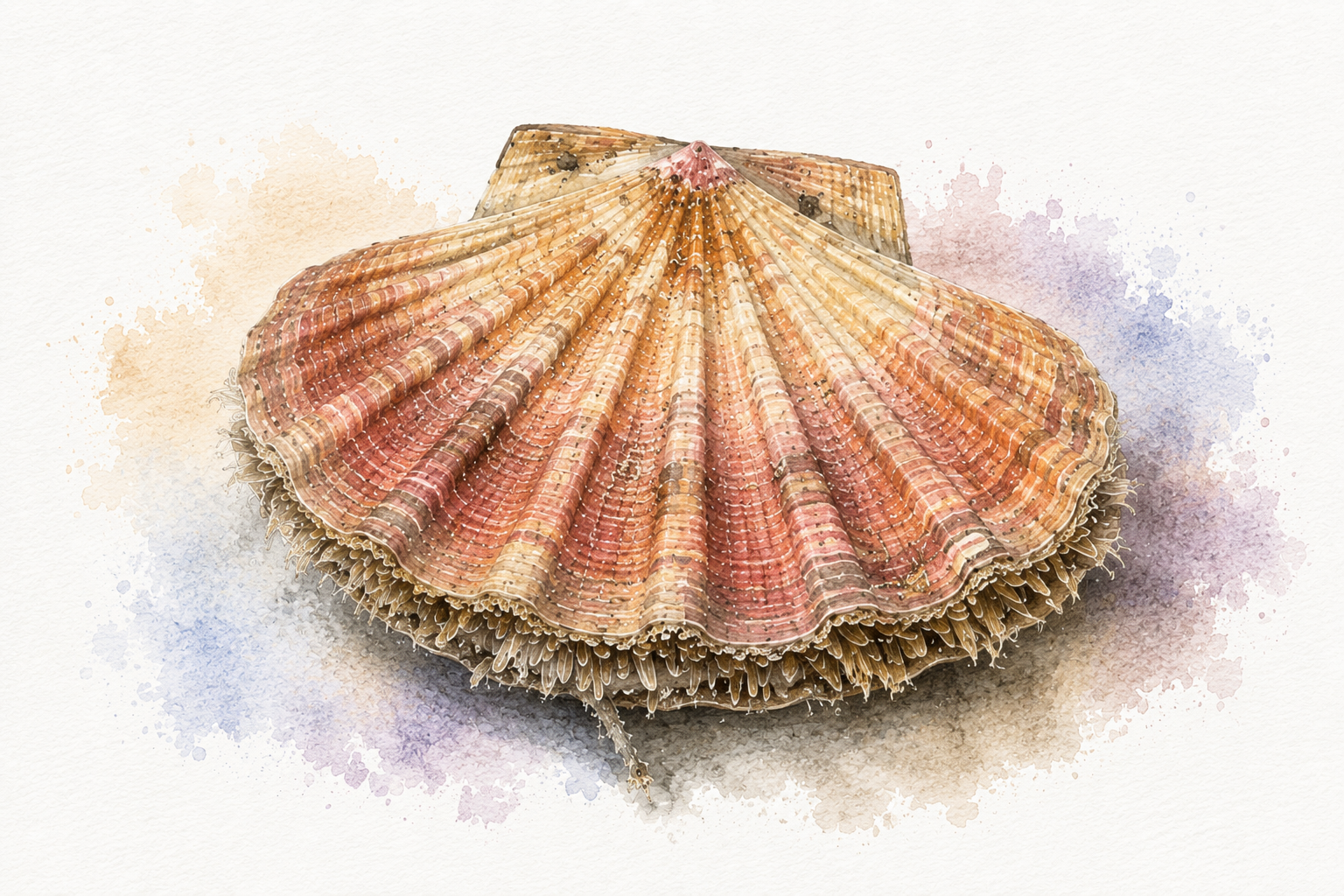
Commercial scallops have a broad, almost circular shell with two equal valves joined by a straight hinge. Adults are typically between 8 and 10 cm across, although larger specimens exceeding 12 cm are occasionally encountered.
The shell carries numerous pronounced radiating ribs extending from the hinge to the shell margin. Colour is extremely variable, ranging through cream, white, pink, orange, brown and reddish-purple, with many individuals displaying attractive mottled or banded patterns.
Unlike oysters or mussels, commercial scallops are not permanently attached to rocks or reefs. They rest freely on the seabed and are capable of swimming short distances by rapidly clapping their shells together, expelling jets of water to escape predators. Although this movement is surprisingly quick, most scallops simply close tightly or make a short burst away when approached by a diver.
Commercial scallops are most likely to be confused with doughboy scallops or queen scallops in parts of southern Australia. Paying attention to shell shape, rib pattern and local distribution helps avoid misidentification.
Habitat
Commercial scallops inhabit temperate coastal waters throughout southern Australia, where they form beds over relatively flat expanses of sand, shell grit and fine gravel. They generally avoid rocky reefs, kelp forests and heavy weed growth, instead favouring open seabeds where they can feed efficiently by filtering microscopic plankton from the surrounding water.
Many productive beds occur inside sheltered bays and large coastal embayments where moderate tidal flow continually supplies suspended food without stirring excessive sediment. Broken shell patches are often particularly productive, especially where they merge into clean sand.
Depth varies considerably between locations. Recreational divers generally encounter scallops in shallower portions of the species’ range, while commercial fisheries often operate much deeper. In suitable conditions, scallops may be found from around 10 metres, although many beds occur between 20 and 60 metres.
Water clarity is often the single biggest factor affecting success. Even healthy scallop beds can be extremely difficult to locate if suspended sediment limits visibility.
Collection Equipment
Commercial scallops require relatively little specialised equipment, but quality diving gear greatly improves both safety and efficiency.
Most recreational collectors use either snorkelling equipment in shallow water or scuba gear where greater depths are involved and regulations permit. A mesh catch bag allows scallops to be stored securely while preventing unnecessary sand accumulation.
Many divers also carry a simple measuring device to confirm legal shell sizes where minimum limits apply. Gloves can improve grip while protecting hands from rough shell edges, although they should never encourage careless handling.
Because scallop collection often involves boating to offshore grounds, reliable anchoring equipment, safety gear and a means of accurately marking productive beds are valuable additions.
Collection Methods
Unlike many shellfish, commercial scallops are usually collected individually from the seabed rather than prised from rocks or dug from sediment.
Divers slowly swim systematic search patterns over suitable habitat, scanning ahead for the distinctive outline of scallop shells resting on the bottom. Their colour often blends remarkably well with surrounding shell grit and sand, making careful observation essential.
Once located, scallops are simply picked up by hand and placed into a collection bag. Experienced divers quickly learn to distinguish live scallops from empty shells by checking whether the valves are tightly closed and respond when handled.
Where regulations permit recreational collection, always remain aware of possession limits and minimum legal sizes. Avoid unnecessary disturbance to surrounding habitat while searching.
Best Collection Conditions
Successful scallop diving depends far more on environmental conditions than on any particular collection technique.
Clear water dramatically improves search efficiency. Even moderate reductions in visibility can make otherwise productive beds appear empty simply because scallops become difficult to detect against the seabed.
Light winds and low swell create safer boating conditions while also reducing suspended sediment. Several consecutive days of settled weather often produce excellent underwater visibility.
Although tidal movement generally has less influence than for many fishing activities, slack water can make diving more comfortable by reducing current strength and improving bottom visibility.
Time of Day
Unlike many fish species, commercial scallops are not significantly influenced by feeding periods linked to sunrise or sunset.
Instead, divers should plan around favourable environmental conditions. Morning often provides calmer winds and smoother sea conditions before afternoon seabreezes develop, particularly during warmer months.
Choosing the right weather window is usually far more important than choosing the right time on the clock.
Common Collection Mistakes
One of the biggest mistakes new collectors make is searching unsuitable habitat. Extensive rocky reef, dense kelp or heavy seagrass rarely hold productive commercial scallop beds.
Poor visibility is another common cause of disappointing trips. Diving after strong winds or large swells often results in suspended sediment that makes locating scallops extremely difficult.
Many beginners also search too quickly. Scallops are naturally well camouflaged, and slowing down significantly increases the number spotted on each dive.
Another mistake is failing to carry a measuring device. Estimating shell size underwater is unreliable and can easily result in accidental retention of undersized scallops where size limits apply.
Finally, avoid collecting every scallop encountered. Leaving smaller individuals and taking only what you genuinely need helps maintain healthy breeding populations and improves the long-term quality of recreational fisheries.
Eating Quality & Preparation
Commercial scallops are widely regarded as one of Australia’s finest seafood species, prized for their sweet, delicate flavour and tender texture. The large white adductor muscle is the portion most commonly eaten, although the roe is also enjoyed by many people when harvested in season.
Freshness is critical. Scallops should be cleaned soon after collection, kept chilled and consumed promptly for the best eating quality.
Cleaning involves separating the shells, removing the digestive organs and retaining the edible muscle and, if desired, the roe. Careful handling helps preserve texture and flavour.
Because scallops cook extremely quickly, overcooking is one of the most common mistakes. Brief high-heat cooking generally produces the best results, allowing the natural sweetness of the meat to remain the focus.
Conservation, Stewardship & Responsible Harvest
Commercial scallops rely on healthy seabed habitats and successful annual recruitment to maintain sustainable populations. Natural fluctuations in abundance are common, which is why fisheries management often includes seasonal closures, area closures and harvest limits.
Take only what you need rather than harvesting your full legal limit simply because regulations allow it. Leaving healthy breeding stock contributes to future recruitment and benefits both recreational and commercial fisheries.
Avoid dragging equipment across sensitive seabed habitats or unnecessarily disturbing surrounding marine life while collecting. Careful finning techniques and responsible anchoring also help minimise environmental impacts.
Always comply with local fisheries regulations, including seasonal openings, size limits, possession limits and any closed areas.
Safety Considerations
Commercial scallop collection is generally safe when undertaken responsibly, but the greatest hazards usually come from the marine environment rather than the scallops themselves.
Offshore conditions can change rapidly. Strong winds, increasing swell and poor visibility all increase risk for both divers and boat operators. Always check marine forecasts before departing and avoid pushing weather windows.
Divers should use appropriate training and equipment for the planned depth, dive with a buddy whenever possible, and follow recognised safe diving practices, including careful ascent procedures and appropriate surface signalling.
Boat traffic may also present a hazard, particularly in popular coastal areas. Display the required dive flags where applicable and ensure a responsible surface lookout remains aware of nearby vessels.
Regulations Statement
Fishing regulations can vary between Australian states, territories and waterways. Size limits, bag limits, possession rules, collection limits, gear restrictions, protected areas and access restrictions may apply. Always check with your local fisheries department before fishing, collecting, retaining or relocating any species.
The Bottom Line
Commercial scallops reward careful planning rather than complicated techniques. Find clean sand or shell-grit seabeds, wait for calm weather and clear water, search methodically, and always collect within the relevant regulations. By taking only what you need and treating scallop beds with care, you’ll not only enjoy one of Australia’s best seafood species but also help ensure these productive fisheries remain healthy for future generations.