
Introduction
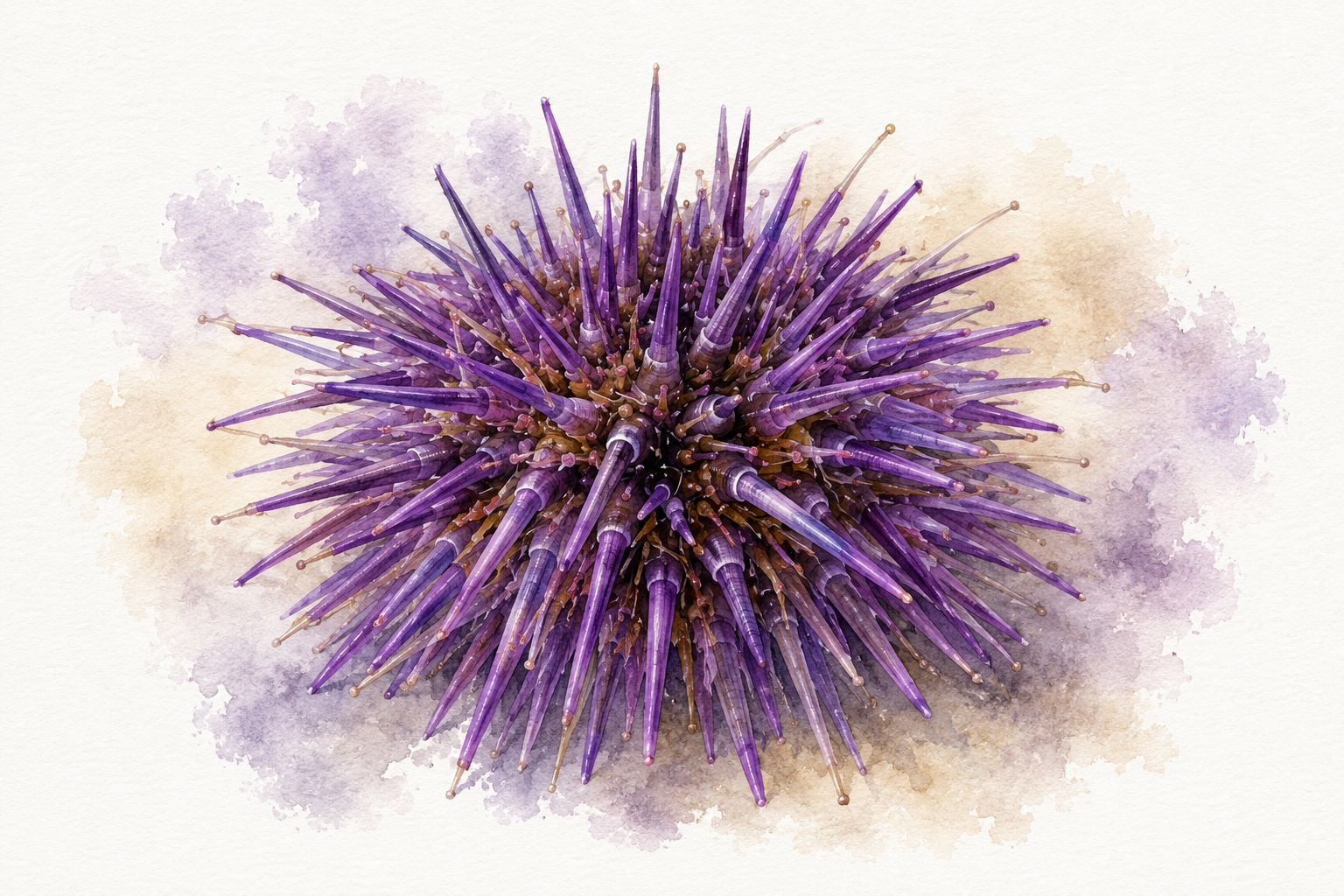
Purple sea urchins (Heliocidaris erythrogramma) are one of Australia’s most common temperate reef echinoderms, occurring on rocky coastlines from southern Queensland around the southern coast to Western Australia, including Tasmania. Their rounded purple shell, known as the test, is covered in short, sturdy spines and is a familiar sight to anyone exploring rock pools, diving shallow reefs or fishing around broken reef country.
Although many anglers simply regard sea urchins as part of the underwater scenery, they play an important role in coastal ecosystems. They graze continuously on algae growing across reefs and rocky ledges, helping shape marine habitats while also providing a natural food source for numerous fish, crabs, octopus and other predators.
For recreational fishers, purple sea urchins are valuable for two reasons. Their roe is considered a delicacy by many seafood enthusiasts, and freshly opened urchins can also provide an effective natural bait when targeting reef species that regularly feed on echinoderms. Understanding where sea urchins live and how they fit into the food chain can also help anglers identify productive reef systems likely to hold quality fish.
Identification
Purple sea urchins are easy to recognise once you know what to look for. The body consists of a rigid, almost perfectly round shell covered with numerous short, blunt spines that are usually deep purple, reddish-purple or maroon, although colour can vary between locations and individuals.
Unlike long-spined tropical sea urchins, this species has relatively compact spines that create a rounded appearance rather than a spiky silhouette. Mature specimens are typically about the size of a cricket ball, with the spines providing additional protection from predators.
The underside contains five rows of tube feet and a centrally located mouth equipped with five hard teeth, commonly referred to as “Aristotle’s lantern”. These specialised mouthparts allow the animal to scrape algae and other plant material directly from rock surfaces.
Purple sea urchins are most commonly found wedged into cracks, beneath rock ledges or clustered among boulders where their colour provides surprisingly effective camouflage against algae-covered reef.
Habitat
Purple sea urchins are strongly associated with hard reef habitat and are rarely encountered away from rock. They inhabit everything from intertidal rock pools and wave-washed platforms to deeper coastal reefs accessible by snorkelling or diving.
Areas supporting healthy growths of seaweed and marine algae are particularly productive because these plants form the bulk of the species’ diet. Reefs with plenty of crevices, broken rock and undercut ledges also provide protection from predators and heavy wave action.
Water movement is generally beneficial provided it is not excessive. Moderate surge continually delivers oxygen and nutrients while preventing sediment from smothering reef surfaces. In contrast, muddy estuaries, sandy flats and heavily silted environments rarely support significant populations.
For anglers, finding healthy populations of purple sea urchins often indicates a productive reef ecosystem. Species such as black drummer, blue groper, snapper, wrasse and octopus commonly forage around these same rocky habitats, making sea urchins another useful indicator when assessing new fishing locations.
Collection Equipment
Collecting purple sea urchins requires relatively simple equipment, but selecting the right gear makes the process considerably safer and more efficient.
Heavy-duty gloves provide valuable protection against sharp spines and abrasive reef surfaces while improving grip on slippery rocks. A sturdy collection bag or mesh catch bag allows water to drain while securely holding harvested urchins during longer walks across reefs.
Where collection involves snorkelling or diving, standard mask, snorkel and fins are generally sufficient for shallow reefs, while scuba equipment may be appropriate for deeper locations where permitted. Good footwear with reliable grip is essential when accessing exposed rock platforms, as algae-covered rocks become extremely slippery even in calm conditions.
Some collectors also carry a short scraper, blunt knife or similar tool to gently dislodge firmly attached specimens from rock without unnecessarily damaging surrounding habitat.
Collection Methods
Purple sea urchins are primarily collected by hand and require very little specialised equipment beyond suitable protective gear. The most productive approach depends largely on water depth, reef structure and tidal conditions.
Intertidal collection is often the simplest method. During a low tide, many urchins become accessible in shallow pools and along exposed reef platforms where they can be carefully lifted by hand while avoiding direct contact with the spines. Individuals sheltering deep within crevices may require patience rather than force, as excessive levering can damage both the reef and the animal.
Snorkelling expands the range of accessible habitat considerably. Many productive reefs remain permanently submerged, allowing collectors to search deeper gutters, bommies and ledges where larger specimens often occur. Clear water and calm seas greatly improve visibility and make locating urchins much easier.
Divers targeting deeper reefs generally encounter less disturbed populations but should only collect where conditions, experience and local regulations allow. Regardless of collection method, avoid taking damaged specimens and minimise unnecessary disturbance to surrounding reef habitat.
Best Collection Conditions
Success is influenced far more by environmental conditions than by the time shown on the clock.
Low tides expose extensive sections of reef that may otherwise remain underwater, making intertidal collection easier and safer. Calm seas and minimal swell also reduce wave action across rock platforms, allowing collectors to move more confidently while improving visibility beneath the surface.
Water clarity is another important factor. Clear water allows snorkellers and divers to identify productive reef structure from a distance and reduces the time spent searching individual crevices.
Season has relatively little influence on availability because purple sea urchins remain active throughout the year. Instead, experienced collectors usually plan trips around weather forecasts, swell conditions and tide charts rather than calendar dates.
Time of Day
Time of day is generally less important than tidal height and sea conditions.
Daylight provides the safest and most productive conditions, particularly for intertidal collection where good visibility helps identify footing, locate hidden crevices and avoid unnecessary contact with sharp spines.
Collectors using snorkelling or diving equipment also benefit from stronger natural light, which improves underwater visibility and makes identifying suitable specimens much easier.
Planning collection around a daylight low tide with calm weather will usually produce better results than focusing solely on morning or afternoon sessions.
Common Collection Mistakes
One of the most common mistakes is collecting wherever sea urchins are first encountered instead of searching for healthy reef systems. Larger, higher-quality specimens are often found on less disturbed reefs with abundant algal growth rather than heavily visited rock platforms.
Many inexperienced collectors also underestimate the hazards posed by slippery reef surfaces. Rushing between pools or turning attention away from incoming swell significantly increases the risk of falls and injury.
Another common mistake is handling urchins carelessly. Grabbing them firmly around the body often results in broken spines lodged in the skin. Careful lifting while wearing suitable gloves is both safer and more effective.
Finally, responsible collectors avoid unnecessary habitat damage. Levering rocks apart, breaking reef structure or collecting excessive numbers offers little long-term benefit and can reduce the quality of local reef environments for both marine life and future recreational users.
Bait Fishing Applications
Purple sea urchins are a niche rather than mainstream bait, but in the right locations they can be extremely effective. Many reef-dwelling fish naturally feed on sea urchins by crushing the shell to reach the soft internal tissue, making freshly opened urchins a convincing and highly natural offering.
Unlike many conventional baits, sea urchins are rarely used to attract large numbers of species. Instead, they are best suited to anglers specifically targeting fish that regularly forage across shallow reef systems and naturally consume echinoderms.
Best Target Species
Fresh sea urchin is most effective when targeting species that are adapted to feeding around rocky reefs. Depending on the region, productive target species may include:
- Black drummer
- Blue groper
- Bream
- Snapper
- Large wrasse
- Other reef-associated omnivores and crustacean feeders
Because these fish already encounter sea urchins as part of their natural diet, the bait is often accepted readily when presented around reef ledges, bommies or broken rock.
Preparing Sea Urchin as Bait
The edible tissue and roe are the most attractive parts of the animal for bait fishing.
Most anglers carefully crack the shell immediately before use and remove small portions of the soft internal tissue. Using fresh bait is important, as the scent and texture deteriorate relatively quickly once exposed to the air.
Smaller pieces are generally easier to secure to a hook while still providing enough scent to attract nearby fish.
Presentation
Sea urchin is usually fished close to the bottom around natural reef structure where target species actively forage.
Minimal weight often produces the most natural presentation, allowing the bait to settle naturally among rocks, kelp and broken reef. Heavy sinkers that drag the bait away from structure can reduce its effectiveness.
Because the bait is relatively soft, fine-wire or short-shank hooks are often easier to bait securely than large heavy-gauge patterns.
Practical Advice
Sea urchin should generally be viewed as a specialist bait rather than an everyday option.
If fish in a particular area regularly feed on sea urchins, matching that natural food source can produce excellent results when more conventional baits are ignored. However, in many locations, squid, prawns, cunjevoi, crabs or shellfish may provide similar or better results with far less preparation.
Where regulations permit collection, only harvest the number of sea urchins needed for immediate use and avoid unnecessary waste.
Eating Quality & Preparation
Purple sea urchins are harvested for their roe, commonly known as uni, which is considered a premium seafood in many parts of the world. The roe has a rich, creamy texture with a distinctive ocean flavour that ranges from mildly sweet to intensely briny depending on season, diet and location.
Only the roe is typically eaten. The shell is carefully opened to expose the internal organs, allowing the bright orange or yellow roe to be removed with a spoon or similar utensil. Fresh seawater is often used to gently rinse away loose debris without excessively washing the roe itself.
Quality varies considerably throughout the year. Well-conditioned sea urchins collected from healthy algal reefs generally produce larger, firmer roe than animals collected from poorer habitats or immediately after spawning.
Because freshness is critical, sea urchins are usually prepared soon after collection. They should be kept cool, protected from direct sunlight and handled carefully to preserve the delicate roe.
Conservation, Stewardship & Release
Purple sea urchins are a native component of Australia’s temperate reef ecosystems and play an important ecological role by grazing algae and providing food for numerous marine predators.
Responsible collection helps maintain healthy reef communities. Collect only what you intend to use, avoid damaging surrounding reef habitat and return undersized or unwanted specimens carefully to the location where they were found if local regulations permit.
Collectors should avoid breaking rock, removing attached marine growth unnecessarily or disturbing other reef organisms while searching for sea urchins. Healthy reef systems support a wide range of recreational fishing opportunities, and careful collection helps preserve those environments for future anglers.
Marine parks, aquatic reserves and other protected areas may prohibit or restrict collection. Always confirm local regulations before harvesting any marine life.
Safety Considerations
Although purple sea urchins are not aggressive animals, collecting them often involves environments that demand careful planning and sound judgement.
Their sharp spines can puncture skin and may break off if handled carelessly, causing pain and increasing the risk of infection. Wearing sturdy gloves and handling specimens gently helps minimise injuries.
The greater hazard is usually the surrounding environment. Purple sea urchins commonly inhabit slippery rock platforms, wave-washed reefs and shallow coastal ledges where changing swell conditions can quickly become dangerous. Collectors using snorkelling or diving equipment must also consider currents, water visibility, cold-water exposure and boat traffic.
For comprehensive advice on rock fishing safety, snorkelling, diving and coastal hazard awareness, refer to the relevant Oz Fish & Game Safety Hub articles.
Regulations Statement
Fishing and marine collection regulations can vary between Australian states, territories and waterways. Size limits, bag limits, possession rules, collection limits, gear restrictions, protected areas and access restrictions may apply. Always check with your local fisheries department before fishing, collecting, retaining or relocating any species.
The Bottom Line
Purple sea urchins are far more than simply another reef inhabitant. They are an important part of Australia’s temperate marine ecosystems, a sought-after seafood for those who appreciate fresh uni, and a specialised natural bait capable of producing excellent results on reef-dwelling fish.
Success begins with understanding the habitats they occupy. Healthy rocky reefs with abundant algae not only support good sea urchin populations but also attract many of the fish species that recreational anglers pursue. Learning to recognise these environments can improve both collection success and overall fishing outcomes.
Like any wild marine resource, purple sea urchins should be collected responsibly. Taking only what you need, minimising habitat disturbance and placing safety ahead of convenience ensures these productive reef systems continue to provide opportunities for future generations of Australian anglers and coastal explorers.