
EQUIPMENT AND NETS
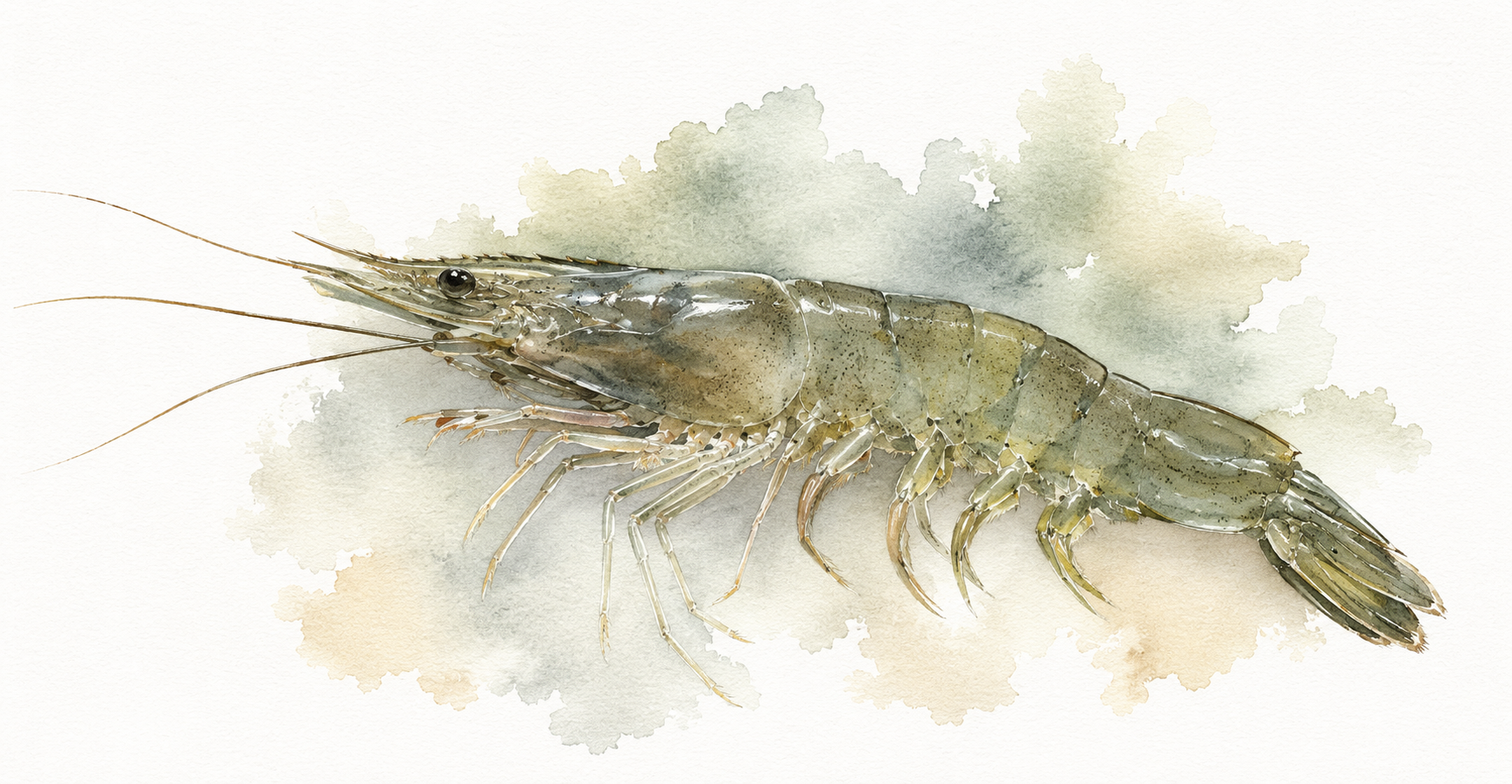
Eastern school prawns are harvested rather than angled, making specialised prawning equipment far more important than traditional fishing tackle. Fortunately, successful prawning generally requires only a handful of reliable tools and a good understanding of tides and prawn behaviour.
Most recreational prawners use a long-handled scoop net in conjunction with a submersible LED prawn light when wading or operating from small boats. Others prefer an LED headlamp fitted with a red-light mode when hand-scooping from a vessel. Where regulations permit, drag nets can also be highly effective in suitable habitats.
A bucket, live well or suitable storage container is essential for handling catches, while polarised sunglasses can help identify productive channels, drop-offs and access points during daylight scouting trips.
Fine mesh nets generally capture more prawns, lightweight designs reduce fatigue during long sessions and bright underwater lighting helps attract and concentrate migrating prawns. As regulations vary between states and waterways, all equipment should comply with local rules regarding net dimensions and usage.
Good prawning equipment is typically simple, reliable and comfortable enough to use repeatedly throughout the night.
TECHNIQUES
Modern recreational prawning revolves around understanding tides, darkness and migration behaviour. The most productive prawners focus on positioning themselves where prawns are already moving rather than attempting to search randomly throughout an estuary.
Spotlighting remains the classic eastern Australian prawning technique. Operating on dark nights, anglers suspend a submersible LED light beneath a boat or kayak to illuminate the surrounding water. As prawns become visible within the light beam, the net is positioned ahead of their travel path and used to guide them into the mesh. Smooth, deliberate movements consistently outperform aggressive chasing, which often spooks prawns away from the net.
Scoop-netting from a drifting boat is another highly effective method, particularly during migration runs. Fishing strong outgoing tides, drifting with the current and positioning over channels or river drop-offs allows prawners to intercept large schools as they move downstream. When migration activity is strong, catches can accumulate very quickly.
Bank-based scoop-netting also remains popular in estuaries and tidal rivers. Public wharves, jetties, boat ramps, channel edges and lake entrances frequently provide excellent access to migrating prawns, particularly when tidal flow pushes them past fixed positions.
TIDES
Tides are arguably the single most important factor influencing school prawn catches.
Outgoing tides consistently produce the highest catch rates, particularly during strong tidal runs and new moon periods. Many school prawns naturally migrate downstream with the current, allowing the tide itself to deliver prawns directly to waiting nets.
The first half of the run-out tide often provides exceptional action, while tide changes and several hours after sunset can also produce productive windows.
Experienced prawners commonly plan trips around tidal movement rather than specific dates, understanding that even excellent locations can perform poorly if tidal conditions are unfavourable.
TIME OF DAY
Eastern school prawns are primarily nocturnal and become significantly more active after sunset.
The most productive periods generally occur during the early evening and several hours after dark, particularly when warm water and strong tidal movement coincide with dark moon phases.
Daytime prawning is usually far less productive, although daylight hours can be useful for scouting channels, access points and likely migration routes before returning after dark.
For most recreational prawners, success increases dramatically once darkness falls and prawns begin moving more actively through the estuary system.
COMMON MISTAKES
Many poor catches can be traced back to ignoring tidal movement rather than choosing the wrong location.
One of the most common mistakes is attempting to prawn during slack water, when little movement occurs through the system. Similarly, failing to consider tide direction often places anglers in locations where prawns simply are not travelling.
Lighting can also significantly affect success. Weak lights make it difficult to identify concentrations of prawns, while aggressively chasing visible prawns with a net often causes them to scatter.
Another common mistake is focusing exclusively on shallow water when active migration is occurring through deeper channels and drop-offs. Fishing during bright moon phases can also reduce catches compared with darker periods around the new moon.
Finally, recreational prawners should always remain familiar with local regulations governing net use and dimensions, as requirements vary between jurisdictions.
THE BOTTOM LINE
Successful school prawning is built around four simple ingredients: warm estuarine water, strong outgoing tides, dark conditions and active migration routes.
The most successful prawners do not spend their time chasing individual prawns around the water. Instead, they position themselves where thousands of prawns are already moving and allow the tide to do the hard work.
Understanding migration behaviour, reading tidal flow and selecting productive funnel points will consistently outperform random searching and dramatically improve catch rates.