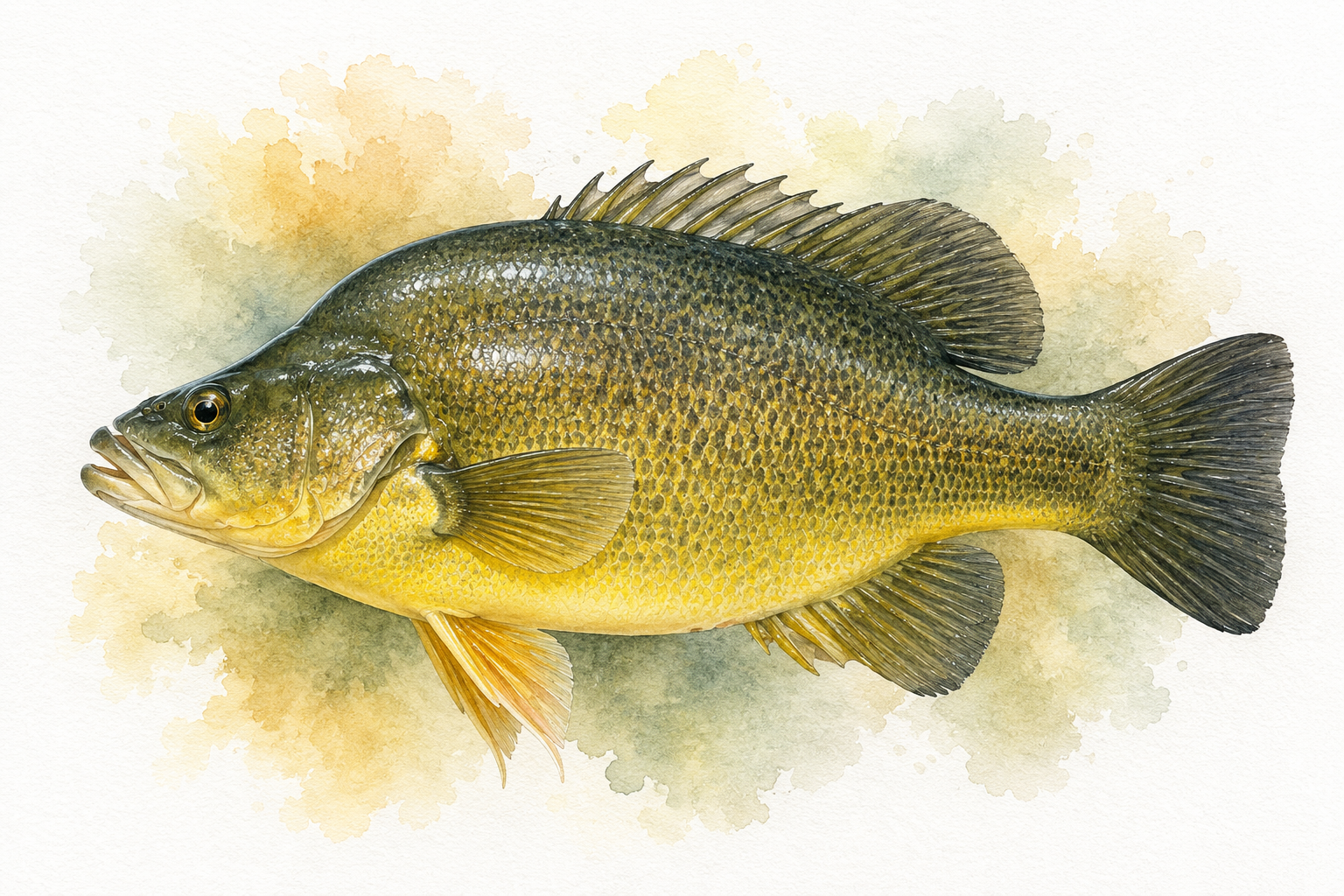

Golden Perch (Yellow Belly)

Macquaria ambigua

Golden Perch are native to inland river systems of eastern and central Australia. Their natural range includes the Murray-Darling Basin, Lake Eyre Basin and Bulloo River drainage systems across Queensland, New South Wales, Victoria and South Australia. Strong recreational fisheries occur throughout the Murray-Darling system and in numerous stocked impoundments across Queensland, New South Wales, Victoria and South Australia, where Golden Perch have become one of Australia’s most widely targeted freshwater sportfish.

QUICK FACTS

Alternative Names

Yellowbelly, Callop, Murray Perch

Average Size

35–50cm

1–5kg

Trophy Size

60cm+

Primary Habitat

Freshwater

Depth Range

1–15m+

Taste Quality

Excellent

DISTRIBUTION & HABITAT

COMING SOON

The Murray, Darling, Murrumbidgee, Lachlan and Macquarie river systems support many of Australia’s best wild Golden Perch fisheries. Large floodplain rivers, anabranches and connected billabongs can all hold substantial populations. In Queensland, stocked fisheries such as Lake Somerset, Lake Wivenhoe, Lake Monduran, Lake Maroon and Copeton Dam on the NSW border have produced exceptional fish over many years. South Australia’s lower Murray system remains a traditional stronghold, where the species is commonly known as Callop. Many fisheries experience increased movement and feeding activity following river rises and flooding events, which play an important role in recruitment and dispersal.

STATES

NSWQLDVICSA

HABITAT

freshwater-riverfreshwater-creekfreshwater-lakefreshwater-impoundmentbillabong
Golden Perch show a strong preference for structure-rich areas containing timber, submerged trees, rock bars, clay banks and deeper holes adjacent to current flow. In rivers they commonly hold around large woody debris, outside bends and deep pools where food is concentrated. In impoundments they frequently associate with flooded timber, creek channels, rock walls and submerged points. Baitfish, shrimp, yabbies and aquatic invertebrates are often concentrated around these features, making them reliable starting points for anglers.

SEASONAL PATTERNS

COMING SOON

SEASONAL NOTES

  • Golden Perch spawning activity is closely linked to rising water temperatures and increased river flows, generally occurring during spring and summer.
  • Many anglers notice improved fishing after rainfall events, freshes and floodwater movement. These conditions often stimulate feeding and movement throughout river systems.
  • In impoundments, feeding activity commonly peaks through warmer months when fish become more mobile and actively hunt baitfish, shrimp and yabbies.
  • Winter fishing can still be productive, particularly in deeper water, but fish generally feed less aggressively.

BEST BAITS

shrimpyabbyearthwormchickencheese
  • Live shrimp remain one of the most effective Golden Perch baits throughout their range. They closely match natural prey and can be fished around timber, rock and drop-offs with minimal weight.
  • Yabbies are particularly effective around rocky structure and river snags where larger fish hunt crustaceans.
  • Worms perform well in rivers following rises and during periods of increased flow when fish move onto feeding stations.
  • When fishing bait, presentation close to structure is usually more important than casting distance.

BEST BERLEY

commercial-berley
  • Berley is rarely essential when targeting Golden Perch but can help concentrate fish in rivers with limited current.
  • Small quantities of natural berley are generally more effective than large volumes. The objective is to create interest around a snag or holding area rather than feed the fish.
  • In impoundments, berley is seldom required because fish are usually targeted by locating structure rather than attracting fish from distance.

BEST LURES

soft-plasticdeep-diving-hardbodylipless-crankbaitspinnerbaitchatterbaitblade
  • Golden Perch respond strongly to lures that make regular contact with structure. Bumping a hardbody through timber or allowing a lure to strike rock often triggers reaction bites.
  • Spinnerbaits excel around standing timber where snag resistance is important. Slow rolling them close to cover is one of the most reliable techniques in impoundments.
  • Deep-diving hardbodies are particularly effective when trolled along river channels, rock bars and submerged creek beds.
  • Soft plastics and blades work best when fished slowly near the bottom with frequent pauses.

WEATHER & TIDES

WEATHER CONDITIONS

  • Stable high-pressure systems often produce the most consistent fishing.
  • Light winds improve boat control and allow more accurate lure presentation around timber and structure.
  • Overcast conditions can encourage fish to move further from heavy cover, particularly in clear impoundments.
  • Rapid weather changes and sharp barometric drops can make fish less predictable.

TIDES

  • Tidal influence is negligible because Golden Perch are a freshwater species.
  • Water movement generated by river flows, inflows and dam releases is generally more important than tidal cycles.
  • Periods of increased flow often improve feeding activity.

AVOID

  • Sudden cold snaps
  • Rapid water temperature drops
  • Extremely clear water in heavily pressured fisheries
  • Severe flooding with excessive debris
  • Prolonged stagnant conditions
  • Fishing well away from structure

IMPORTANT TIP

After a period of stable weather, a modest rise in river flow can dramatically improve Golden Perch fishing. Focus on timber and current breaks where food is concentrated by the increased movement of water.

COMPLETE FISHING GUIDE

Introduction

Golden Perch, better known as Yellowbelly across much of Australia, are one of the country’s most adaptable freshwater sportfish. They occupy everything from large inland rivers and floodplain billabongs to heavily stocked impoundments and farm dams.

What makes Golden Perch different from many native species is their ability to thrive in conditions that appear unfavourable. Dirty water, warm temperatures and fluctuating river levels rarely stop them feeding for long. Understanding how they use structure and respond to water movement is usually the key to consistent success.

Unlike Murray Cod, which often hold tightly to a single piece of structure, Golden Perch frequently move between feeding areas. They may spend part of the day holding deep within timber before shifting onto adjacent flats, creek channels or current edges to hunt.

The most successful anglers focus less on finding individual fish and more on identifying productive zones that concentrate food.

Tackle and Rigs

Golden Perch can be caught on surprisingly light tackle, but structure often dictates how heavy you need to fish.

For lure casting in rivers, a 2–5kg or 3–6kg spin outfit provides excellent versatility. In heavily timbered impoundments, many anglers step up to 4–8kg tackle to control fish before they reach cover.

When fishing bait, a simple running sinker rig remains hard to beat. Use only enough weight to maintain contact with the bottom. Excessive sinker weight often reduces bait movement and can make presentations appear unnatural.

Live shrimp are among the most reliable baits because they remain active around structure. Position them close to timber, rock or channel edges and allow them to move naturally.

Yabbies are particularly effective for larger fish. They are durable, remain active for extended periods and closely resemble natural prey found throughout much of the species’ range.

When to Use Lures

Lures become especially effective when fish are actively hunting and covering ground.

Deep-diving hardbodies are often the best choice when searching large areas. Trolling allows anglers to locate productive depths, creek channels and structure lines that would otherwise take hours to cover.

Once fish are located, casting usually produces better results.

Spinnerbaits are particularly effective around standing timber. Their snag resistance allows anglers to fish areas that would be almost impossible with treble-hooked lures.

A common mistake is retrieving spinnerbaits too quickly. Golden Perch often respond best to a slow retrieve that keeps the lure close to structure.

Lipless crankbaits, blades and soft plastics excel when fish are holding deeper. Slow lifts, controlled drops and extended pauses often outperform aggressive retrieves.

One of the most consistent triggers is contact. Whether using hardbodies, blades or spinnerbaits, lures that occasionally strike timber, rock or bottom structure frequently draw more strikes than perfectly clean retrieves.

Time of Day

Golden Perch can be caught throughout the day, but low-light periods generally offer the most consistent action.

Early morning and late afternoon often see fish move further from cover to feed. During these periods they may patrol creek channels, flats adjacent to timber and the edges of submerged structure.

In turbid rivers, the bite can remain strong throughout the middle of the day because reduced visibility provides fish with confidence to move and feed.

During summer, night fishing can be particularly productive. Larger fish often leave heavy cover under darkness and become easier to target with both bait and lures.

Common Mistakes

One of the biggest mistakes anglers make is fishing too quickly.

Golden Perch are not always aggressive chasers. Many fish are caught because a lure remains in the strike zone long enough to trigger a response.

Another common mistake is ignoring water movement. Even small increases in river flow can dramatically improve fishing. Fish frequently position themselves where food is funnelled by current.

Many anglers also fish too far from structure. Golden Perch are strongly structure-oriented fish and often hold surprisingly tight to timber, rock and submerged cover.

In impoundments, anglers frequently spend too much time in open water. Productive areas usually contain a combination of structure, depth change and food sources.

Finally, many anglers leave an area too soon. Golden Perch often feed in short windows. A location that appears inactive for an hour can suddenly produce multiple fish when feeding activity begins.

The Bottom Line

Golden Perch reward anglers who focus on structure, water movement and food availability. Whether fishing a remote inland river, a stocked reservoir or a small farm dam, the same principle generally applies: locate the cover that attracts prey and the Golden Perch are rarely far away.

Fish slowly, keep presentations close to structure and pay close attention to changes in flow and water temperature. Those three factors consistently account for a large percentage of successful Golden Perch captures across Australia.

Built for Hunters. Made for Australia.

Join Oz Fish and Game and connect with those who live the lifestyle — training, fieldcraft, and mateship for the modern outdoorsman.