
Introduction
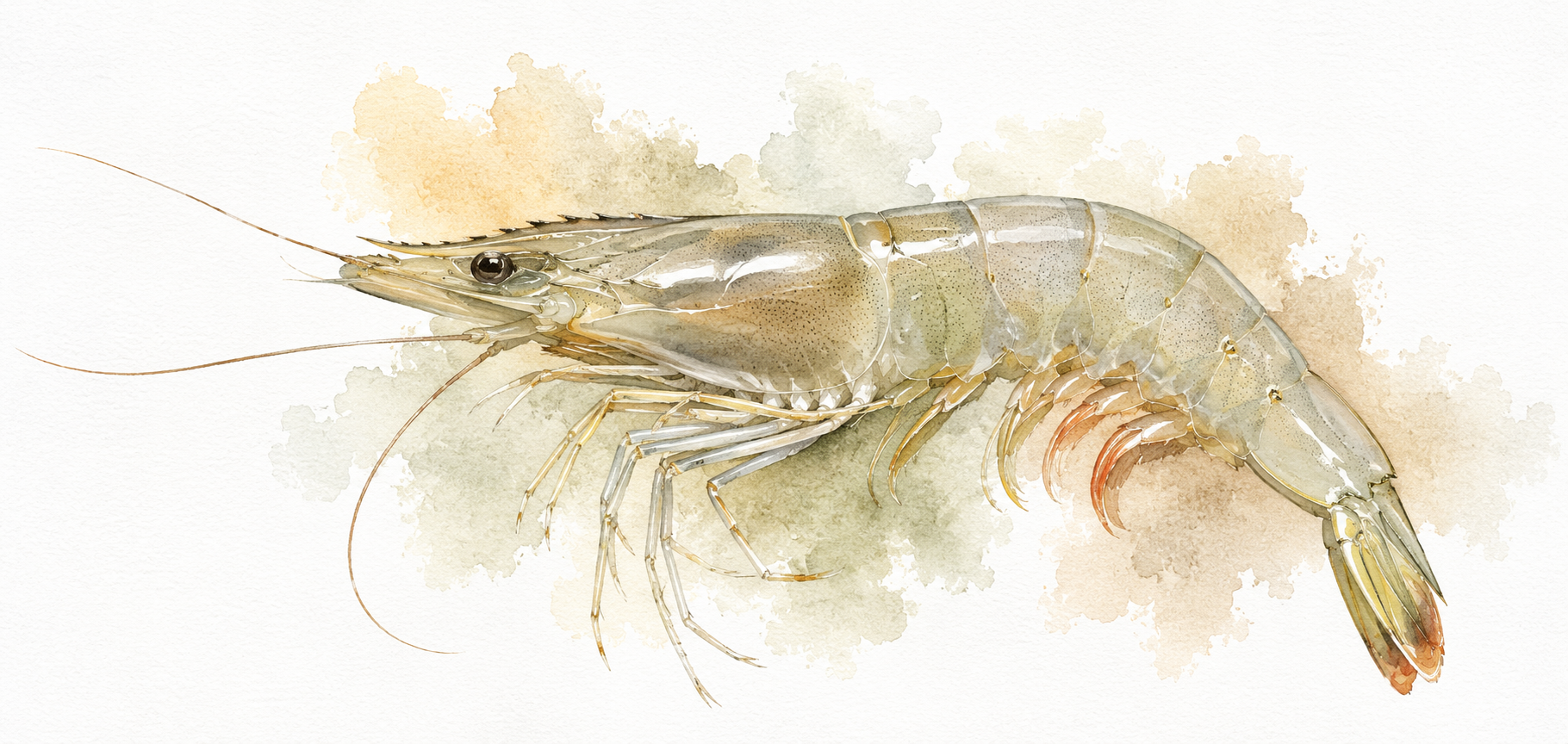
Few natural baits have earned the reputation of the banana prawn (Penaeus merguiensis). Whether fished live straight from the cast net or thawed from the freezer, it consistently produces fish in Australian estuaries, rivers and coastal waters. Its natural scent, soft flesh and familiar profile make it an easy meal for everything from whiting and bream to barramundi and mangrove jack.
Its biggest advantage is versatility. A banana prawn can be fished live, fresh or frozen with very little preparation, making it one of the few baits equally suited to lure anglers carrying a backup bait, offshore reef fishers and estuary anglers alike.
Although simple to use, small differences in sourcing, storage and rigging have a significant effect on how well it performs. A firm, well-presented prawn will consistently out-fish one that has been poorly handled or repeatedly frozen and thawed.
Sourcing the Bait
If you have access to tropical northern Australia during the wet season or shortly afterwards, collecting your own banana prawns is difficult to beat. Seasonal prawn runs into estuaries and tidal creeks provide recreational anglers with excellent opportunities to cast-net fresh bait. These runs often coincide with warm water and increased freshwater runoff, with prawns moving in large schools through river mouths, mangrove creeks and shallow bays.
When collecting your own, concentrate on clean sand or mud flats bordering mangroves, creek mouths and gently sloping banks where prawns travel with the tide. Flood tides are generally the most productive because they allow prawns to push further into shallow feeding areas.
Outside northern Australia, most anglers source banana prawns commercially. Fresh seafood retailers offer the best option during commercial fishing seasons, while individually quick frozen (IQF) prawns provide excellent bait throughout the year. IQF prawns freeze separately rather than in large blocks, allowing you to thaw only what you need for a session.
Whole prawns with the head attached generally make the best bait purchase. They retain more natural scent, lose less moisture during storage and offer greater flexibility when preparing different presentations.
Recognising Quality
Good banana prawns are easy to recognise once you know what to look for.
Fresh specimens should have firm flesh, a glossy translucent shell and a clean ocean smell. The shell should remain tightly attached to the body, while the head should still feel secure rather than loose or separating from the thorax.
Avoid prawns showing black patches around the head, shell joints or tail fan. While slight darkening can occur naturally after capture, extensive blackening usually indicates deterioration. Likewise, soft flesh that collapses when squeezed has already begun to break down and will struggle to stay on the hook.
Frozen prawns should remain individually separated, not stuck together in large icy clumps. Excessive ice crystals often indicate temperature fluctuations during storage and usually result in softer bait after thawing.
If purchasing frozen bait, choose packaging with intact shells and minimal freezer burn. Dry, discoloured shells usually indicate prolonged freezer storage.
Storage and Care
Few baits benefit more from careful handling than banana prawns.
Freshly caught prawns should be placed onto drained ice immediately after capture. Keeping them cold without allowing them to soak in meltwater helps preserve both flesh firmness and natural scent. Waterlogged prawns become noticeably softer and lose much of their durability on the hook.
If you are not using them within a day or two, freeze them as soon as possible. Vacuum sealing provides the best long-term storage because it reduces dehydration and freezer burn while helping maintain texture.
For frozen bait, thaw only the quantity required for each session. Once thawed, banana prawns soften rapidly, particularly in warm weather. Refreezing further weakens the flesh, making the bait difficult to cast and more prone to being stripped by pickers.
On the boat or bank, keep thawed prawns in a small insulated container or esky rather than leaving them exposed in the sun. Even a short period of heat noticeably reduces bait quality.
Preparing the Bait
Banana prawns require very little preparation, but matching the presentation to your target species improves results.
Live prawns are normally fished whole without modification. Their natural movement is their greatest advantage, so avoid unnecessary trimming or handling.
Fresh and frozen prawns can be used whole, headless or peeled depending on the species being targeted. Whole prawns offer the largest scent profile and remain the preferred option for larger predators such as barramundi, mangrove jack and mulloway.
Removing the head creates a more streamlined bait that casts further while still retaining most of the body scent. Peeled prawns release additional scent into the water and are particularly effective on bream and whiting, although they sacrifice durability.
When targeting smaller estuary fish, cutting larger prawns into body sections often provides better hook coverage while reducing missed strikes.
The key is maintaining a natural profile rather than producing perfectly uniform pieces.
How to Rig It
The best rigging method depends largely on whether the prawn is alive or dead.
Live banana prawns are commonly hooked lightly through the tail fan or through the hard horn on the head. Both methods allow the prawn to swim naturally while avoiding vital organs that would quickly kill the bait. This natural movement is often what triggers strikes from ambush predators.
Dead prawns benefit from slightly firmer rigging. Threading the hook through the body onto a baitholder hook provides excellent security and reduces the chance of the bait sliding down during casting. Where smaller fish are present, lightly exposing the hook point improves hook-up rates without noticeably affecting presentation.
Whole prawns suit running sinker rigs, float rigs and unweighted presentations depending on current and water depth. Paternoster rigs also work well when fishing vertically from boats over reefs or deeper channels.
Because banana prawns have relatively soft flesh compared with some other prawns, avoid aggressive casting. Smooth overhead casts preserve bait integrity and reduce the chance of tearing the body from the hook.
Best Fish to Target
Few Australian bait species appeal to such a broad range of predators.
In northern estuaries, banana prawns are among the premier natural baits for barramundi, mangrove jack and estuary cod. These species regularly feed on prawns as part of their normal diet, making live presentations particularly effective around mangrove edges, rock bars and timber.
Throughout southern estuaries, yellowfin bream, whiting and flathead readily take whole or peeled banana prawns. The bait’s natural scent disperses quickly, while its soft texture allows even cautious fish to engulf it without hesitation.
Offshore, snapper, trevally and mulloway also respond well to whole banana prawns, particularly when fished naturally over broken reef or along channel edges.
One reason banana prawns remain so dependable is their familiarity. Across much of Australia’s coastline, they form part of the natural food chain, meaning predatory fish rarely hesitate to investigate a well-presented prawn.
Common Mistakes
The most common mistake is allowing prawns to become soft before they ever reach the hook. Poor temperature control, prolonged exposure to the sun and repeated thawing all dramatically reduce bait quality.
Another frequent error is using hooks that are too large. Oversized hooks distort the bait’s natural shape, split the body and reduce hook security.
Many anglers also overlook presentation after the cast. If the prawn spins unnaturally or hangs awkwardly from the hook, retrieve it and re-rig. A properly mounted banana prawn should sit straight and maintain a natural profile in the water.
Using damaged or partially decomposed prawns simply because they are available is another false economy. Fish may still eat them, but hook durability and scent quality decline rapidly once the flesh begins to deteriorate.
Finally, avoid excessive handling. Every squeeze, pinch and adjustment weakens the flesh, especially after thawing.
The Bottom Line
Banana prawns have earned their reputation through consistency rather than novelty. They are one of Australia’s most reliable natural baits because they combine widespread availability with a scent, texture and profile that predatory fish recognise immediately.
Whether collected fresh during seasonal northern prawn runs or purchased frozen from a tackle shop, they remain effective across an enormous range of Australian fisheries. Their only real weakness is relatively soft flesh, but careful storage, minimal handling and appropriate rigging largely overcome that limitation.
For anglers wanting a bait capable of targeting everything from whiting and bream to barramundi and snapper, few options are as versatile or as dependable as the banana prawn.