
Introduction
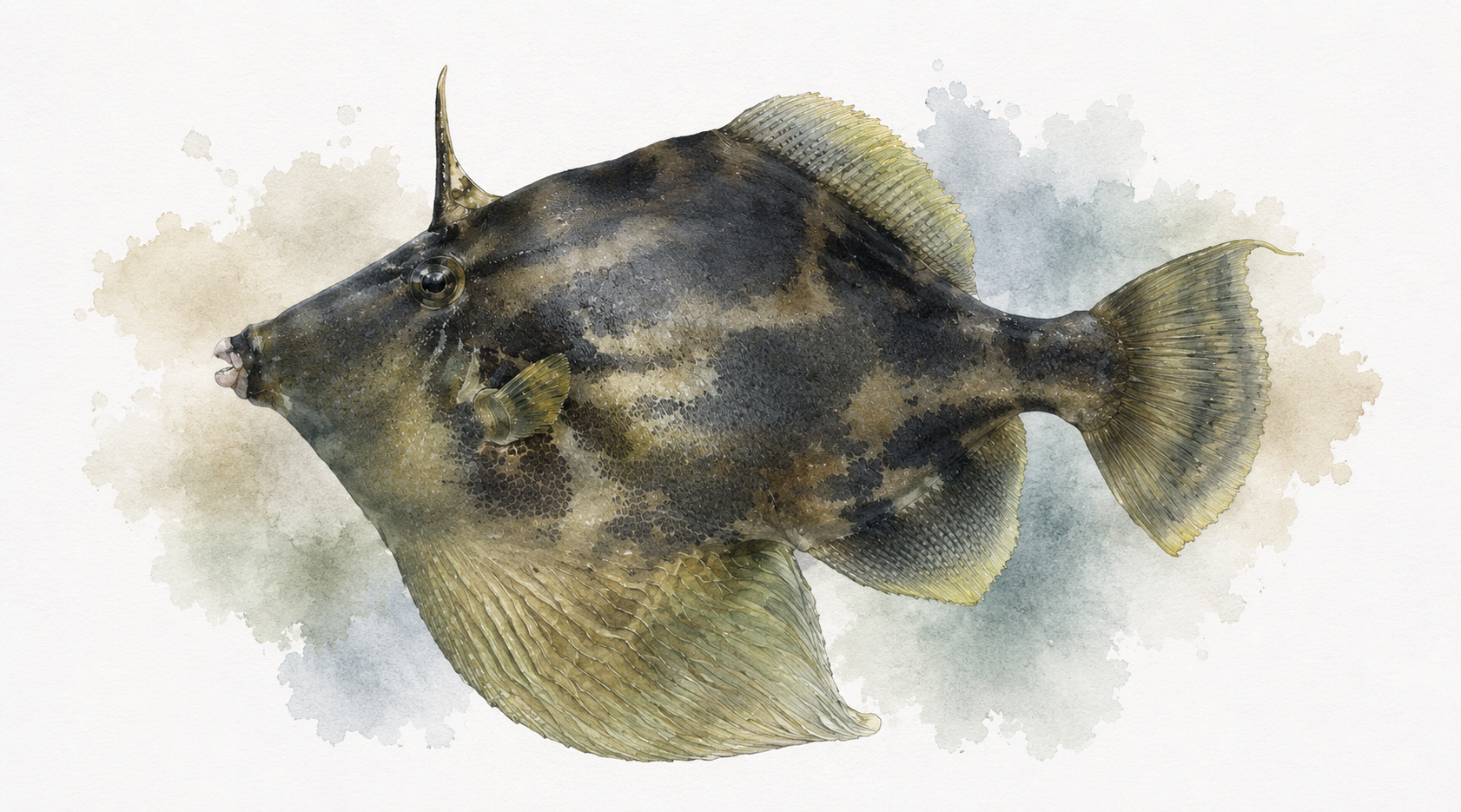
The fan-bellied leatherjacket is one of the more distinctive members of Australia’s leatherjacket family. Although it rarely receives the attention given to snapper, flathead or kingfish, anglers fishing sheltered estuaries, seagrass beds and inshore reefs regularly encounter the species while targeting a variety of bread-and-butter fish.
Its deep, laterally compressed body, rough leathery skin and powerful incisor-like teeth allow it to feed on prey that many other estuarine fish simply cannot exploit. Small crustaceans, molluscs, tube worms, bryozoans and other hard-bodied invertebrates form much of its diet, making it a specialised feeder that spends much of its time methodically picking over structure rather than chasing baitfish in open water.
For anglers, that feeding behaviour explains both its strengths and frustrations. Fan-bellied leatherjackets are often willing biters, yet they are equally adept at stripping soft baits from hooks with remarkable precision. Catching them consistently requires smaller tackle, fine-wire hooks and presentations that keep natural baits close to the bottom.
Although generally regarded as a by-catch, they provide enjoyable light-tackle fishing and are considered excellent table fare by anglers willing to spend the extra time removing their tough skin.
Tackle and Rigs
Because fan-bellied leatherjackets seldom grow large, there is little advantage in using heavy tackle. A light estuary outfit provides greater bite detection while allowing small baits to move naturally.
A 1–3 kg or 2–4 kg spin rod paired with a 1000–2500 size reel loaded with 4–8 lb braided line is ideal. A fluorocarbon leader between 6 and 10 lb offers sufficient abrasion resistance while remaining inconspicuous in clear water.
Hook selection is far more important than brute strength. Leatherjackets have relatively small mouths but extremely powerful teeth capable of clipping heavy leaders and removing poorly presented bait.
Small long-shank hooks in sizes 8 to 2 are excellent because they place the leader slightly further from the fish’s teeth while making hook removal easier. Fine-gauge baitholder hooks also perform well when fishing worms, prawns or pipis.
Simple paternoster rigs excel when fishing deeper channels or from boats, while lightly weighted running sinker rigs allow baits to drift naturally across seagrass beds and broken reef. Around shallow weed beds, a small split-shot placed well above the hook often provides all the weight required.
The objective is always the same: present a small natural bait as close to the bottom as possible without excessive weight reducing sensitivity.
When to Use Baits
Natural baits consistently outperform artificial lures for fan-bellied leatherjackets because their feeding behaviour revolves around carefully inspecting and picking stationary prey from structure.
Small pieces of peeled prawn remain one of the most reliable options, offering both scent and a soft texture that fish readily inhale. Pipi, mussel, squid strips and marine worms are equally productive, particularly when trimmed into small mouth-sized portions.
Rather than presenting oversized baits, experienced anglers use pieces only slightly larger than the hook. Smaller baits reduce missed strikes while making it harder for leatherjackets to remove the offering without becoming hooked.
Because these fish feed deliberately rather than aggressively, maintaining direct contact with the bait is important. Gentle taps often precede a proper take, and striking too early commonly results in missed fish. Allowing the rod to load naturally before lifting firmly usually produces better hook-up rates.
When to Use Lures
While fan-bellied leatherjackets are occasionally caught on lures, they should not generally be considered a lure-oriented species.
Very small soft plastics, tiny crustacean imitations and lightly weighted micro-jigs may take fish when worked slowly through seagrass or over shallow reef, particularly where leatherjackets are feeding actively alongside other species.
Success usually comes from subtle presentations that imitate shrimp, amphipods or small benthic invertebrates rather than fast-moving baitfish.
The biggest limitation is durability. Leatherjackets quickly destroy soft plastics with their sharp teeth, making lure fishing an expensive proposition if schools are abundant.
Many anglers intentionally switch back to bait once leatherjackets begin appearing regularly because natural offerings simply produce more consistent results.
Time of Day
Fan-bellied leatherjackets can be caught throughout daylight hours, particularly in clear, sheltered water where they remain active while foraging over weed beds and reef edges.
Early morning and late afternoon generally provide the most consistent fishing as reduced light encourages fish to venture slightly further from cover while remaining comfortable in shallow water.
Unlike many pelagic species, leatherjackets do not rely on brief feeding windows. If water quality, current and food availability remain favourable, they often continue feeding steadily throughout the day.
Overcast conditions can further improve daytime fishing by reducing light penetration across shallow seagrass flats.
Common Mistakes
One of the most common mistakes is using tackle intended for much larger fish. Heavy rods, oversized hooks and thick leaders reduce bite detection while making it difficult for leatherjackets to properly take the bait.
Another frequent error is fishing with baits that are too large. Because leatherjackets feed by nibbling and tearing, oversized offerings are often stripped repeatedly without exposing the hook point.
Many anglers also strike far too quickly. The initial taps are frequently the fish testing or repositioning the bait rather than committing to swallowing it. Waiting for steady pressure before lifting the rod usually results in better hook-ups.
Fishing too high in the water column is another common issue. Fan-bellied leatherjackets spend most of their time feeding close to the seabed, particularly around weed, sponge gardens and low-profile reef. Baits drifting well above the bottom are often ignored.
Finally, many anglers become frustrated after losing hooks or leaders to leatherjackets. Their powerful incisor teeth are specifically adapted for crushing and cutting hard prey, making occasional tackle losses inevitable. Regularly checking leaders for abrasion and replacing damaged hooks saves many lost fish later in the session.
The Bottom Line
The fan-bellied leatherjacket is rarely the primary reason anglers head onto the water, yet it offers rewarding light-tackle fishing for those prepared to adapt their approach.
Understanding how the species feeds is the key to consistent success. Rather than chasing baitfish through open water, these fish spend their lives methodically searching seagrass beds, reef edges and broken bottom for small invertebrates. Matching that natural diet with compact, carefully presented baits fished close to the seabed dramatically improves catch rates.
While lure fishing can occasionally be productive, natural baits remain the most reliable option, particularly when paired with light tackle and small long-shank hooks. Patience also plays an important role. Allowing fish time to properly take the bait rather than reacting to every tap often makes the difference between repeated missed bites and a productive session.
Although many anglers regard leatherjackets as little more than a nuisance, the fan-bellied leatherjacket deserves greater appreciation. It provides enjoyable sport on light gear, rewards thoughtful bait presentation and, once skinned, is widely regarded as one of the better eating fish available from Australia’s sheltered coastal waters. For anglers targeting estuary and inshore reef species, understanding this often-overlooked fish turns an occasional by-catch into a worthwhile target in its own right.