
Introduction
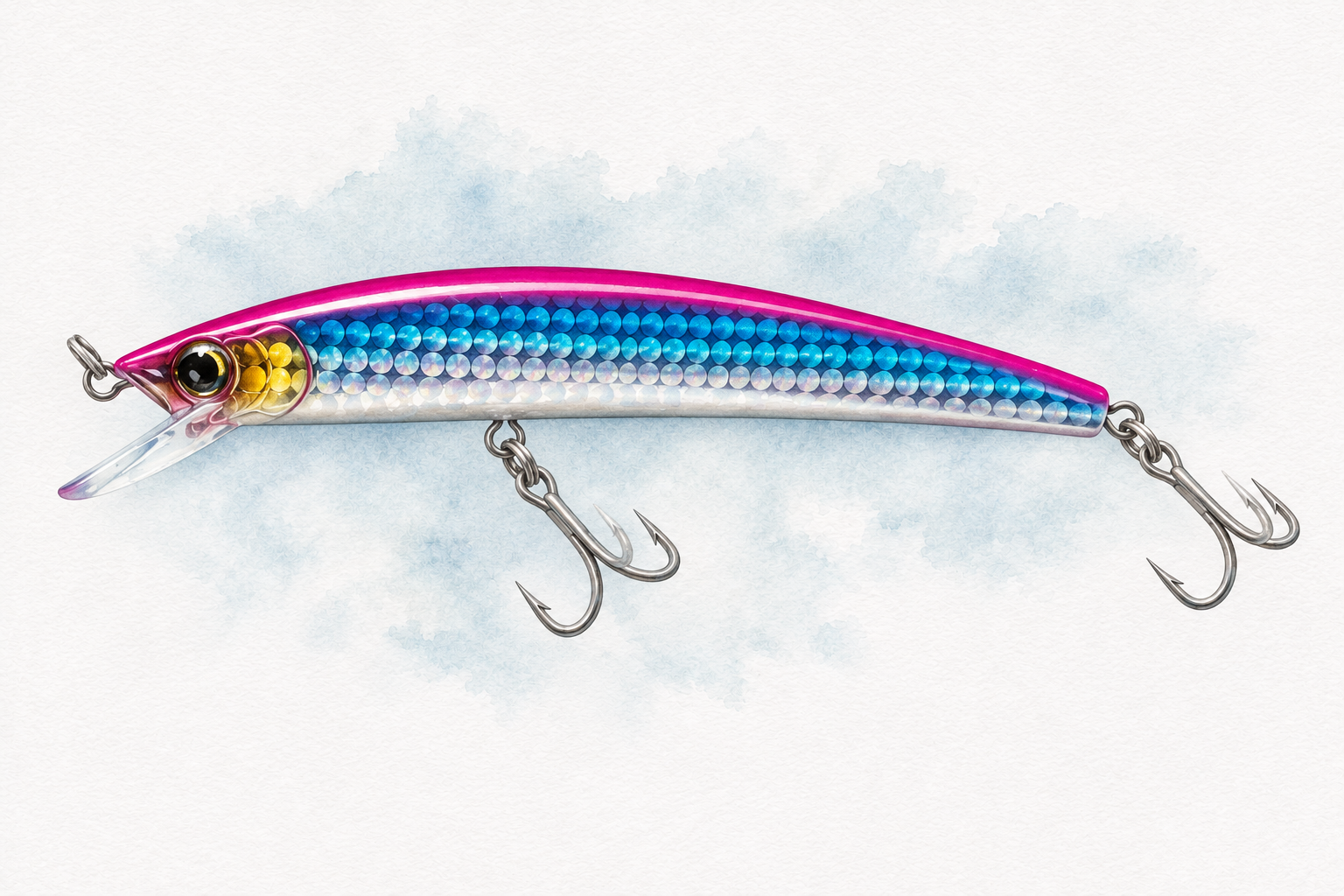
Diving minnows are slender, bibbed hardbody lures that swim beneath the surface during retrieval. Their elongated profiles typically imitate baitfish, while their swimming action can be varied through retrieve speed, rod movement and pauses.
Some produce a tight swimming action during steady retrieval. Others respond to twitches and jerks with sudden darts, changes of direction and flashes from their flanks.
Compared with the typically shorter, deeper-bodied crankbaits, diving minnows generally have longer, slimmer profiles, although the two families overlap.
Floating, suspending and sinking models are used across Australian freshwater and saltwater environments. Small minnows are popular for bream, bass and flathead, while larger models target barramundi, mangrove jack, mulloway, Murray cod and coastal predators.
Understanding Diving Minnows
Body Shape and Swimming Action
Diving minnows typically have elongated bodies resembling small fish.
Narrow models often produce a tight swimming action, while deeper-flanked designs can generate stronger rolling movements and more noticeable flashes.
Some dart sharply when twitched, while others maintain a relatively straight swimming path.
Bib Design
The projecting bib creates resistance against the water during retrieval, producing swimming action and downward force.
Shorter bibs are common on shallow-running models, while longer bibs are often associated with deeper-running designs.
Diving depth also depends on the lure’s body shape, line attachment and fishing conditions.
Internal Weighting
Internal weights influence casting distance, balance and swimming behaviour.
Some minnows use fixed weights, while others contain moving weights that shift during casting and return to their swimming position during retrieval.
Weight placement also affects how the lure responds to twitches and jerks.
Floating, Suspending and Sinking Diving Minnows
Buoyancy determines how a diving minnow behaves when retrieval stops.
Floating Minnows
Floating minnows rise towards the surface during a pause.
They are useful over shallow weed beds and around submerged timber, where allowing the lure to rise can help it clear obstacles.
Some rise quickly, while others ascend slowly and remain near their working depth longer.
Suspending Minnows
Suspending minnows are designed to remain at approximately the same depth when retrieval stops.
This allows anglers to pause the lure beside fish or structure without it immediately rising or sinking.
Changing hooks, split rings or fishing in saltwater can affect suspension. Test the lure after changing its hardware or fishing conditions.
Sinking Minnows
Sinking minnows descend when retrieval stops.
They can be allowed to sink to a selected depth before retrieval begins, allowing the presentation to start below the surface or near fish holding deeper in the water column.
Once moving, their swimming depth depends on lure design, retrieve speed and line angle.
Control their descent around timber, rock and reef to avoid sinking into obstacles.
Choosing the Right Buoyancy
- Floating: Shallow water and structure where rising during pauses is useful.
- Suspending: Holding a lure near fish or structure between movements.
- Sinking: Starting a presentation at a selected depth or working through deeper water.
Choosing the Right Diving Minnow
Size and Profile
Match lure size to the prey and target species.
Small minnows suit bream, bass and other predators feeding on small baitfish.
Medium-sized models cover many estuary and freshwater applications, including flathead, golden perch, mangrove jack and barramundi.
Larger minnows are used for mulloway, Murray cod and coastal predators.
Baitfish and Prawn Imitations
Most diving minnows imitate baitfish.
Some bibbed prawn-imitation hardbodies share similar swimming characteristics and can be fished using comparable techniques.
These are relevant around estuary flats, weed beds and channel edges when prawns are active.
Use short movements and pauses to imitate brief swimming bursts. When predators are chasing baitfish through open water, a conventional minnow is generally the more direct imitation.
Running Depth
Choose a lure that passes through the depth where fish are holding.
Shallow-diving minnows suit flats, weed beds and submerged obstacles. Medium and deeper-running models are useful around channel edges, timber and drop-offs.
Advertised running depths are approximate. Casting distance, line thickness and retrieve speed can affect the depth achieved.
A floating minnow needs sufficient retrieval distance to descend.
Holding the rod tip low generally helps maintain a deeper presentation, while raising it can help keep the lure shallower.
Colour and Finish
Natural silver, olive, blue and translucent finishes imitate common baitfish.
Reflective flanks produce flashes as the lure rolls or darts.
Contrasting colours can help fish detect a lure in discoloured water.
When fish follow without striking, try changing the retrieve before changing colour.
Rattling and Silent Designs
Rattling minnows produce sound during movement and may be useful in discoloured water.
Silent models provide a less conspicuous presentation, particularly in clear or heavily fished water.
Try both when fish are reluctant to strike.
Where to Use Diving Minnows
Estuaries and Channels
Work diving minnows along channel edges, rock walls, sandbanks and submerged structure.
Small suspending minnows can be twitched and paused beside oyster-covered rock walls for bream.
Larger models can be retrieved along channel edges for flathead and mulloway.
Cast beyond the intended strike zone so the lure reaches its working depth before passing the fish.
Shallow Flats and Weed Beds
Use shallow-diving floating minnows over submerged weed and shallow flats.
Retrieve along weed edges or through openings between vegetation.
Pause the lure when approaching weed to allow it to rise clear before continuing.
Submerged Timber
Diving minnows are effective around submerged timber for bass, golden perch, Murray cod, barramundi and mangrove jack.
Cast beyond the timber where possible and retrieve towards the holding position.
Suspending minnows can be paused beside branches, while floating models can rise away from obstacles.
Rocky Banks and Drop-Offs
Retrieve parallel to rocky banks and submerged ledges to keep the lure near the structure without repeatedly pulling it into rock.
Where the bottom rises sharply towards the bank, select a shallower-running model or raise the rod tip as the lure approaches.
Beaches
Diving minnows can be effective around gutters, shore breaks and deeper channels where predators are feeding on baitfish.
Cast across or along gutters and retrieve through the deeper water.
Longer-casting minnows help reach fish beyond the shore break, provided they maintain a stable swimming action.
In heavy surf or strong onshore winds, metal slugs and slices may provide better casting distance and stability.
Larger shallow-diving hardbodies remain a proven option for mulloway in suitable surf conditions.
Australian salmon and tailor can also be targeted with appropriately sized minnows.
Rocky Shores and Headlands
Cast larger minnows across current lines or retrieve them along reef edges, wash zones and deeper channels.
Shallow-diving models can be effective for mulloway feeding around wash and baitfish concentrations.
Choose a running depth that keeps the lure above shallow rock.
Coastal Reefs and Offshore Waters
Larger casting minnows can be worked around reef edges, bait schools and coastal structure.
Yellowtail kingfish and other predators may respond to suitable bibbed minnows retrieved along reef edges and wash zones.
Cast beyond bait schools and retrieve through their edges or beneath the activity where the lure’s running depth allows.
Specialised bibbed trolling lures are covered separately.
Rivers, Creeks and Impoundments
Work minnows around freshwater banks, submerged timber, rocky points and drop-offs.
In northern freshwater systems, smaller minnows can be effective for Sooty Grunter around shaded banks and submerged cover.
Current affects swimming action. A lure retrieved against the current may develop greater resistance, while one moving with the current may require additional retrieve speed.
If the lure rolls or loses its normal action, reduce speed or change the casting angle.
When fishing across a current, watch for sideways drift.
Tackle and Rigging
Rod Selection
Choose a rod suited to the lure’s casting weight and intended presentation.
A responsive rod tip helps produce controlled twitches and jerks.
Small minnows are easier to work with lighter, more responsive tackle, while larger models and powerful predators require stronger equipment.
Reel and Main Line
Spinning and baitcasting outfits are both suitable.
Spinning tackle is commonly used for small estuary minnows and coastal casting. Baitcasting outfits provide accurate placement around freshwater structure.
Braided line transmits rod movements and strikes effectively.
Thicker line creates greater water resistance and can reduce running depth.
Leader Selection
Lighter leaders allow greater freedom of movement for small minnows.
Heavier leaders provide additional abrasion resistance around rock, timber and reef.
Toothy predators may require bite-resistant leaders, although heavy or wire leaders can alter the action of smaller lures.
Line Attachment
Use a connection that allows the lure to swim freely.
Depending on the design, this may involve a split ring, loop knot or suitable clip.
Avoid oversized hardware that interferes with the lure’s action.
Hook Configuration
Diving minnows may use treble hooks or suitable single hooks.
Replacement hooks must provide adequate strength without fouling the lure or changing its balance unnecessarily.
Heavier hooks can affect buoyancy, particularly on suspending models.
Test the lure after changing hooks or split rings.
Diving Minnow Retrieve Techniques
Steady Retrieve
Cast beyond the target and retrieve at a consistent speed once the lure reaches its working depth.
This technique covers water efficiently and suits fish actively chasing bait.
Slow Roll
Retrieve slowly while maintaining enough speed for the lure to swim correctly.
Useful along weed edges, timber and other structure where a slower presentation keeps the lure near fish.
Stop-and-Go
Retrieve the lure to its working depth, stop briefly, then resume.
Vary the duration of pauses and the distance travelled between stops.
A floating minnow rises during the pause, a suspending model remains near its depth, and a sinking model descends. Adjust pause duration accordingly.
Twitch-and-Pause
Short rod-tip movements produce small darts, flashes and changes of direction.
- Retrieve to the intended depth.
- Apply one or more short twitches.
- Recover unnecessary slack.
- Pause before repeating.
Useful around structure and when fish respond poorly to aggressive movements.
Jerk-and-Pause
Stronger rod movements produce greater acceleration and more pronounced directional changes.
- Retrieve to the working depth.
- Apply a controlled rod jerk.
- Recover unnecessary slack.
- Pause before repeating.
Avoid excessive movement that causes unstable swimming or hook tangles.
Managing Depth and Line Control
Reaching the Strike Zone
Allow enough retrieval distance for floating minnows to reach their working depth before passing the target.
Sinking minnows can be counted down before retrieval, but monitor their depth around obstacles.
Controlled Slack
A small amount of slack after a twitch or jerk allows some minnows to dart more freely.
Recover excess slack so strikes remain detectable without immediately pulling the lure away from its intended position.
Watching the Line
Fish may strike during a pause before the angler feels anything through the rod.
Watch for unexpected tightening, sideways movement or sudden straightening of the line.
Recover slack and establish contact before applying pressure.
Lure Tuning and Tracking
A diving minnow should swim consistently at its intended retrieve speed.
Diagnosing Tracking Problems
If a lure repeatedly veers or rolls, test it in relatively still water at a moderate speed.
If it swims correctly there but behaves differently in current, water movement may be responsible.
If it tracks poorly only at excessive speeds, reduce the retrieve speed.
Persistent problems may indicate bent hardware, an incorrectly aligned tow point or a damaged bib.
Tow-Point Adjustment
Some minnows have adjustable tow points.
Where permitted by the manufacturer, make small adjustments and retest after each change.
Do not force rigid components or attempt to correct structural damage through tuning.
Damage and Water Ingress
Cracked bodies, loose tow points, damaged bibs and water ingress can affect swimming action.
Repair or replace damaged components where practical. Retire lures that no longer operate reliably.
Detecting Strikes and Hook-Setting
Strikes may occur during retrieval, immediately after a twitch or while the lure is paused.
A strike may feel like a sharp impact, sudden weight or interruption to the lure’s swimming action.
Recover slack, establish firm contact and apply controlled pressure.
Avoid repeated aggressive hook-setting movements, particularly with treble hooks.
Maintain steady tension and guide fish away from nearby structure where possible.
Common Mistakes
| Mistake | Why It Matters | Better Approach |
|---|---|---|
| Wrong running depth | Lure passes above or below the fish | Match the lure’s diving range to the strike zone |
| Unsuitable buoyancy | Lure rises or sinks when it should remain near the fish | Choose buoyancy to suit the presentation |
| Overworking the lure | Causes unstable action or hook tangles | Use controlled rod movements |
| Excessive slack | Makes strikes difficult to detect | Recover unnecessary slack |
| Incorrect leader or hooks | Restricts action or changes balance | Match hardware to the lure and test changes |
| Uncontrolled sinking | Increases snagging around structure | Monitor descent and pause duration |
| Ignoring tracking problems | Reduces effective swimming action | Check speed, current and hardware |
| Repeating an unsuccessful retrieve | Fish may follow without striking | Change retrieve rhythm or pause duration |
Care, Maintenance and Storage
Cleaning: Rinse saltwater-exposed minnows with fresh water and allow them to dry.
Hooks and Split Rings: Inspect for corrosion, bending and wear. Replace damaged components.
Diving Bib: Check for cracks, looseness or deformation that affects swimming action.
Body and Finish: Inspect for cracks, damaged seams and water ingress.
Swimming Action: Test the lure after impacts, hardware changes or tuning.
Suspension: Recheck buoyancy after changing hooks or split rings.
Storage: Use divided tackle compartments or protective sleeves to prevent tangles and damage.
Moisture: Dry lures before storing them with clean tackle.
The Bottom Line
Diving minnows are versatile bibbed hardbody lures suited to both steady retrieval and rod-driven presentations.
Choose a model that reaches the intended strike zone, matches the available prey and behaves appropriately during pauses.
Understanding how the lure responds to retrieve speed, rod movement and line tension is more valuable than relying on any single retrieve technique.