
Introduction
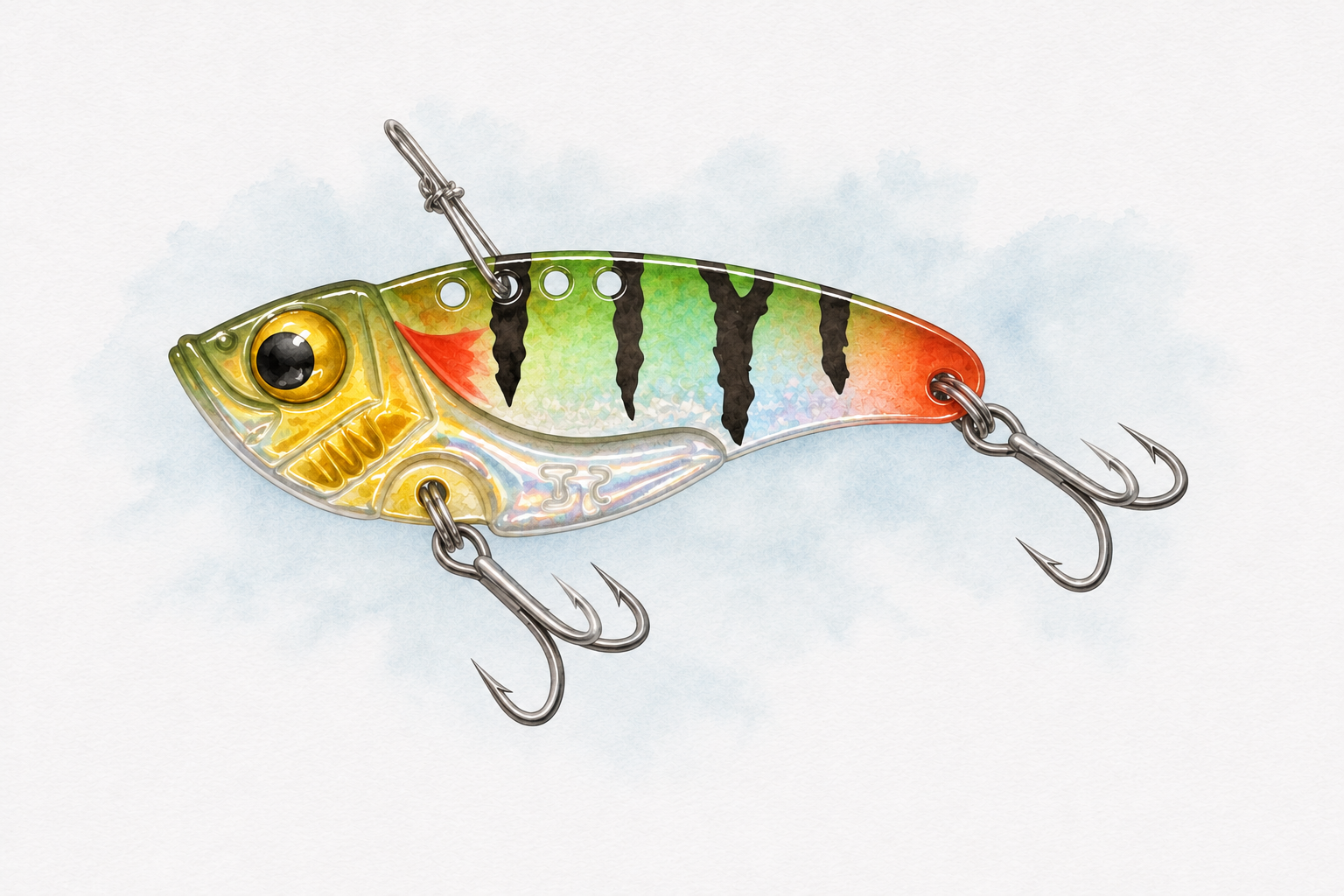
Vibration lures, commonly called vibes, are compact fishing lures designed to produce a rapid vibrating action as they move through the water.
Unlike conventional crankbaits and diving minnows, most have no projecting diving bib. Their body shape and line attachment generate vibration during retrieval or rod movement.
The family includes hardbody lipless crankbaits, metal vibration blades and soft-bodied vibes. Although their construction differs, all rely on vibration as a principal part of their swimming action.
Most are sinking designs, making them particularly useful for searching different depths, working submerged structure and targeting fish holding close to the bottom.
In Australian waters, vibration lures are established options for golden perch, Australian bass, flathead, barramundi, bream and other predatory species.
Understanding Vibration Lures
Body Shape and Swimming Action
Most vibration lures have compact bodies with relatively narrow profiles.
Water resistance acting against the lure’s body produces a rapid vibrating movement during retrieval or lifting.
Some designs generate a tight, subtle vibration, while others produce stronger movement that can be felt clearly through the rod.
The intensity of vibration depends on lure design and retrieve speed.
Line-Tie Position
The line attachment influences swimming angle, resistance and vibration.
Many metal blades have several attachment points along their upper edge.
Changing attachment points can alter the lure’s action, although the effect varies between designs.
Test the available positions to establish which produces the most suitable presentation.
Internal Weighting and Rattles
Hardbody lipless crankbaits may contain internal weights and rattles.
Metal blades generally rely on their construction and body shape rather than internal rattling chambers.
Soft-bodied vibration lures use weighted components to achieve the intended swimming action.
Rattling models provide an additional sound stimulus, while silent designs offer a less conspicuous presentation.
Types of Vibration Lures
Hardbody Lipless Crankbaits
Hardbody lipless crankbaits are compact, rigid lures that vibrate during retrieval.
Many have relatively deep bodies, internal weighting and one or more treble hooks.
They can be worked with steady retrieves, lifts and drops, or intermittent pauses.
These lures are useful around submerged points, open-water structure and areas where fish are feeding on small baitfish.
Metal Vibration Blades
Metal blades are thin, weighted lures that vibrate strongly when retrieved or lifted.
Their compact construction provides good casting performance and allows them to sink quickly.
They are particularly effective along deeper channel edges, submerged rock and bottom contours.
Many have multiple line-tie positions that allow anglers to adjust their action.
Soft Vibration Lures
Soft vibration lures typically combine a weighted internal structure with a flexible outer body. Their shape and line attachment produce vibration during retrieval or lifting, distinguishing them from conventional soft plastics that rely primarily on tail movement.
Depending on the design, their action may be less abrupt than that of rigid metal blades.
They can provide an alternative when fish respond poorly to stronger vibration.
Choosing the Right Vibration Lure
Size and Weight
Select a lure that suits the available prey, target species and fishing depth.
Small vibration lures are useful for bream, bass and golden perch.
Medium-sized models cover many estuary and freshwater applications, including flathead, mangrove jack and barramundi.
Larger, heavier models can be used for mulloway, Murray cod and coastal predators.
Weight affects casting distance, sink rate and the ability to maintain control in current.
Sink Rate and Fishing Depth
Sinking vibration lures can be allowed to descend before retrieval begins.
Count down after casting to establish a repeatable starting depth.
The actual depth reached depends on sink rate, current and line movement.
Around submerged obstacles, begin retrieval before the lure descends into the structure.
Vibration Strength
Some models produce strong vibration, while others have a more restrained action.
Stronger vibration can help fish locate a lure in discoloured water or when searching broad areas.
A subtler presentation may be effective when fish are reluctant to strike.
Choose according to fish response rather than assuming stronger vibration is always preferable.
Colour and Finish
Silver, gold, olive and natural baitfish finishes are useful starting points.
Reflective surfaces produce flashes during lifts and changes of direction.
Bright or contrasting colours can improve visibility in discoloured water.
When fish follow without striking, adjust the retrieve before automatically changing colour.
Hook Configuration
Vibration lures may use treble hooks, double hooks or suitable single hooks.
Hook placement varies between hardbody, metal and soft-bodied designs.
Replacement hooks should provide adequate strength without interfering with swimming action.
Oversized hooks may foul each other or alter the lure’s balance.
Where to Use Vibration Lures
Estuaries and Channels
Vibration lures are effective along channel edges, deeper holes, rock walls and submerged structure.
Small blades and hardbody vibes are established options for bream and flathead.
Work short lifts and controlled descents along channel slopes or beside structure where fish are holding near the bottom.
Shallow Flats
Lightweight vibration lures can be worked across shallow flats where predators are feeding on small baitfish or prawns.
Begin retrieval promptly to keep the lure above weed and bottom debris.
A steady retrieve or short lifts can maintain the presentation close to the substrate.
Submerged Timber
Vibration lures can be effective around standing timber and submerged branches, particularly when fish are holding deeper.
Cast beside rather than directly into dense structure.
Work the lure close to the timber while keeping exposed hooks clear of branches.
Rocky Banks and Drop-Offs
Work vibration lures along rocky banks, submerged ledges and changes in bottom depth.
Short lifts can keep the lure near the bottom without dragging exposed hooks through rock crevices.
Coastal Reefs and Offshore Waters
Heavier vibration lures can be used around reef edges, bait schools and deeper coastal structure.
Suitable models may attract mulloway, kingfish and other predators feeding below the surface.
They can be cast across bait concentrations or worked vertically beneath a boat.
Keep the lure above snag-prone reef rather than repeatedly dropping it onto the rock.
Rivers and Creeks
Vibration lures are useful in deeper pools, channels and areas of reduced current.
Australian bass, golden perch, Murray cod and Sooty Grunter can be targeted with suitable models.
Current affects descent and swimming action. Reduce retrieve speed or change casting angle if strong flow causes the lure to become unstable.
Lakes and Impoundments
Vibration lures are particularly useful for searching submerged points, channels, standing timber and deeper open water.
They are established options for golden perch and Australian bass.
Cast across depth changes or work vertically beneath the boat when fish are holding at a known depth.
Tackle and Rigging
Rod Selection
Choose a rod suited to the lure’s casting weight and intended presentation.
A responsive rod helps detect vibration and produce controlled lifts.
Small blades generally suit lighter tackle, while heavier vibration lures require stronger equipment.
Avoid excessively aggressive rod movements when fishing small lures near the bottom.
Reel and Main Line
Spinning tackle is commonly used for small blades and estuary vibration lures.
Baitcasting outfits are also suitable, particularly for heavier models and accurate casting around structure.
Braided line provides direct contact and makes changes in vibration or line tension easier to detect.
Leader Selection
Leader strength should suit the target species and surrounding structure.
Lighter leaders allow greater freedom of movement for small lures.
Heavier abrasion-resistant leaders are useful around rock, timber and reef.
Toothy predators may require bite-resistant arrangements.
Line Attachment
Use the attachment method recommended for the lure.
Many metal blades use clips or split rings that allow the lure to vibrate freely.
Where several attachment points are provided, test their effect on action.
Avoid oversized hardware that interferes with the lure.
Hook Clearance
Check that hooks do not foul the body, line or each other.
This is particularly important with compact metal blades.
If hooks repeatedly tangle, inspect their size, position and attachment hardware.
Vibration Lure Retrieve Techniques
Steady Retrieve
A steady retrieve maintains a consistent vibrating action.
- Cast beyond the intended target.
- Allow the lure to sink to the selected depth.
- Retrieve at a speed that produces stable vibration.
- Continue through the strike zone.
This technique is useful for covering water and targeting actively feeding fish.
Slow Roll
Retrieve slowly while maintaining the lure’s vibrating action.
This is useful around deeper structure and when fish are reluctant to chase faster-moving prey.
If the lure stops vibrating, increase speed slightly or choose a model suited to slower retrieval.
Stop-and-Go
Retrieve briefly, pause, then resume.
A sinking vibration lure descends during the pause.
Adjust pause duration according to depth and nearby structure.
Strikes may occur as the lure begins moving again or during the pause itself.
Lift-and-Drop
Lift-and-drop is one of the most effective vibration-lure presentations, particularly for fish holding near the bottom.
- Cast and allow the lure to reach the intended depth.
- Raise the rod tip smoothly until the lure begins vibrating.
- Continue the lift for the desired distance.
- Lower the rod tip while maintaining enough contact to detect a strike.
- Repeat once the lure reaches the intended depth.
The vibration should be noticeable through the rod during the lift. If the lure does not vibrate, the movement may be too slow for that design.
Short lifts keep the lure near bottom-holding fish. Longer lifts search a greater portion of the water column.
Pay particular attention during the fall. Fish frequently strike as the lure descends, when there may be little or no impact felt through the rod.
Vertical Jigging
Vertical presentations are useful when fish are holding beneath a boat or around deep structure.
Lower the lure to the selected depth and use controlled rod lifts followed by descents.
The objective is to activate the lure’s vibration and keep it near the fish, rather than repeatedly jerking it through large distances.
Short, deliberate movements are often sufficient.
Adjust lift height and frequency according to fish response.
Managing Depth and Line Control
Maintaining Contact During Descent
A sinking vibration lure needs enough freedom to descend naturally without leaving excessive slack in the line.
Lower the rod tip as the lure descends, allowing enough controlled slack for a natural fall while remaining alert to changes in line movement.
Excessive slack reduces sensitivity and makes strikes more difficult to detect.
Recognising Strikes on the Fall
A fish may intercept the lure before it reaches the expected depth.
Watch for:
- The line stopping earlier than expected.
- Sudden sideways movement.
- Unexpected tightening or acceleration.
- A sharp tap or change in line tension.
If the line behaves unexpectedly, recover slack and establish contact before applying pressure.
Bottom Contact
Allowing a vibration lure to reach the bottom can help establish depth and locate fish holding close to the substrate.
On sand or relatively clear bottom, brief contact can be useful before beginning another lift.
Around rocks, timber and dense weed, repeated bottom contact increases the risk of snagging.
The aim is to keep the lure within the strike zone, not necessarily to touch the bottom on every descent.
Working Different Depths
If fish are not responding near the bottom, vary the presentation depth.
Shorten the initial countdown or begin the next lift before the lure reaches the substrate.
When fish are suspended, work the lure through their holding depth rather than repeatedly dropping it to the bottom.
Lure Tuning and Tracking
Checking Vibration
A vibration lure should produce a consistent action at its intended retrieve speed.
If vibration becomes weak or irregular, inspect the hooks, line attachment and body.
Weed or debris caught on the hooks can substantially reduce action.
Line-Tie Adjustments
Some metal blades have multiple line-tie positions.
These can alter swimming angle, vibration strength and retrieve resistance.
Follow the manufacturer’s recommendations and test each position.
Damage and Wear
Inspect metal blades for bending, damaged attachment holes and corrosion.
Check hardbody models for cracks, damaged seams and water ingress.
Soft-bodied designs should be inspected for tears and damage around hooks or weights.
Replace lures that no longer operate reliably.
Detecting Strikes and Hook-Setting
Strikes may occur during retrieval, immediately after a lift or while the lure descends.
A strike can feel like a sharp impact, sudden weight or an interruption to the lure’s normal vibration.
Recover slack and establish contact before applying pressure.
Avoid repeated aggressive hook-setting movements with exposed treble hooks.
Maintain steady tension and guide fish away from nearby structure.
Common Mistakes
| Mistake | Why It Matters | Better Approach |
|---|---|---|
| Using excessive weight | Lure sinks too quickly or becomes difficult to control | Match weight to depth and current |
| Retrieving too slowly | Some designs lose their intended vibration | Maintain sufficient retrieve speed |
| Excessive rod lifts | Moves the lure too far from bottom-holding fish | Use controlled movements |
| Allowing uncontrolled descent | Increases snagging and missed strikes | Maintain light contact during the fall |
| Ignoring line movement | Strikes during descent may go undetected | Watch for unexpected changes |
| Incorrect hook hardware | Can restrict action or cause tangles | Use suitable hooks and attachments |
| Fishing only one depth | May miss fish holding elsewhere | Vary countdown and presentation depth |
| Continuing with fouled hooks | Reduces vibration and hooking performance | Inspect the lure regularly |
Care, Maintenance and Storage
Cleaning and Drying: Rinse saltwater-exposed lures with fresh water and allow them to dry thoroughly before storage.
Hooks and Split Rings: Inspect for corrosion, bending and wear. Replace damaged components.
Metal Bodies: Check for bending, damaged attachment holes and corrosion.
Hardbody Construction: Inspect for cracks, loose fittings and water ingress.
Soft Bodies: Check for tears and damage around hooks or weights.
Swimming Action: Test the lure after significant impacts or hardware changes.
Storage: Use divided tackle compartments to prevent hook tangles and damage.
The Bottom Line
Vibration lures are effective for searching different depths and targeting fish around submerged structure, channel edges and open water.
Hardbody, metal and soft-bodied designs offer different casting, sinking and swimming characteristics.
Choose a lure suited to the depth and conditions, then use controlled retrieves, lifts and descents to keep it working near the fish.
Maintaining contact during the fall is particularly important, as strikes often occur between rod movements.