
Introduction
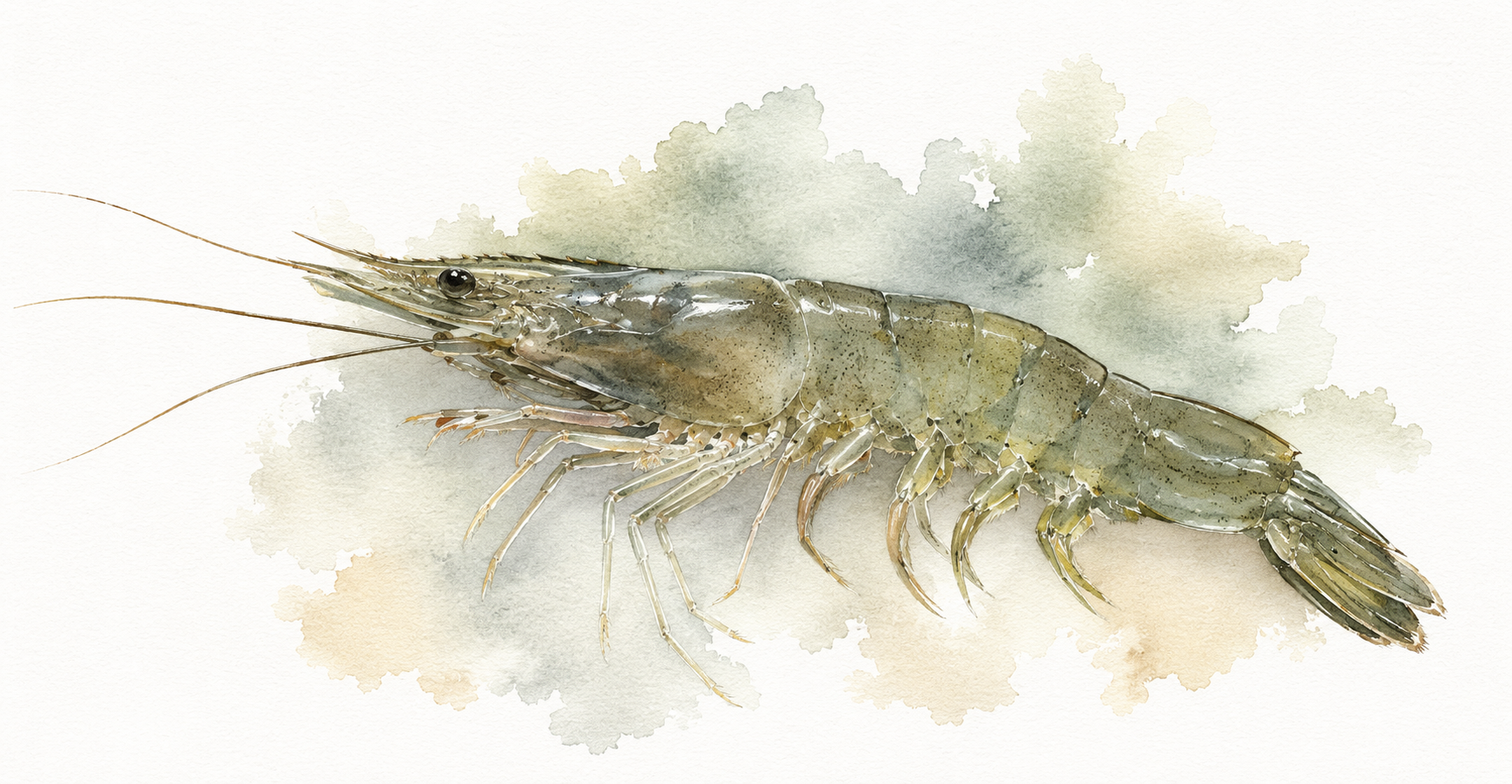
The Eastern School Prawn (Metapenaeus macleayi) is one of Australia’s most useful natural estuary baits. Found from southern Queensland through New South Wales to eastern Victoria, it is particularly abundant in NSW estuaries and tidal rivers.
School Prawns are relatively small, typically around 6–10 cm long, with a slender body and a pale, translucent appearance that can vary from greyish to light brown. They favour muddy estuarine bottoms, tidal channels and sheltered areas, including waters associated with seagrass.
Their size makes them particularly suitable for Bream, Whiting and Flathead, while larger specimens can also be used for Mulloway and Snapper.
School Prawns can be fished live, freshly caught or frozen. Live prawns provide natural movement, while fresh and frozen prawns offer a convenient, versatile bait that can be fished whole, peeled or cut into smaller portions.
Sourcing the Bait
School Prawns can be purchased fresh or frozen from seafood suppliers and bait retailers, particularly along Australia’s east coast. They can also be collected recreationally in suitable estuaries when seasonal abundance and local conditions permit.
Recreational Collection
Eastern School Prawns inhabit muddy estuary bottoms, tidal rivers and channels, often extending into relatively low-salinity waters.
Common recreational collection methods include:
- Prawn scoop nets: Used in shallow water where prawns can be located and collected individually.
- Prawn drag nets: Used in suitable shallow estuarine areas to collect prawns over soft substrates, where permitted.
- Hand-hauled prawn nets: Used to intercept prawns moving through suitable channels and shallow estuarine waters, where permitted.
Collection is often more productive during warmer months, although local abundance varies considerably between estuaries and seasons.
Run-out tides can provide opportunities where prawns are moving through channels and constricted passages. However, tidal movement alone does not guarantee prawns will be present.
Rainfall and freshwater discharge can influence their movements, particularly during downstream migration periods. Heavy flooding and strong currents may make collection impractical.
Choosing Purchased Prawns
Fresh School Prawns are convenient for immediate use, while frozen prawns allow anglers to carry bait for several sessions.
Whole prawns are generally preferable when purchasing bait, as they offer greater flexibility for different presentations.
Small prawns can be used whole, while larger specimens can be peeled or divided into portions.
Recognising Quality
Fresh School Prawns should have firm, intact bodies and a mild marine smell.
The shells should remain reasonably well attached, and the flesh should retain its structure when handled. Some variation in colour is normal and is not necessarily an indication of poor quality.
Avoid prawns with:
- Soft, mushy or deteriorating flesh.
- A strong ammonia-like or unpleasant odour.
- Extensive physical damage that makes them difficult to attach securely.
Darkening around the head or shell can occur after capture and does not automatically mean the flesh is unusable. Assess the overall condition rather than relying on colour alone.
For live bait, choose active prawns with intact bodies and appendages. Prawns that are sluggish or physically damaged may be less suitable for presentations that depend on natural movement.
Frozen prawns should remain firm while frozen, without obvious signs of repeated thawing and refreezing.
Storage and Care
Keeping Prawns Alive
Live School Prawns are best kept in an aerated container with clean water suited to the conditions in which they were collected.
Avoid overcrowding and excessive handling. Water temperature, oxygen levels and changes in salinity can affect survival.
Where practical, use a live-bait tank or container that maintains water circulation and aeration.
Storing Fresh Prawns
Fresh prawns should be kept chilled immediately after collection or purchase.
Place them in a sealed container or bag and store them in an ice-filled esky, keeping the bait separate from melting ice water.
Avoid allowing prawns to sit in freshwater, as this can soften the flesh and reduce their suitability for bait.
Use fresh prawns promptly or freeze them in portions for later sessions.
Freezing Prawns
Divide prawns into session-sized portions before freezing. Remove excess air from the packaging to reduce drying and freezer burn.
Thaw only the quantity required for fishing, preferably while refrigerated or kept chilled.
Repeated freezing and thawing can damage the flesh and reduce its ability to remain attached to a hook.
Preparing the Bait
School Prawns can be prepared in several ways depending on their size, condition and the fish being targeted.
Whole Prawns
Small School Prawns are particularly convenient when used whole.
The head, shell and tail provide a natural profile, while the body contains enough flesh to attract fish without requiring additional preparation.
Whole prawns are suitable for Bream, Flathead, Whiting and other estuary species.
Peeled Prawns
Removing the shell exposes the flesh and produces a softer bait.
Peeled prawns can be effective for Bream and Whiting, particularly when fish are taking smaller, softer offerings.
However, removing the shell reduces durability, especially during casting or when smaller fish repeatedly attack the bait.
Prawn Tails
The tail section provides a compact bait that can be threaded along a hook.
It is useful when a whole prawn is too large for the intended presentation or when the head has become damaged.
The shell can be retained for durability or removed to expose the flesh.
Cut Prawn Pieces
Larger School Prawns can be cut into smaller sections to suit hook size and target species.
A compact piece of firm flesh is generally preferable to an oversized portion that conceals the hook.
Cut sections are particularly useful when fishing for smaller Bream and Whiting.
How to Rig It
The best rigging method depends on whether the prawn is live or dead, the target species and the fishing conditions.
Live School Prawns
Live prawns should be hooked carefully to preserve movement.
A small, fine-wire hook can be passed shallowly through the tail section, avoiding the central digestive tract. Alternatively, place the hook shallowly through the firm shell near the front of the head, avoiding the vital organs beneath.
The aim is to secure the prawn without unnecessarily restricting its movement.
Live prawns can be fished beneath a float, on a lightly weighted running-sinker rig or with minimal weight where conditions permit.
Use the smallest practical weight to allow the prawn to move naturally.
Whole Dead Prawns
A whole dead prawn can be rigged by passing the hook through the body or tail section, keeping the bait reasonably straight.
For small prawns, a single hook is generally sufficient.
Larger specimens may require the hook to be positioned further along the body to maintain a secure attachment and leave the point exposed.
Avoid repeatedly piercing the flesh, as excessive handling can cause it to break apart.
Peeled Prawns and Tail Sections
Peeled prawns and tail sections can be threaded along the hook shank.
Pass the hook through the firmer portion of the flesh and bring the point out so that it remains clear.
Where the bait is particularly soft, leaving part of the shell attached can improve durability.
Running-Sinker Rig
A light running-sinker rig is a versatile option for presenting School Prawns near the bottom.
It is suitable for Bream, Flathead and Whiting in estuaries, tidal rivers and channels.
Use a sinker heavy enough to maintain the desired position without unnecessarily restricting bait movement.
For live prawns, lighter weighting is generally preferable.
Float Fishing
A float rig can suspend a live or dead prawn above the bottom.
This is useful when fish are feeding around submerged structure, channel edges or in mid-water.
Adjust the depth so the bait remains in the intended feeding zone rather than dragging along the bottom.
Lightly Weighted or Unweighted Presentations
Where current and casting distance permit, School Prawns can be presented with little or no added weight.
This allows a live prawn to move more freely and lets a dead prawn sink or drift naturally.
Such presentations can be useful for Bream feeding around sheltered structure or along shallow estuary margins.
Best Fish to Target
Yellowfin Bream
Yellowfin Bream readily feed on prawns and other small crustaceans.
Whole School Prawns are suitable around estuary structure, channel edges, oyster-covered areas and shallow flats.
A lightly weighted running-sinker rig or unweighted presentation is effective where conditions allow.
Peeled prawns and small tail sections are useful when fish are taking smaller offerings.
Black Bream
Black Bream are particularly well suited to School Prawns in southern estuaries.
Fish whole or cut prawns around submerged timber, rocky structure, channel edges and other areas where Bream forage.
Lightly weighted presentations allow the bait to settle naturally near the bottom.
Dusky Flathead
Dusky Flathead will take live or dead School Prawns, particularly where prawns are moving along shallow channels and drop-offs.
Whole prawns are generally preferable, although larger specimens can be trimmed if necessary.
A lightly weighted rig allows the bait to remain close to the bottom, where Flathead commonly feed.
Live prawns can be particularly useful when fish are actively hunting.
Sand Whiting
Sand Whiting will take small prawns and peeled prawn pieces on sandy estuary flats and channel margins.
Use small hooks and compact portions of bait.
Peeled prawn flesh can provide a soft offering, although it may require more frequent replacement.
Yellowfin Whiting
Yellowfin Whiting can be targeted with small School Prawns or prawn pieces in shallow estuarine waters.
Use light tackle and small hooks, particularly when fish are feeding in shallow water.
A lightly weighted presentation helps keep the bait moving naturally with the current.
Mulloway
Mulloway will take prawns, particularly smaller fish feeding in estuaries and tidal rivers.
Larger whole School Prawns can be presented around estuary channels and deeper holes.
Live prawns can be effective where Mulloway are actively feeding on small crustaceans.
School Prawns are generally a more practical bait for smaller estuary Mulloway than for anglers specifically targeting large fish.
Snapper
Snapper readily consume prawns and other crustaceans.
Whole School Prawns or larger tail sections can be fished around reefs, rubble grounds and coastal structure.
A lightly weighted running-sinker rig is suitable in calmer conditions, while additional weight may be required in deeper water or stronger current.
School Prawns are useful for smaller Snapper, although their relatively small size and moderate durability can make them less practical for some heavier offshore presentations.
Common Mistakes
Hooking live prawns too deeply
Deep hook penetration can damage vital organs and quickly kill the prawn. Use shallow hook placement through a suitable firm section of the shell.
Using hooks that are too large
Oversized hooks can overwhelm a small School Prawn, restrict live movement or tear through the flesh. Match hook size to the bait and target species.
Overhandling soft prawns
Repeatedly threading or repositioning a prawn weakens its flesh. Secure the bait with as few hook penetrations as practical.
Using excessive sinker weight
Heavy sinkers can restrict live-prawn movement and produce an unnatural presentation. Use only enough weight to maintain control.
Failing to replace deteriorating bait
Soft or damaged prawns may remain on the hook poorly and can be stripped by smaller fish. Replace bait when it no longer holds together.
The Bottom Line
Eastern School Prawns are an excellent natural bait for Australian estuary fishing, particularly for Bream, Flathead and Whiting.
Their small size makes them convenient to fish whole, while larger specimens can be peeled, tailed or cut into smaller portions. Live prawns provide natural movement, and fresh or frozen prawns remain effective across a range of presentations.
Their main limitation is moderate hook durability, particularly once peeled or thawed. Careful storage, appropriate hook placement and light rigging help make the most of this versatile bait.