
Introduction
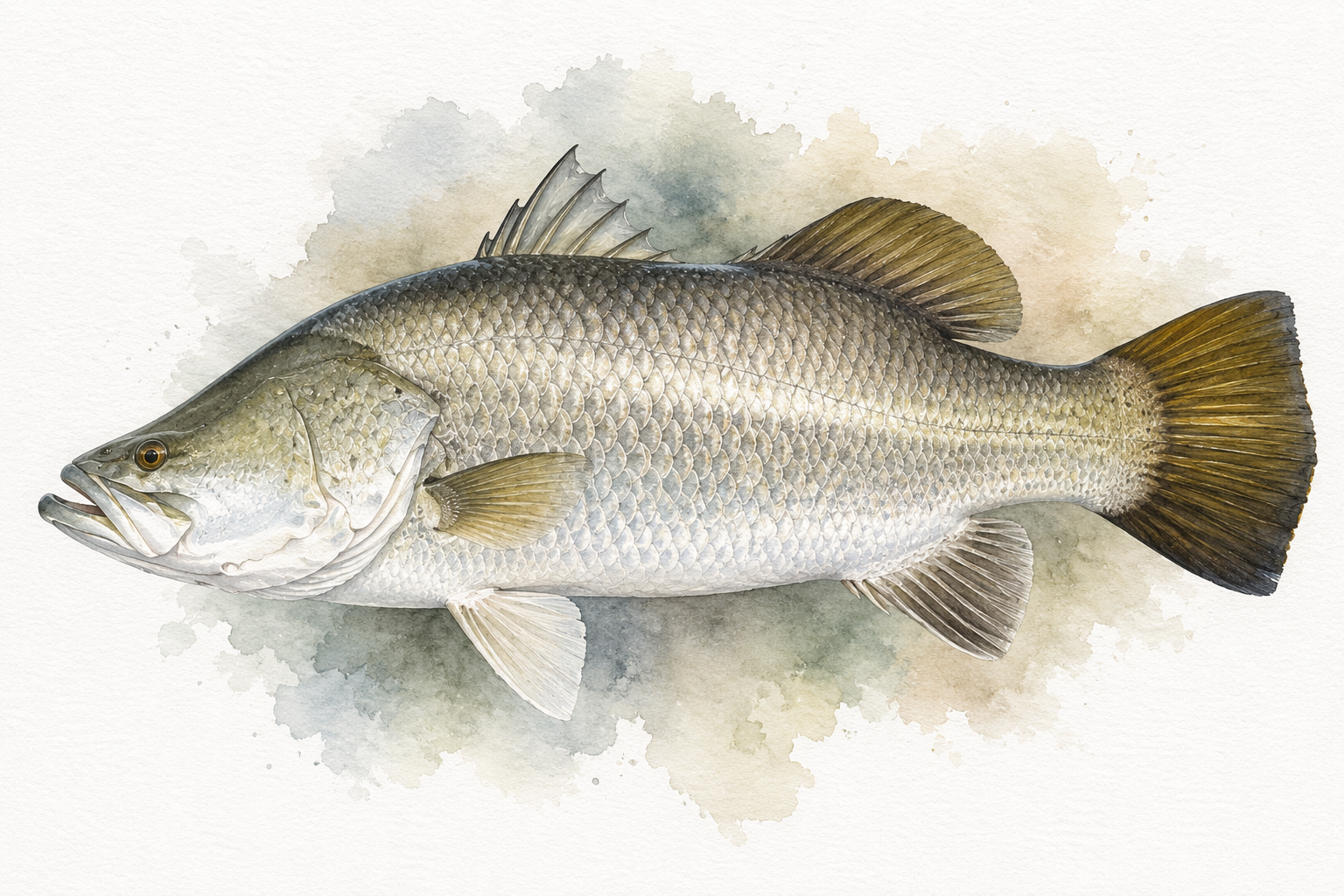
Barramundi are one of the few Australian sportfish that regularly move between freshwater, estuarine and coastal environments throughout their lives. Understanding that movement is the key to catching them consistently.
Many anglers focus on finding structure, but experienced barra fishers often focus first on water movement and bait. Barramundi are opportunistic ambush predators. They position themselves where tidal flow, current or wind-driven water concentrates baitfish and prawns, then use cover to launch short, explosive attacks.
A productive barra location almost always contains three elements:
- Bait
- Current
- Structure
Remove any one of those factors and the location often becomes far less reliable.
Across northern Australia, barramundi inhabit tidal rivers, mangrove creeks, estuary systems, floodplains, freshwater billabongs, impoundments and coastal embayments. Their behaviour changes considerably between these environments, which is why techniques that work in one fishery can fail completely in another.
Large tidal rivers in the Northern Territory often produce fish holding around submerged timber, rock bars and feeder creek mouths. Queensland estuaries frequently see barra positioned around mangrove edges, drains and rock structure. Inland impoundments such as Lake Tinaroo and Peter Faust Dam require a different approach again, with fish relating to points, weed beds, standing timber and submerged creek channels.
Successful barra fishing is less about covering huge areas and more about identifying small feeding zones within larger systems.
Tackle and Rigs
Barramundi are powerful fish capable of violent strikes, sudden direction changes and spectacular jumps. Even medium-sized fish can quickly expose weaknesses in tackle.
Most lure anglers use:
- 15–30lb braid
- 30–60lb fluorocarbon leader
- 2500–5000 size spin reels
- 5’6″–7′ medium-heavy rods
Heavy leaders are often necessary because barra commonly strike around timber, rock bars, oyster-encrusted snags and mangrove roots.
In snag-filled tidal rivers, many experienced anglers favour shorter rods with strong butt sections that allow immediate control after the strike.
For bait fishing, simple rigs generally outperform complicated setups.
Common options include:
- Running sinker rigs
- Unweighted live-bait presentations
- Light paternoster rigs in deeper water
Live mullet, herring, prawns and cherabin are among the most productive natural offerings.
The best bait presentation often depends on current speed. In slow-moving water, lightly weighted baits tend to produce more natural movement. In stronger tidal flow, enough weight is needed to keep the bait within the strike zone rather than allowing it to wash downstream.
Hook choice is important because barra possess hard mouths and powerful jaws. Strong chemically sharpened hooks provide better penetration during aggressive strikes.
When to Use Lures
Lure fishing has become the dominant method in many barra fisheries because it allows anglers to search water efficiently and repeatedly target likely ambush points.
The most productive lure category varies according to conditions.
Hardbody Minnows
Suspending and shallow-diving minnows excel around:
- Timber
- Rock bars
- Mangrove edges
- Creek mouths
Barramundi often inspect a lure several times before striking. Long pauses frequently trigger bites that continuous retrieves do not.
Many experienced anglers work a lure almost painfully slowly around structure. Barra often hit during the pause rather than during the retrieve itself.
Soft Plastics
Soft plastics become particularly effective when fish are feeding on small baitfish.
Paddle tails between 100mm and 150mm are among the most versatile barra lures available. They can be fished through snags, along drop-offs, beside weed beds or around bait schools.
The ability to adjust jighead weight allows anglers to match depth and current conditions precisely.
Vibration Lures
Vibes are extremely effective around:
- Deep holes
- Rock bars
- Channel edges
- Impoundment structure
They allow anglers to maintain contact with the lure while covering water vertically.
This technique is especially productive during cooler periods when fish hold deeper and become less willing to move long distances to intercept prey.
Surface Lures
Surface fishing represents one of the most exciting forms of barramundi angling.
Large fish regularly attack surface presentations around:
- Mangrove edges
- Flooded grass
- Lily pads
- Shallow flats
Warm water temperatures, low light and calm conditions often produce the best surface sessions.
Time of Day
Barramundi can feed throughout the day, but certain periods consistently outperform others.
Dawn and dusk are traditionally regarded as prime times because reduced light allows barra to hunt more aggressively in shallow water.
During these periods fish commonly move away from heavy cover and become more willing to patrol open feeding areas.
Night fishing can be exceptionally productive in many tidal systems.
Artificial lights around:
- Jetties
- Boat ramps
- Harbour structures
- Bridges
often attract baitfish, which in turn attract barramundi.
Some of the largest estuary fish are caught well after dark when boat traffic and fishing pressure are minimal.
During bright daytime conditions, barramundi frequently position themselves deeper within cover.
This is particularly noticeable in clear water where fish become more cautious and difficult to approach.
In impoundments, midday fishing can still be productive when fish are located holding deep along submerged structure or creek channels.
Common Mistakes
Fishing Too Fast
Perhaps the most common barra fishing mistake is retrieving lures too quickly.
Barramundi are capable of tremendous bursts of speed, but they often prefer to ambush prey rather than chase it over long distances.
A slower retrieve with regular pauses generally produces more strikes.
Ignoring Water Temperature
Barramundi activity is strongly influenced by water temperature.
Even small temperature differences can concentrate fish within a system.
Warm pockets of water often attract bait and actively feeding fish, particularly during cooler months.
Many anglers overlook these subtle changes.
Leaving Productive Structure Too Soon
Barramundi frequently require repeated presentations before committing to a strike.
A snag that appears lifeless may hold multiple fish.
Experienced anglers often work productive structure from several angles before moving on.
Fishing Structure Instead of Current
Structure alone rarely explains why barra are present.
Current creates feeding opportunities.
The most productive locations usually combine cover with water movement that funnels bait into predictable areas.
Poor Hook-Setting Technique
Barramundi frequently jump immediately after being hooked.
Overly aggressive hook strikes can create large hook holes that increase the likelihood of fish throwing the lure during aerial displays.
Maintaining steady pressure and allowing the rod to absorb sudden movements often results in better landing rates.
Failing to Adjust to Tide Changes
Many anglers continue fishing the same location despite changing tidal conditions.
Barramundi often reposition dramatically as water levels rise and fall.
A productive drain on the falling tide may become almost inactive once the tide begins pushing in.
The Bottom Line
Consistent barramundi fishing comes down to understanding how fish use structure, current and bait throughout a system. The anglers who catch barra regularly are usually those who spend less time searching for random fish and more time identifying repeatable feeding locations.
Look for areas where moving water concentrates bait around cover. Focus on creek mouths, drains, rock bars, mangrove points, submerged timber and current breaks. Fish these locations thoroughly rather than racing between spots.
Barramundi are opportunistic predators that often feed in short windows. A location that appears lifeless for an hour can suddenly produce multiple fish when bait movement, tide stage and fish activity align.
Patience, precise lure placement and an understanding of water movement consistently outperform brute-force fishing. Learn how barramundi position themselves within a system, and the fish become far more predictable.
For most anglers, the breakthrough moment comes when they stop simply casting at structure and start understanding why the fish are holding there in the first place. Once that happens, barramundi become a species that can be targeted consistently rather than occasionally encountered by chance.