

Introduction
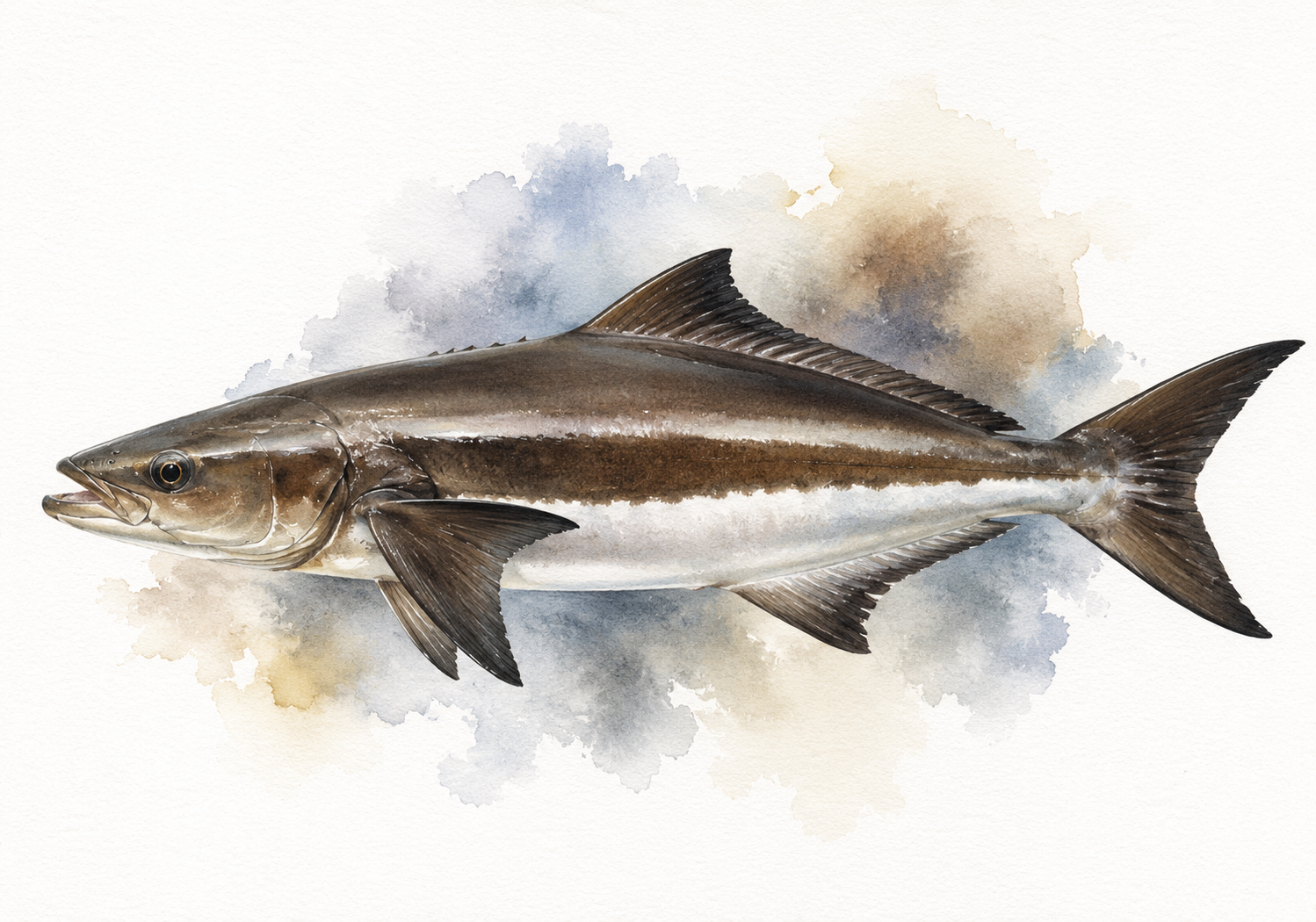
Cobia are one of the more unusual fish encountered in Australian coastal waters because they rarely behave exactly as anglers expect.
They are often described as pelagic fish, yet many are caught around fixed structure. They can appear beside an offshore beacon, under a manta ray, next to a wreck, beneath a turtle or suddenly materialise behind a hooked fish being retrieved from depth.
Many anglers spend years catching Cobia accidentally before learning how to target them consistently.
The key is understanding that Cobia are structure-oriented hunters that use current, bait concentrations and visual cues to locate food. They are far less random than their reputation suggests.
Once anglers learn where to look and what signs to watch for, they become a surprisingly predictable target.
Tackle and Rigs
Cobia are powerful fish that combine sustained runs with stubborn fighting close to the boat. A quality 8000–14000 size spin reel matched to a medium-heavy offshore rod covers most Australian situations. Thirty to fifty-pound braid and a leader between 60 and 100 pounds is a practical starting point around reefs, wrecks and beacons.
Live-bait rigs account for many larger fish. A simple single-hook rig pinned through the shoulder of a live slimy mackerel or yakka is often all that is required. One common mistake is fishing live baits too deep. While Cobia will feed near the bottom, they frequently patrol well above structure. Suspending live baits through the mid-water column often produces better results than placing them directly on the seabed. Around navigation beacons and wrecks, many experienced anglers stagger baits at different depths until fish reveal where they are holding.
When to Use Lures
Lures excel whenever fish are visible or actively feeding. Sight-casting opportunities are one of the most exciting aspects of Cobia fishing. Fish cruising beneath rays, turtles or floating debris can often be targeted directly with soft plastics, stickbaits and bucktail jigs.
Large paddle-tail plastics have become particularly effective because they allow anglers to cover multiple depths while maintaining a realistic baitfish profile. Unlike Spanish Mackerel or Tuna, Cobia generally do not require extremely fast retrieves. In fact, slower presentations often work better. Allowing a plastic to sink naturally before applying a steady retrieve frequently produces strikes from following fish.
Surface lures become valuable when fish are actively cruising around structure or visible beneath bait schools. Poppers and stickbaits can draw aggressive strikes, particularly from fish that have moved high in the water column. When a fish follows but refuses a lure, immediately dropping a soft plastic or live bait behind it is often enough to trigger a bite.
Time of Day
Cobia can be caught throughout the day, particularly when associated with fixed structure. Unlike many species that rely heavily on low-light feeding periods, Cobia are frequently sighted and caught during full daylight hours.
The most productive periods often coincide with active tidal movement rather than a specific time on the clock. Dawn remains valuable because bait schools commonly become active around reefs and beacons during the first few hours of light. However, anglers who stop looking once the sun rises often miss opportunities. Many large Cobia are spotted around structure during the middle of the day when visibility is at its best.
Common Mistakes
One of the most common mistakes is failing to keep a rod ready. Cobia frequently appear unexpectedly. Anglers cleaning fish, retrieving anchors or fighting another species often encounter fish beside the boat with no bait or lure immediately available. Successful Cobia anglers usually have a live bait or cast-ready lure prepared whenever fishing productive structure.
Another mistake is focusing exclusively on the bottom. Cobia use the entire water column and regularly feed well above reef structure. Fishing too deep can place presentations beneath actively feeding fish. Many anglers also leave productive structure too quickly. Cobia may appear suddenly after tide changes, bait movements or shifts in current direction.
Finally, anglers often underestimate how visual the species can be. Constantly scanning around the boat for rays, turtles, bait schools, floating debris and cruising fish often leads directly to opportunities that sounder screens never reveal.
The Bottom Line
Consistent Cobia fishing is built around three factors: structure, bait and warm water. Find offshore reefs, wrecks, beacons, headlands or floating objects holding bait in water above 20°C and you are already looking in the right places. Keep live baits suspended through the water column, remain alert for fish appearing unexpectedly around the boat and avoid the temptation to fish exclusively on the bottom.
Many Australian anglers catch Cobia by accident. The anglers who catch them regularly are usually the ones actively watching the water around them, understanding how the species relates to structure and always having a bait or lure ready when an opportunity appears.