
Introduction
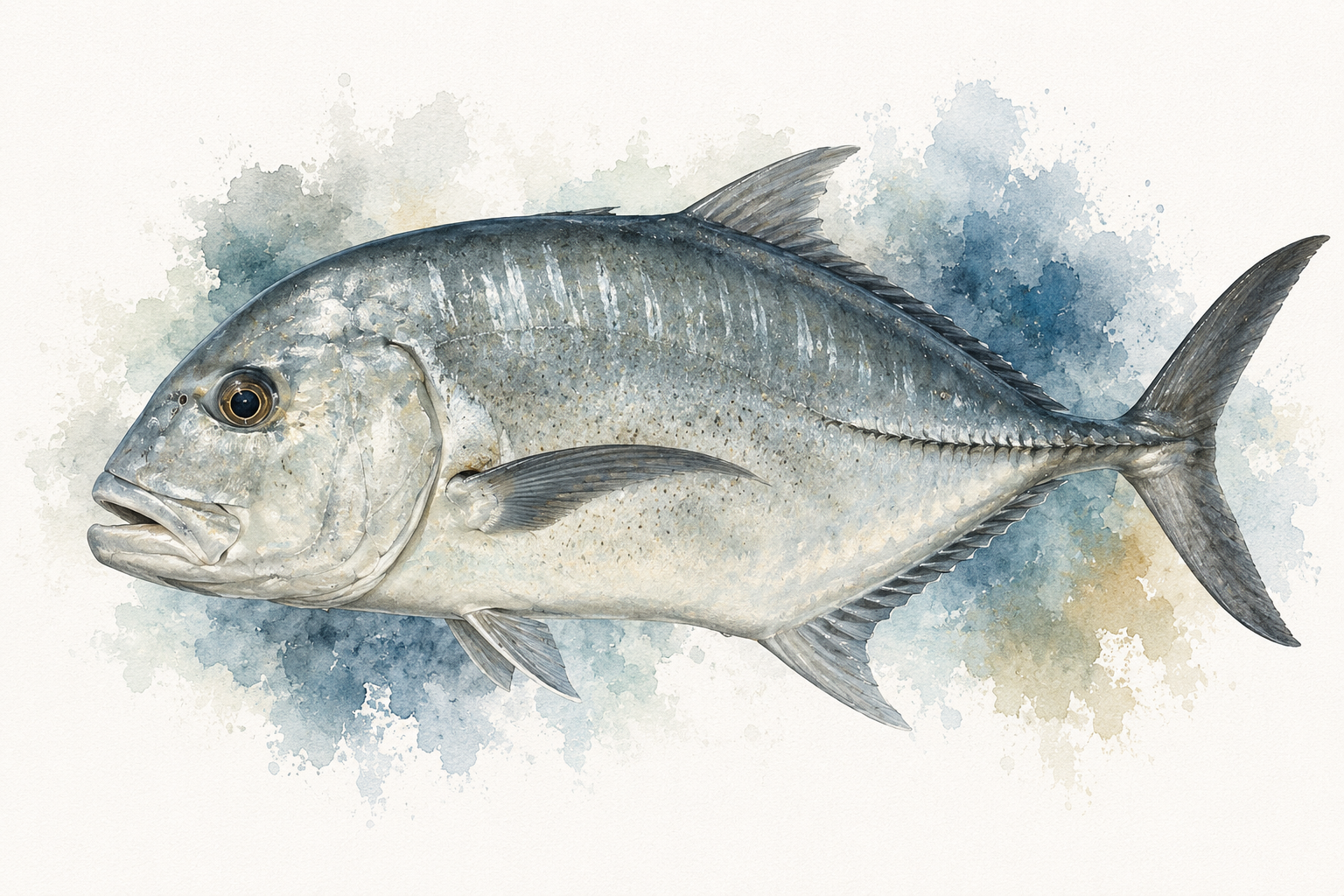
Giant trevally are built for one thing: using current, structure and speed to ambush baitfish.
Unlike many reef species that spend much of their time holding close to cover, GTs are highly mobile predators that patrol reef edges, pressure points, channel entrances, bommies, headlands and tidal passes looking for feeding opportunities. Their movements are often dictated less by location and more by current flow, bait concentration and water movement. A reef that appears lifeless on a slack tide can suddenly become a high-percentage GT location once water starts moving.
In Australian waters, giant trevally occur from central Western Australia across the tropical north and down the east coast into central New South Wales. The largest and most consistent fisheries are found around northern WA, the Kimberley, Pilbara, Ningaloo region, Northern Territory coastal systems, Cape York, the Great Barrier Reef and offshore Coral Sea reefs.
Although capable of exceeding 50kg and occasionally approaching 80kg, most fish encountered by recreational anglers fall into a far more manageable range. Juveniles are regularly encountered around estuaries, harbours and inshore coastal systems, while larger adults become increasingly associated with offshore reefs, islands and heavy current zones.
The biggest mistake many anglers make is treating GTs as purely reef fish. In reality, they are current-oriented predators. Finding moving water, baitfish and an ambush point is often more important than finding reef itself.
Tackle and Rigs
GT fishing is one of the few Australian fisheries where genuinely heavy tackle is often justified.
Large fish are capable of covering significant distance in seconds and will immediately attempt to reach reef edges, coral bommies, ledges, moorings or other structure. Once a fish reaches cover, the battle is usually over.
For surface lure fishing around reefs and islands, PE8-10 tackle is standard, matched with large spinning reels capable of producing substantial drag pressure. Many experienced GT anglers fish 100-170lb leaders depending on terrain and coral density.
Where fish are encountered around estuary mouths, harbour systems and inshore rock platforms, lighter tackle can be used effectively. PE4-6 outfits are often sufficient for fish under 15kg provided structure can be managed.
Live bait rigs should prioritise strength and simplicity. Single heavy-gauge live bait hooks or strong inline circles perform well when presenting fusiliers, garfish, mullet, herring, slimy mackerel and other local baitfish.
The objective is not finesse.
The objective is applying enough pressure early in the fight to turn the fish before it reaches structure.
Many lost GTs result from anglers fishing tackle suitable for the fish’s weight rather than tackle suitable for the terrain.
When to Use Lures
Surface lures dominate the reputation of GT fishing for good reason.
Large cup-faced poppers create significant surface disturbance and can draw fish from considerable distances when current is moving and baitfish are concentrated around reef edges. Few fishing experiences match watching a large GT accelerate from depth and engulf a surface lure.
However, surface fishing is not always the highest-percentage approach.
Stickbaits often outperform poppers when fish are feeding beneath surface schools or when conditions are calm. Their more subtle presentation can trigger fish that refuse aggressive surface commotion.
Around pressure points, current seams and reef channels, sinking stickbaits frequently account for fish that are holding deeper in the water column.
Soft plastics also remain underutilised in many Australian GT fisheries. Large paddle-tail plastics worked through current lines, harbour channels and estuary mouths can be extremely effective on juvenile and medium-sized fish.
The key is matching lure depth to fish position.
Many anglers continue throwing surface lures simply because GTs are known for surface strikes, even when fish are clearly feeding several metres below the surface.
Time of Day
GTs can feed aggressively throughout the day, particularly when tidal movement is strong.
Unlike species that become heavily restricted to dawn and dusk periods, giant trevally often feed whenever current creates favourable ambush conditions.
That said, low-light periods frequently provide an advantage.
Early morning often sees bait schools pushed closer to the surface, allowing fish to hunt more aggressively around reef edges, channel mouths and shallow pressure points. Late afternoon can produce similar results.
Cloud cover can extend these feeding periods significantly. Overcast conditions frequently allow fish to remain active in shallower water for longer periods than during bright, clear days.
In clear tropical environments, bright midday sun often pushes larger fish deeper along reef edges and drop-offs. They remain catchable, but locating them may require fishing deeper presentations.
Current generally matters more than the clock.
A perfectly timed tide change occurring at midday will often outfish a poor tide occurring at dawn.
Common Mistakes
Fishing structure instead of current
Many anglers focus entirely on reef location while ignoring water movement.
GTs are commonly positioned where current is compressed, accelerated or redirected. Reef corners, channel entrances, pressure points and headlands often produce because of how they influence water flow, not because they are simply reef.
Working lures too quickly
GTs are powerful predators, but they do not always want maximum speed.
Particularly around pressure points and current lines, slower presentations often allow fish more time to commit. Anglers frequently retrieve surface lures faster than necessary.
Ignoring bait activity
Birds, fusiliers, garfish, slimy mackerel and other bait species provide valuable information.
If bait is absent, GTs are less likely to remain in the area for extended periods. Productive locations almost always have some form of forage base present.
Underestimating juvenile habitat
Many anglers associate GTs exclusively with offshore reefs.
Juveniles regularly utilise estuaries, harbour systems, coastal bays and river mouths. These areas can provide excellent opportunities on lighter tackle and often receive far less fishing pressure than offshore locations.
Being unprepared for the first run
The opening seconds determine many GT fights.
Anglers who hesitate after hookup often lose fish before meaningful pressure can be applied. The first objective should always be preventing the fish from reaching structure.
The Bottom Line
Successful GT fishing revolves around understanding how giant trevally use current.
The best locations consistently combine moving water, bait concentration and a structure feature that allows fish to ambush prey efficiently. Reef points, island corners, channel entrances, current seams and pressure edges repeatedly produce because they create predictable feeding opportunities.
While giant trevally are famous for explosive surface strikes, anglers who consistently catch them remain flexible. They adjust lure depth, presentation speed and location based on current flow, bait position and fish behaviour rather than relying on a single technique.
Find moving water. Find bait. Identify the ambush point.
When those three factors align, giant trevally are rarely far away.