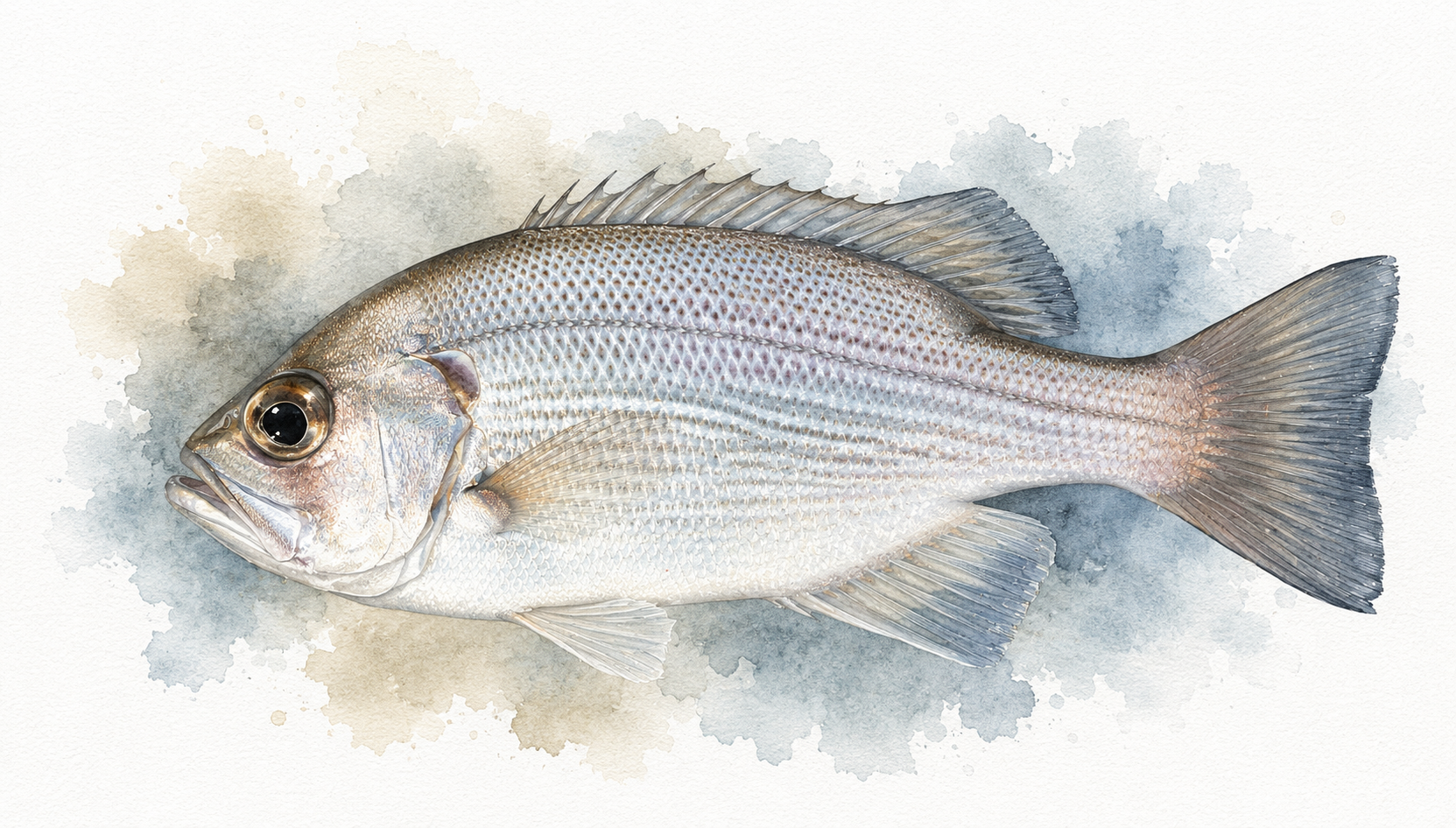

Pearl Perch

Glaucosoma scapulare

Pearl Perch are endemic to Australia’s east coast. Their recognised range extends from the Rockhampton region of central Queensland south to the Port Macquarie region of New South Wales, with the strongest recreational fisheries occurring off southeast Queensland and northern New South Wales. Major recreational fisheries occur off Brisbane, the Sunshine Coast, Fraser Coast, Wide Bay-Burnett, Bundaberg, 1770, Gladstone and northern New South Wales reef systems where suitable offshore reef habitat is available.

QUICK FACTS

Alternative Names

Pearly, Pearlie

Average Size

35–50 cm

1–3 kg

Trophy Size

60 cm+

Primary Habitat

Reef

Depth Range

20–150 m

Taste Quality

Excellent

DISTRIBUTION & HABITAT

COMING SOON

The species is largely associated with the continental shelf and offshore reef systems of subtropical eastern Australia. The most consistent recreational fisheries occur from the Sunshine Coast north to Gladstone, where extensive hard-bottom reef systems support strong populations. Pearl Perch are also an important component of the offshore reef fishery off Fraser Island, Double Island Point and the Capricorn Coast. In New South Wales, captures become less frequent toward the southern end of their range. Most fish are taken from offshore reef complexes between Port Macquarie and the Queensland border. Pearl Perch are not known for long-distance seasonal migrations. Instead, localised movements appear linked to spawning activity, reef occupancy and changing water temperatures.

STATES

NSWQLD

HABITAT

rock-reefpinnaclegravel-bottomrock-bottom
Pearl Perch are most commonly found around isolated reef structure, broken hard bottom, coffee rock formations, gravel patches, pinnacles and reef edges. Unlike species that remain tight to the seabed, Pearl Perch often hold several metres above structure and regularly feed throughout the lower and mid-water column. This behaviour frequently places them slightly wider of reef peaks than species such as Snapper or Trag Jew. Productive areas typically contain bait schools, squid concentrations and moderate current flow. Reef edges that intersect current lines often produce better catches than flat reef plateaus.

SEASONAL PATTERNS

COMING SOON

SEASONAL NOTES

  • Pearl Perch are available throughout the year across most of their range, but catch rates often improve during cooler months when stable oceanic water occupies offshore reef systems.
  • Spawning activity is believed to occur primarily during winter and spring, influencing local aggregations on some reef systems.
  • Unlike highly migratory pelagic species, Pearl Perch generally remain associated with established reef habitat throughout the year. Seasonal changes usually affect feeding intensity and local abundance rather than causing major migrations.

BEST BAITS

pilchardsquidoctopusslimy-mackereltuna-stripbonito-stripsquid-strip
  • Squid consistently ranks among the most reliable Pearl Perch baits because it withstands pickers and remains intact during repeated drops into deeper water.
  • Fresh fish strips from tuna, bonito and mackerel work particularly well when larger fish are present. Long, tapered strip baits often outfish bulky offerings because they flutter naturally in current.
  • Live baits are effective over isolated reef structure where larger Pearl Perch are actively hunting baitfish above the reef.
  • Many anglers fish too close to the bottom. Pearl Perch frequently intercept baits several metres above structure, making longer droppers or elevated presentations effective.

BEST BERLEY

pilchard-cubesfish-framesfish-cubestuna-mincemackerel-mince
  • Berley can be effective when fishing shallower reef systems and reef edges where current disperses scent trails through the water column.
  • Unlike species that aggressively school behind berley trails, Pearl Perch are more commonly attracted indirectly through increased bait activity around the reef.
  • Berley is generally less important than accurate positioning over productive reef structure.

BEST LURES

paddle-tail-soft-plasticcurl-tail-soft-plasticsoft-jerkbaitmicro-jigslow-pitch-jigflutter-jigoctopus-jig
  • Pearl Perch respond particularly well to soft plastics because they commonly feed above the seabed rather than directly on it.
  • Five to seven-inch jerk shads worked with long lifts and controlled descents are highly effective on southeast Queensland reefs. Many strikes occur as the lure sinks back toward the reef.
  • Slow-pitch and mechanical jigs are effective when fish are suspended around bait schools. Pearl Perch often strike during the pause or flutter phase rather than during aggressive rod work.
  • Lure anglers targeting Snapper frequently encounter Pearl Perch when fishing deeper reef edges with larger plastics.

WEATHER & TIDES

WEATHER CONDITIONS

  • Light winds below 15 knots
  • Stable barometric pressure
  • Several days of settled weather
  • Small offshore swell
  • Overcast to partly cloudy conditions

Pearl Perch can be caught under a wide range of weather conditions, but stable offshore weather allows more precise boat positioning and lure presentation over isolated reef structure.

TIDES

  • Moderate tidal flo
  • Building tide movement
  • First half of the run-in tide
  • First half of the run-out tide
  • Tide changes around dawn

Pearl Perch often feed most actively when current is sufficient to move bait across reef structure without becoming excessively strong.

Periods of minimal tidal movement can reduce feeding activity, while very strong tidal flow may make it difficult to keep baits and lures in the strike zone.

AVOID

  • Dirty runoff water
  • Excessively strong current
  • Large offshore swell
  • Rapid water-temperature changes
  • Slack tidal periods
  • Poor boat positioning over reef structure

IMPORTANT TIP

A moderate tidal run combined with light winds often produces the most consistent Pearl Perch fishing because boats can maintain position over small reef features while current continues to move bait through the area. Dawn tide changes during settled weather frequently produce short but productive feeding periods.

COMPLETE FISHING GUIDE

Introduction

Pearl Perch occupy a niche that sits somewhere between traditional reef species and mid-water predators. Many anglers first encounter them while targeting Snapper, Trag Jew, Amberjack or reef species on offshore structure, but anglers who deliberately target Pearl Perch often catch them far more consistently.

One reason they can be overlooked is that they do not always behave like a typical bottom fish. While they are strongly associated with reef structure, they frequently feed several metres above it. This single behavioural trait explains why some anglers catch Pearl Perch regularly while others fishing the same reef rarely see one.

The most productive Pearl Perch anglers spend less time thinking about the bottom and more time thinking about the water immediately above the reef.

Tackle and Rigs

Pearl Perch are not particularly difficult fish to stop, but they are usually targeted around deep reef structure where tackle needs enough power to maintain control during the first part of the fight.

For bait fishing, a 15–24kg overhead outfit or a medium-heavy spin outfit is suitable for most offshore situations. Braided line improves bite detection and helps maintain contact in deeper water.

Traditional paternoster rigs remain effective, particularly when fishing squid strips and fish baits. However, many experienced Pearl Perch anglers deliberately run longer droppers than they would for Snapper or Trag because Pearlies often feed higher in the water column.

A common mistake is using rigs designed to keep baits pinned hard on the bottom. Raising a bait even a few metres above the reef can make a significant difference.

When lure fishing, tackle designed for Snapper soft-plastic fishing adapts well to Pearl Perch. Rods capable of working 60–150g jigheads, slow-pitch jigs and larger soft plastics are ideal.

When to Use Lures

Lures become increasingly effective when fish are actively feeding around bait schools. Pearl Perch often respond aggressively to soft plastics because the presentation naturally imitates wounded baitfish drifting above reef structure. Large jerk shads and paddle tails are particularly effective when allowed to sink naturally through the water column.

Many anglers work plastics too quickly. Pearl Perch frequently strike during the drop rather than the lift. Maintaining contact while allowing the lure to descend naturally often produces more bites than aggressive rod work.

Slow-pitch jigs are another productive option, especially on reefs holding suspended fish. Their fluttering action closely matches the movement of injured baitfish and squid.

One useful approach is to fish slightly wider than the highest point of the reef. Fish holding above surrounding hard bottom often encounter a descending lure before it reaches the reef itself.

Time of Day

Pearl Perch can be caught throughout the day, particularly in deeper water where light penetration has less influence on feeding behaviour. That said, dawn remains one of the most productive periods on many southeast Queensland and northern New South Wales reef systems. Early morning often coincides with increased bait activity around reef edges, and Pearl Perch commonly rise higher in the water column to feed.

The first few hours after sunrise frequently produce the most aggressive lure bites of the day.

Unlike some reef species that become difficult to catch during bright conditions, Pearl Perch often continue feeding throughout daylight hours provided current remains favourable.

Common Mistakes

The most common mistake is fishing too close to the bottom. Many anglers assume Pearl Perch behave like other reef fish and keep baits directly on the seabed. In reality, a significant proportion of fish are caught several metres above the structure.

Another mistake is ignoring small or isolated reef features. Large reef systems attract attention, but small pinnacles, gravel rises and isolated hard-bottom patches often hold quality Pearl Perch with less fishing pressure.

Poor boat positioning is another major issue. A drift line only a short distance off target can move baits completely away from productive structure.

Lure anglers also frequently retrieve too quickly. Pearl Perch regularly strike on the sink, making controlled descents more important than aggressive retrieves.

Finally, many anglers leave productive reefs too quickly. Pearl Perch often feed in short windows associated with current changes, and a reef that appears quiet can become highly productive when conditions align.

The Bottom Line

Consistent Pearl Perch fishing comes down to understanding one key principle: they are reef fish that frequently feed above the reef. That behaviour influences almost every aspect of how they should be targeted. It affects bait presentation, lure choice, rig design and boat positioning. Focus on offshore hard-bottom structure between 20 and 150 metres, fish clean oceanic water with moderate current, and avoid pinning presentations directly to the seabed.

Whether fishing squid strips on paternoster rigs, drifting soft plastics across reef edges or working slow-pitch jigs through suspended fish, anglers who keep their presentation above the structure generally catch more Pearl Perch than those who fish hard on the bottom. On many east-coast reef systems, that small adjustment is often the difference between occasionally catching Pearl Perch and targeting them deliberately.

Built for Hunters. Made for Australia.

Join Oz Fish and Game and connect with those who live the lifestyle — training, fieldcraft, and mateship for the modern outdoorsman.