

TACKLE AND RIGS
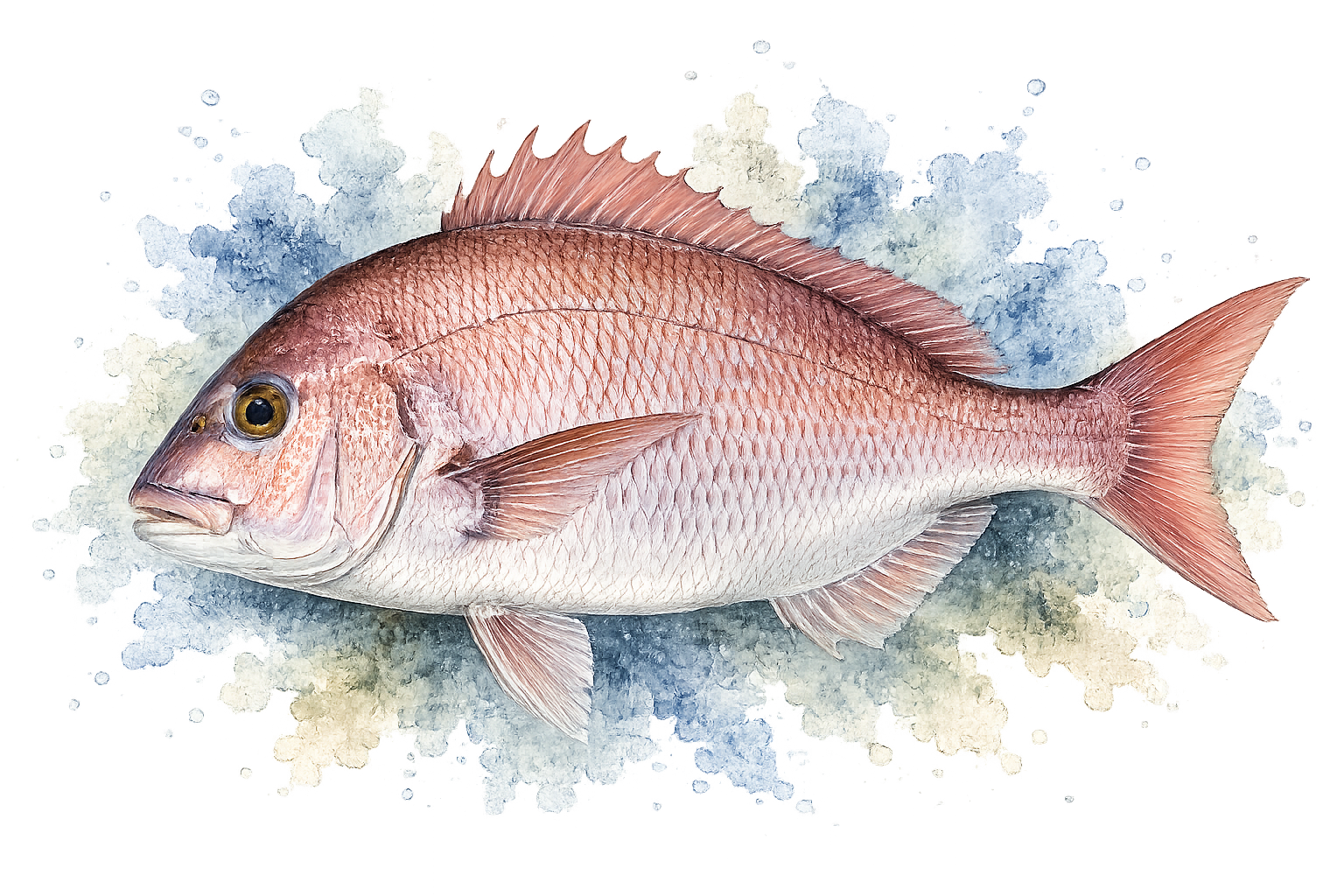
Snapper are powerful fish that make excellent use of both their surroundings and their fighting style. While they rarely produce blistering runs, larger fish are renowned for violent head shakes and a habit of finding nearby reef, kelp or broken ground once hooked. A balanced outfit that offers both sensitivity and stopping power is therefore essential.
For most Australian snapper fishing situations, a medium-heavy spin or overhead rod between 6’6″ and 7’6″ provides an ideal combination of casting ability, fish-fighting control and versatility. Reels in the 4000–8000 size range remain the standard choice, matched with 10–30lb braid or monofilament depending on personal preference and fishing conditions. Leaders between 20–50lb fluorocarbon or monofilament provide sufficient abrasion resistance around reef and structure while still allowing natural bait presentation.
Terminal tackle should remain as simple as possible. Octopus and circle hooks in sizes from 4/0–7/0 account for countless snapper each year, and many experienced anglers deliberately minimise additional hardware to allow baits to move naturally in the current.
Several rig styles consistently produce fish across Australia. Stray-line rigs excel when presenting lightly weighted baits in current, while running sinker rigs provide versatility across a range of depths and conditions. Twin-hook snelled rigs are commonly used with larger baits, and float-lined pilchard rigs remain one of the most productive methods for targeting quality snapper around reef systems and pressure edges.
Regardless of the rig chosen, natural bait presentation remains one of the most important factors in successful snapper fishing. Fish that are hesitant to inspect an unnatural offering will often confidently engulf a bait that drifts naturally with the current.
WHEN TO USE LURES
Modern lure fishing for snapper is highly effective, but it is often most productive when fish are actively feeding or holding around identifiable structure. While bait remains a proven option in many situations, lures allow anglers to efficiently cover water and target fish that are actively hunting.
Lures are particularly effective when snapper are clearly visible on sounder marks and responding to schools of bait. Fish holding along reef edges with consistent current flow are also excellent candidates, as moving water concentrates both food and feeding fish. Drifting over broken ground allows anglers to present lures across a variety of productive terrain, while areas holding bait schools often attract snapper that are actively searching for easy feeding opportunities.
Success with lures often comes down to matching presentation to fish behaviour. Slow lifts, controlled drops and extended pauses frequently outperform aggressive retrieves, particularly when targeting larger fish holding close to the bottom. Anglers who pay close attention to sounder activity, bait concentrations and current lines can often identify situations where lures will outperform natural baits.
TIME OF DAY
Snapper can be caught throughout the day, but certain periods consistently produce higher catch rates than others. Dawn and dusk are widely regarded as the most productive windows, with reduced light levels encouraging fish to move more freely and feed with greater confidence.
Low-light conditions often see larger fish venture into shallower water, particularly around reef edges, washes and broken ground. This behaviour creates opportunities for anglers willing to fish the periods immediately before sunrise and after sunset.
Night fishing can be particularly effective in shallow reef systems and wash zones, where snapper frequently move into areas that may be difficult to fish during daylight hours. Daytime fishing remains productive, especially in deeper water, but anglers often find that larger fish become more cautious as light intensity increases.
Understanding how light levels influence fish behaviour can significantly improve results, particularly when targeting trophy-sized snapper.
COMMON MISTAKES
Many snapper anglers unknowingly reduce their chances of success by overlooking a handful of critical factors. One of the most common mistakes is targeting water that is excessively clear and calm. While such conditions may appear ideal to anglers, snapper often feed more confidently when there is some movement, colour or whitewater present.
Bait quality is another area where many opportunities are lost. Fresh bait consistently outperforms stale or heavily frozen offerings, particularly when targeting larger fish. Similarly, using excessive weight can hinder natural presentation and reduce the effectiveness of otherwise productive baits.
Current direction is frequently overlooked despite being one of the most important factors influencing snapper location and feeding behaviour. Productive reef edges, pressure points and bait concentrations are often directly linked to moving water.
Location selection also plays a major role. Many anglers fish too far from structure, while others focus their efforts too high in the water column. Snapper spend much of their time close to the bottom and around areas that provide both food and cover. Lure anglers can make a similar mistake by retrieving too aggressively when a slower, more subtle presentation would be more effective.
In many cases, small adjustments in presentation, positioning and bait quality can produce dramatically better results.
THE BOTTOM LINE
Successful snapper fishing is often far less complicated than many anglers make it. The most consistent catches usually come from anglers who focus on a handful of key ingredients: reef, current, bait and slightly stirred-up water.
When these factors come together, snapper are rarely far away. The challenge then becomes presenting a bait or lure as naturally as possible and remaining patient enough to capitalise on feeding opportunities when they occur.
Consistent snapper anglers place enormous importance on conditions, bait quality and presentation. Small improvements in rigging, location selection and understanding fish behaviour frequently separate average sessions from exceptional ones.