
Introduction
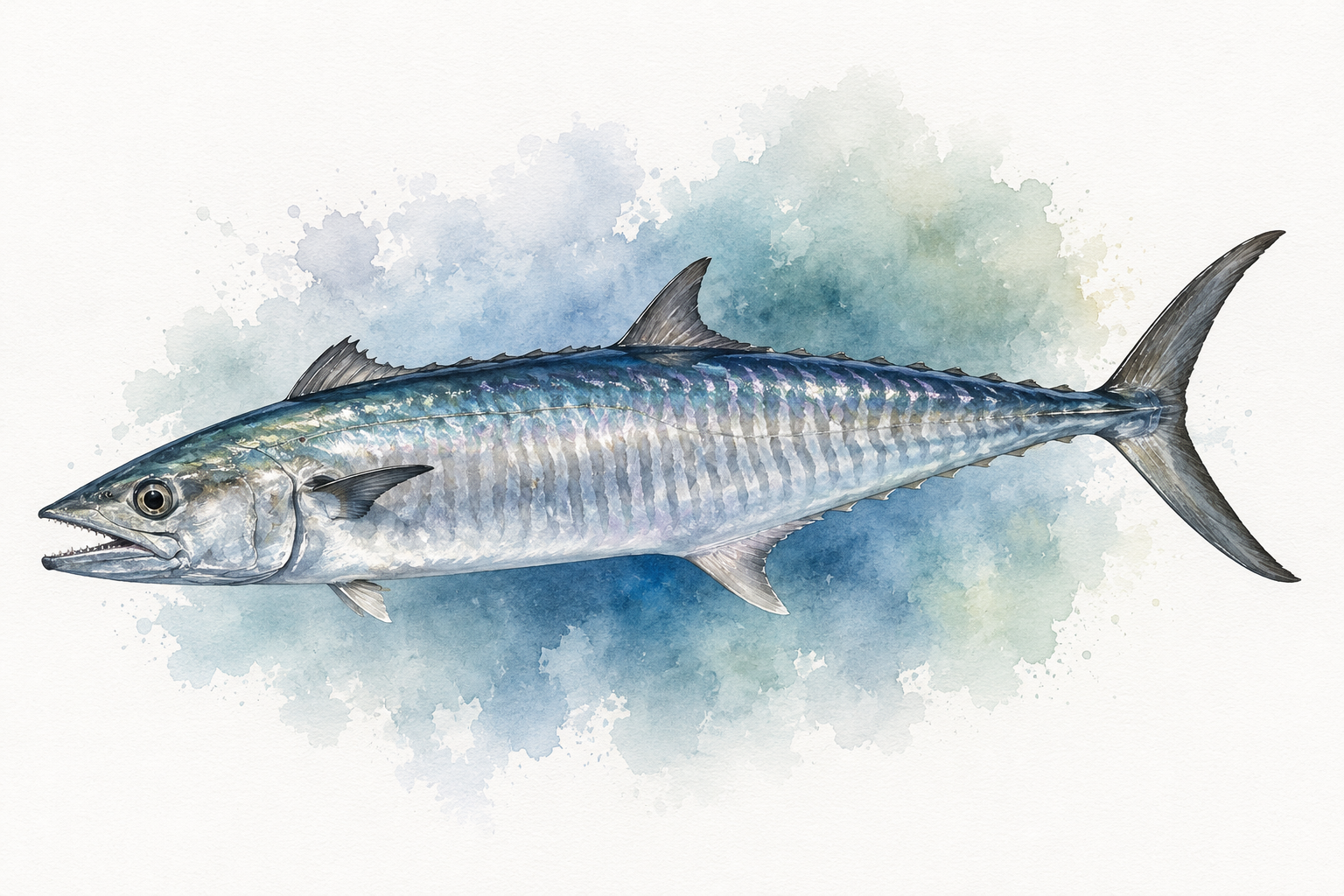
Spanish mackerel are one of the few Australian sportfish that can be targeted effectively with multiple techniques on the same day. Trolling, live-baiting, casting and even drifting can all produce fish when conditions line up. The challenge is rarely getting a lure or bait in front of a mackerel. The challenge is finding where bait, current and water quality intersect.
Many anglers spend too much time focusing on reef structure itself. Spanish mackerel are not a structure-oriented species in the same way coral trout, red emperor or mangrove jack are. They are highly mobile pelagic predators that use reefs, shoals and islands primarily as feeding stations.
Understanding this distinction is often the difference between occasionally catching Spanish mackerel and targeting them consistently.
Large Spaniards spend much of their time patrolling open water adjacent to structure. They are constantly searching for bait schools and will often move considerable distances if food availability changes. For anglers, this means finding bait is usually more important than finding reef.
One of the most reliable indicators is concentrated bait activity. Schools of fusiliers, slimy mackerel, scad, sardines and garfish all attract Spanish mackerel. Bird activity, surface disturbances and bait showing on sounders are often far more valuable clues than a GPS mark alone.
The most productive locations typically combine several factors:
- Clean oceanic water
- Active bait schools
- Current flow
- Reef edges or drop-offs
- Nearby deep water
When these ingredients overlap, Spanish mackerel rarely stay far away.
Tackle and Rigs
Spanish mackerel possess one of the most efficient cutting tools in Australian waters. Their narrow jaws are lined with razor-sharp teeth capable of slicing through monofilament and fluorocarbon instantly.
For this reason, trace selection becomes a balancing act.
Heavy wire traces virtually eliminate bite-offs but can reduce strikes during difficult conditions. Lighter single-strand wire, knottable wire or short lengths of fine multi-strand wire often provide a better compromise when fish are wary.
For trolling, many experienced anglers run:
- 15–24kg main line
- 40–80lb leader
- Short wire trace
- Deep-diving trolling minnows
This setup provides enough stopping power for large fish while maintaining lure action.
Live-baiting outfits are often slightly heavier because strikes commonly occur close to reef edges where fish can accelerate rapidly. A large Spanish mackerel hooked near a reef face can remove hundreds of metres of line in seconds before changing direction unexpectedly.
The most effective live-bait rigs are usually the simplest.
A lightly weighted live bait suspended above the reef often outperforms complicated rigs. Slimy mackerel, garfish, fusiliers and yakkas all make excellent offerings.
Many successful anglers slow-troll live baits around reef corners, current points and pressure edges rather than anchoring. This allows them to continually search for actively feeding fish while keeping the bait moving naturally.
When targeting trophy fish exceeding 20kg, reel drag settings become critical.
Too much drag early in the fight often results in pulled hooks or damaged tackle. Too little drag can allow fish to reach structure or create tangles around multiple lines.
A smooth drag and patient fighting technique generally land more large Spanish mackerel than brute force.
When to Use Lures
Spanish mackerel are among Australia’s most lure-responsive offshore species.
The key is matching lure style to fish behaviour.
When searching unfamiliar water, trolling remains the most efficient technique available. It covers ground quickly and allows anglers to locate active fish spread across large reef systems.
Deep-diving hardbodies dominate for good reason.
They maintain consistent swimming action at speed, cover a range of depths and can trigger strikes from fish holding well below the surface.
Many anglers make the mistake of trolling directly over reef structure.
The better approach is often working the surrounding edges where bait schools travel. Large Spanish mackerel frequently patrol the outer perimeter rather than sitting directly over shallow reef.
Once fish are located, casting can become extremely effective.
Surface feeding activity often presents obvious opportunities, but many feeding fish never break the surface. Sounders showing bait schools with larger marks beneath can indicate fish that will readily respond to cast lures.
Metal slices excel when fish are feeding aggressively.
Their speed closely imitates fleeing baitfish and often triggers instinctive reaction strikes.
Stickbaits become particularly effective when fish are feeding higher in the water column or when bait schools are tightly packed near the surface.
One common mistake is retrieving too slowly.
Spanish mackerel are built for speed. Fast retrieves often outperform slower presentations because they resemble baitfish attempting to escape predation.
Another advantage of lure fishing is mobility.
Rather than waiting for fish to arrive, anglers can actively search for feeding schools and rapidly adjust to changing conditions.
This approach becomes particularly effective during periods when fish are moving frequently between bait concentrations.
Time of Day
Spanish mackerel can be caught throughout the day, but feeding intensity often varies significantly.
Early morning consistently produces some of the most reliable action.
Low-angle light, cooler water temperatures and overnight bait concentrations frequently combine to create strong feeding windows around sunrise.
This period often sees fish pushing bait to the surface, making bird activity especially useful.
Late afternoon can produce similar results, particularly around reef systems where bait schools gather before dark.
Unlike some reef species, Spanish mackerel do not necessarily stop feeding once the sun climbs higher.
In clear tropical water, feeding activity often becomes more dependent on current flow and bait movement than time of day alone.
Many productive midday sessions occur when strong tidal movement pushes bait onto reef edges.
Cloud cover can also extend feeding periods.
Bright, calm days occasionally see fish become more selective, while lightly overcast conditions often encourage prolonged feeding activity.
The most consistent anglers rarely focus solely on sunrise or sunset.
Instead, they concentrate on periods when current movement, bait concentration and water quality align.
Those factors usually influence success more than the clock.
Common Mistakes
Perhaps the most common mistake is fishing reef structure instead of fishing bait.
Many anglers locate a reef mark and remain there regardless of what the sounder shows. Spanish mackerel follow food. If bait is absent, mackerel are often absent as well.
Another frequent error is ignoring current.
Spanish mackerel are strongly influenced by moving water. Current concentrates bait, creates feeding opportunities and establishes predictable travel routes.
Areas with little current often produce disappointing results even when structure appears ideal.
Many anglers also troll too slowly.
Spanish mackerel respond aggressively to speed. Faster lure presentations frequently generate more strikes because they imitate panicked baitfish.
Poor wire selection causes countless lost fish.
Heavy traces may reduce bites during difficult conditions, but no trace at all often leads to repeated bite-offs. Finding an appropriate balance is important.
Some anglers focus exclusively on bottom features visible on charts while overlooking surface signs.
Birds, bait showers, surface boils and current lines often reveal active fish far more effectively than contour lines on a screen.
Another mistake is leaving productive water too quickly.
Spanish mackerel schools can move rapidly, but they often remain within a relatively small area if bait remains present. When multiple indicators align—bait, birds, current and clean water—it is usually worth working the area thoroughly before moving elsewhere.
Finally, many anglers underestimate just how mobile these fish can be.
Yesterday’s hotspot may be empty today if bait has shifted. Successful Spanish mackerel anglers constantly adapt rather than relying solely on historical marks.
The Bottom Line
Consistent Spanish mackerel fishing is less about reef fishing and more about understanding predator-prey relationships in offshore environments.
The anglers who catch them regularly are usually the anglers who become skilled at locating bait schools, reading current flow and recognising productive water conditions.
Clean blue water, active bait, moderate current and nearby structure form the foundation of most successful Spanish mackerel sessions.
Once fish are located, techniques such as trolling deep-diving minnows, slow-trolling live baits or casting fast-moving lures can all produce exceptional results.
Perhaps the biggest lesson Spanish mackerel teach is that fish movement matters. They are not a species that simply occupies a reef and waits for food to arrive. They are constantly searching, patrolling and hunting.
If you focus on where the bait wants to be, where the current wants to flow and where clean water meets structure, you’ll usually find Spanish mackerel nearby. And when those elements come together, few Australian saltwater species offer a more explosive strike or a faster first run.