
Introduction
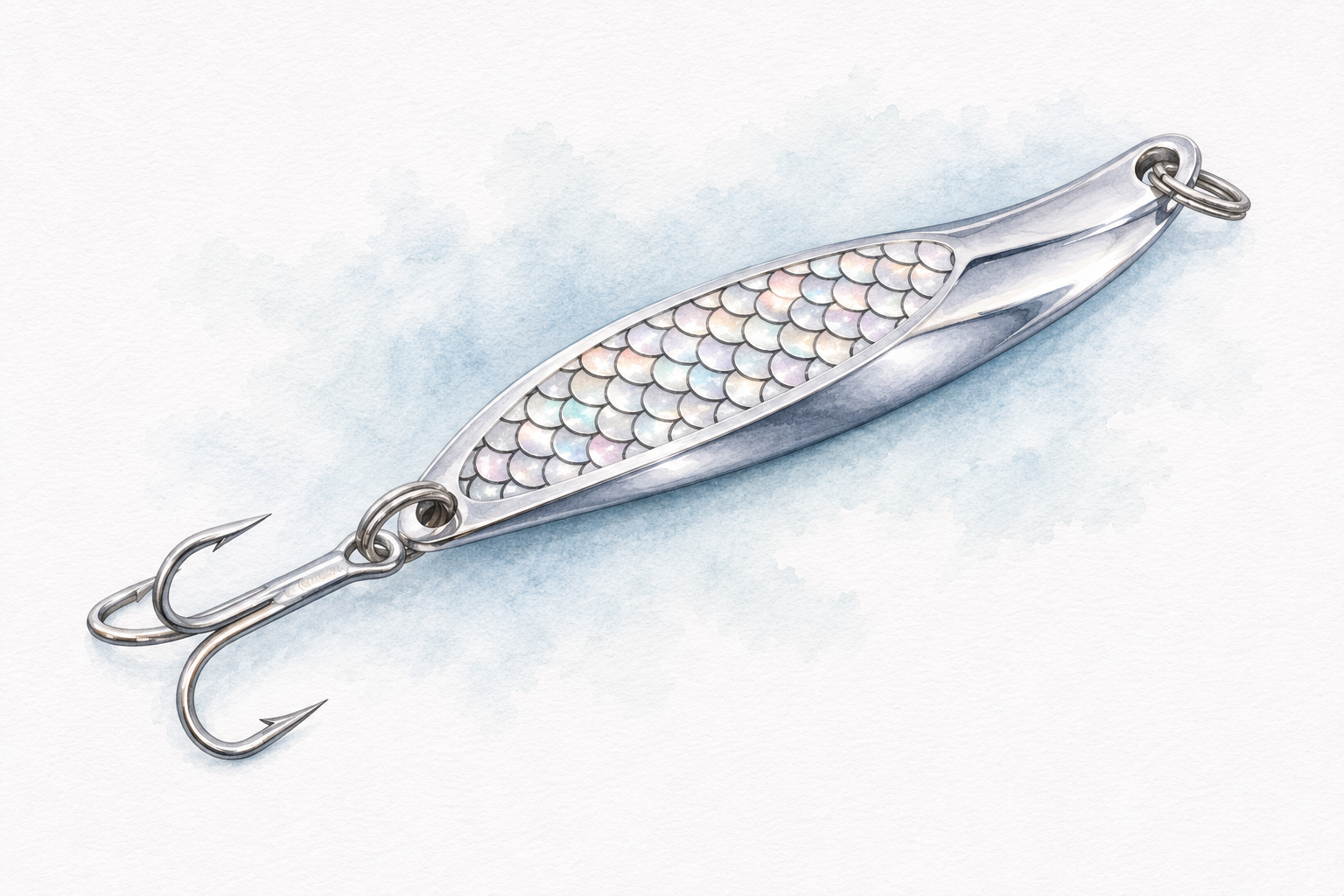
Metal slugs and slices are compact, weighted fishing lures designed to imitate small baitfish through flash, vibration and movement.
Their dense metal construction allows relatively small lures to be cast considerable distances, making them particularly useful when predatory fish are feeding beyond the reach of lighter lures.
They are widely used along Australian surf beaches, rocky headlands and coastal waters for species such as Australian salmon, tailor, Australian bonito, yellowtail kingfish and tuna. Smaller models can also be effective for freshwater predators, including Australian bass and golden perch.
Although often grouped together, metal slugs and slices differ in body shape and swimming characteristics. Some are designed primarily for rapid, straight-line retrieves, while others produce pronounced wobbling, rolling or fluttering movements.
Successful fishing with metals depends on selecting the appropriate profile and weight, maintaining the intended working depth and retrieving at a speed that allows the lure to perform correctly.
Understanding Metal Slugs and Slices
Metal slugs and slices are typically manufactured from dense metal alloys and fitted with a single or treble hook.
Unlike soft plastics or hard-bodied lures with diving bibs, they rely on their body shape, weight distribution and water resistance to produce movement.
Their relatively high weight-to-size ratio provides excellent casting performance, particularly in windy coastal conditions.
Metal Slugs
Metal slugs are generally compact, elongated lures with relatively thick bodies.
Their streamlined construction allows them to cast efficiently and maintain a stable presentation at higher retrieve speeds.
Some produce a tight wobble or rolling action, while others have comparatively little movement and rely primarily on speed and reflected light.
Metal slugs are particularly useful when predators are chasing small, fast-moving baitfish.
Metal Slices
Metal slices are generally flatter or more laterally compressed than conventional slugs.
Their broader surfaces can produce more pronounced flashing, wobbling or fluttering movements.
Depending on their shape and weight distribution, slices may respond well to moderate retrieves, changes in speed and controlled descents.
However, the distinction between slugs and slices is not always consistent across manufacturers.
The lure’s actual swimming characteristics are more important than its product name.
Weight Distribution and Swimming Action
Weight distribution influences casting performance, sinking behaviour and stability during retrieval.
A compact, rear-weighted metal may cast efficiently and track well at speed.
A broader or asymmetrical design may produce more pronounced wobbling or fluttering movements.
Some metals swim effectively during a steady retrieve but lose their intended action at excessive speed.
Others are specifically designed to remain stable during high-speed retrieval.
Test unfamiliar lures at different speeds to identify their effective working range.
Choosing the Right Metal Lure
Size and Profile
Metal lure size should reflect the available baitfish, intended target and fishing conditions.
Small, narrow metals can closely resemble whitebait, anchovies and other compact baitfish.
Larger models may be appropriate when predators are feeding on bigger prey or when additional casting weight is required.
Matching the approximate size and profile of local baitfish is particularly useful when predators are feeding selectively.
A heavier lure is not necessarily a larger baitfish imitation. Dense, compact metals can provide substantial casting weight without an oversized profile.
Weight and Casting Distance
One of the principal advantages of metal lures is their casting performance.
Their density allows relatively small profiles to carry enough weight for long-distance casting.
However, maximum casting distance should not be the only consideration.
A metal that is too heavy for the intended water depth may sink rapidly beneath feeding fish or contact the bottom before retrieval begins.
Select a weight that provides sufficient casting distance while allowing the lure to remain in the intended strike zone.
Body Shape and Action
Narrow, streamlined metals are useful when a fast, relatively direct presentation is required.
Broader designs may produce more wobble, roll or flutter.
The appropriate action depends on the baitfish being imitated and how predators are feeding.
When fish are actively chasing baitfish near the surface, a fast, stable lure may be effective.
When predators are holding deeper or responding to slower presentations, a metal with more movement during retrieval or descent may be preferable.
Colour and Finish
Silver and chrome finishes are common because they produce strong flashes of reflected light.
Blue, green and other darker-backed patterns can provide additional contrast while retaining a natural baitfish appearance.
Gold and contrasting finishes may also be useful under particular lighting and water conditions.
Reflective surfaces can be especially noticeable as a lure rolls or changes direction.
However, profile, retrieve speed and working depth should take priority over minor colour differences.
Where to Use Metal Slugs and Slices
Beaches and Surf Zones
Metal lures are particularly effective along surf beaches where Australian salmon, tailor and other predators feed on baitfish.
Their casting weight allows anglers to reach gutters, channels and feeding activity beyond the immediate shore break.
Cast beyond the intended target where practical and retrieve through the feeding area.
When fish are actively chasing baitfish near the surface, a fast retrieve may be effective.
If fish are holding deeper, allow the lure to descend briefly before beginning the retrieve.
Monitor the line and retrieve speed to avoid unnecessary bottom contact.
Rocky Shores and Headlands
Rocky shores and headlands provide access to deeper water, current lines and baitfish moving along the coastline.
Metal slugs and slices are useful for targeting Australian bonito, tailor, kingfish and other predators around these areas.
Their casting distance allows anglers to cover substantial areas of water.
However, their rapid sinking behaviour increases the risk of snagging around submerged rock and reef.
Control the countdown and begin retrieval before the lure reaches unsuitable structure.
Estuaries
Smaller metals can be effective in estuaries where predatory fish are feeding on schools of small baitfish.
They can be cast across channels, current lines and open-water feeding activity.
A steady retrieve is useful when fish are actively chasing prey.
Stop-and-go or controlled lift-and-drop presentations may be effective when predators are holding beneath the surface.
Select lure weight carefully in shallow estuaries to avoid repeatedly dragging the metal along the bottom.
Coastal Reefs
Metal lures can be worked around coastal reefs, reef edges and nearby open water.
They are particularly useful when baitfish are concentrated around the structure.
A fast retrieve may attract predators actively hunting near the surface.
Controlled descents can help reach fish holding deeper, provided the lure remains clear of snag-prone reef.
Offshore Waters
Metal slugs and slices are effective for casting towards surface-feeding schools of tuna, kingfish and other pelagic predators.
Their streamlined construction is useful when fish are feeding at a distance or moving rapidly.
Where practical, cast beyond the school and retrieve through the feeding area.
Repeatedly landing a heavy metal directly into concentrated fish can disturb the school.
If fish are feeding beneath the surface, allow the lure to reach the intended depth before retrieving.
Although some casting metals can be worked vertically, this guide focuses on casting slugs and slices rather than dedicated vertical metal jigs.
Rivers, Creeks and Impoundments
Smaller metal lures can be effective for Australian bass and golden perch, particularly when fish are feeding on small baitfish in open water.
They can be cast towards schooling activity, along drop-offs or through deeper sections of rivers and impoundments.
A steady retrieve can imitate fleeing baitfish, while controlled lifts and pauses allow the lure to move through different depths.
Avoid unnecessarily heavy metals around shallow timber, weed and other snag-prone structure.
Tackle and Rigging
Rod Selection
Metal lure rods must be capable of casting the intended weight while providing sufficient control during retrieval and fighting fish.
Longer spinning rods are commonly used from beaches and rock platforms, where casting distance and line clearance are important.
Shorter outfits may be more manageable from boats or in freshwater environments.
Rod power should suit both the lure weight and the intended target.
An excessively heavy rod may make smaller metals difficult to cast and control, while an underpowered rod may struggle with larger lures or powerful predators.
Reel and Main Line
Spinning reels are widely used for casting metal slugs and slices.
Braided line provides direct contact and helps transmit changes in lure resistance during retrieval.
Reel size, line capacity and drag performance should suit the target species and fishing environment.
High-speed retrieves can be easier with reels that recover sufficient line per handle turn.
However, retrieve speed should be selected according to the lure’s intended action rather than reel speed alone.
Leader and Connections
Leader strength should reflect the target species, surrounding structure and abrasion risk.
Heavier leaders may be necessary around rocks, reef or other abrasive environments.
Toothy predators such as tailor and Spanish mackerel can sever ordinary monofilament or fluorocarbon leaders. Suitable bite protection may be required.
Use appropriately rated connections that do not interfere with the lure’s action.
Hook Configuration
Metal slugs and slices may be fitted with treble hooks or single hooks.
Hook size and strength should suit the lure and expected target.
Changing hook configuration can affect the lure’s balance and swimming action.
A replacement hook that is excessively heavy may alter the lure’s movement, particularly on smaller metals.
After changing hooks or split rings, test the lure to confirm it retains its intended action.
Line Twist
Some metal lures can produce line twist if they spin excessively during retrieval.
This may occur when a lure is retrieved faster than its design allows, when it is damaged or when the hook and attachment arrangement affects its balance.
A suitable swivel can help manage line twist, but it does not correct an unstable lure.
If a metal repeatedly spins rather than swimming as intended, adjust the retrieve speed and inspect its alignment.
Metal Lure Retrieve Techniques
Metal slugs and slices can be worked using several techniques.
The most effective presentation depends on the lure’s shape, intended swimming action, target depth and fish behaviour.
Steady Retrieve
A steady retrieve maintains a consistent swimming action.
- Cast beyond the intended target.
- Allow the lure to reach the required depth if necessary.
- Retrieve at a consistent speed.
- Adjust speed and rod angle to maintain the intended action.
This technique is useful for covering water and targeting actively feeding predators.
Observe the lure in clear water where possible to identify the speed at which it swims correctly.
Burning / High-Speed Retrieve
Burning involves retrieving the metal rapidly to imitate fleeing baitfish.
- Cast beyond the feeding area.
- Begin retrieving at a speed that produces the intended action.
- Increase speed while monitoring the lure’s stability.
- Reduce speed if the lure begins spinning or losing its intended swimming action.
High-speed retrieves can be effective for Australian salmon, tailor, bonito, tuna and other predators chasing fast-moving prey.
Not every metal is designed for this technique.
A lure that spins uncontrollably may produce excessive line twist and an ineffective presentation.
Stop-and-Go
Stop-and-go retrieves alternate between swimming and brief pauses.
- Cast and begin retrieving through the intended area.
- Stop winding briefly.
- Allow the lure to descend.
- Resume retrieving.
- Repeat while varying the duration of the pauses.
The change in speed and depth can trigger fish following the lure.
Some metal slices flutter during the descent, while compact slugs may fall more directly.
Monitor the line during each pause because fish may strike as the lure sinks.
Lift-and-Drop
Lift-and-drop retrieves allow the metal to move vertically through part of the water column after casting.
- Cast and allow the lure to reach the intended depth.
- Raise the rod to lift the lure.
- Lower the rod while recovering unnecessary slack.
- Allow the lure to descend under control.
- Repeat along the intended area.
The height and speed of each lift influence the lure’s movement.
Some designs flutter or wobble as they fall, while others descend with relatively little action.
This technique can be useful when fish are holding deeper or responding poorly to continuous retrieval.
Managing Depth, the Fall and Line Control
Metal lures sink when retrieval stops, making depth control an important part of their presentation.
Their descent can be rapid, particularly with compact, heavy designs.
Counting Down the Lure
A countdown can help reproduce a working depth once fish are located.
After casting, allow the lure to sink for a consistent number of seconds before beginning the retrieve.
This provides a repeatable reference rather than an exact depth measurement.
Actual descent varies with lure design, current, line resistance and the angle of the line.
Adjust the countdown when changing lure weight, fishing location or conditions.
Controlled Descent
During pauses, maintain enough line contact to detect strikes without unnecessarily restricting the lure’s natural movement.
A controlled, semi-slack line can allow a metal slice to flutter during descent.
Excessive tension may pull the lure forward and alter its action.
Too much slack makes strikes difficult to detect and increases the risk of the lure reaching snag-prone structure unnoticed.
Fishing Beneath Surface Activity
Predatory fish do not always feed directly at the surface, even when baitfish are visible above them.
Allowing a metal to descend beneath the feeding activity can be effective when surface retrieves are ignored.
Select a suitable countdown and retrieve speed to work through the intended depth.
Avoid automatically allowing the lure to sink to the bottom when the fish are suspended higher in the water column.
Detecting Strikes and Hook-Setting
Strikes on metal lures may occur during a steady retrieve, immediately after a change in speed or while the lure is descending.
During retrieval, a strike may feel like a sharp impact or sudden increase in resistance.
During the fall, the line may stop unexpectedly, accelerate or move sideways.
Recover unnecessary slack and apply firm pressure once contact is established.
When a fish strikes during a high-speed retrieve, the existing line tension may already provide sufficient initial hook penetration.
Avoid unnecessary repeated strikes that could dislodge the hook.
Maintain consistent pressure during the fight, particularly when targeting fast-moving pelagic fish.
Common Mistakes
| Mistake | Why It Matters | Better Approach |
|---|---|---|
| Selecting a lure solely for maximum casting distance | May result in excessive weight or an unsuitable profile | Balance casting distance with lure size and working depth |
| Retrieving every metal at maximum speed | Some designs become unstable or spin | Match retrieve speed to the lure’s intended action |
| Allowing uncontrolled descent around reef | Increases snagging | Use a controlled countdown and monitor the line |
| Assuming every metal flutters on the fall | Descent behaviour varies between designs | Test the lure’s actual sinking action |
| Using an oversized hook | Can alter balance and swimming action | Match hook size and weight to the lure |
| Ignoring repeated line twist | Can cause tangles and reduced casting performance | Check lure alignment and retrieve speed |
| Fishing beneath the intended strike zone | The lure may pass below feeding predators | Adjust countdown and retrieval depth |
| Maintaining excessive tension during a fluttering descent | Can restrict the lure’s intended action | Use controlled, semi-slack line |
| Allowing excessive slack during pauses | Makes strikes difficult to detect | Recover unnecessary slack promptly |
| Using unsuitable leader material around toothy fish | Can result in bite-offs | Select appropriate bite protection where required |
Care, Maintenance and Storage
Cleaning: Rinse metal lures with fresh water after saltwater use and allow them to dry thoroughly.
Hooks: Inspect hook points, shanks and eyes for corrosion, bending or damage. Replace compromised hooks.
Split Rings and Connections: Check split rings, swivels and other attachment hardware for corrosion, distortion or wear.
Body and Finish: Inspect the metal body for cracks, deformation and damage to reflective finishes. Surface scratches may be cosmetic, but significant bending can affect swimming action.
Swimming Action: Test the lure after substantial impacts or hardware changes to confirm it still swims correctly.
Line Twist: Check for repeated spinning during retrieval and correct the cause before continuing to fish.
Storage: Keep metal lures in divided tackle compartments or protective sleeves to minimise hook tangles and damage to finishes.
Moisture: Avoid storing wet or salt-contaminated metals with clean tackle, as trapped moisture can accelerate corrosion.
The Bottom Line
Metal slugs and slices are compact, dense baitfish imitations that combine excellent casting performance with flash, vibration and movement.
Their streamlined construction makes them particularly effective when predatory fish are feeding at a distance, especially along beaches, rocky shores and in open coastal water.
Slugs generally favour compact profiles and efficient casting, while broader slices may produce more pronounced wobbling or fluttering movements.
The most important considerations are selecting the appropriate size and weight, maintaining the intended working depth and using a retrieve speed that suits the lure’s design.
Controlled descents, appropriate hook configurations and attention to line twist are essential to fishing metal slugs and slices effectively.