
Introduction
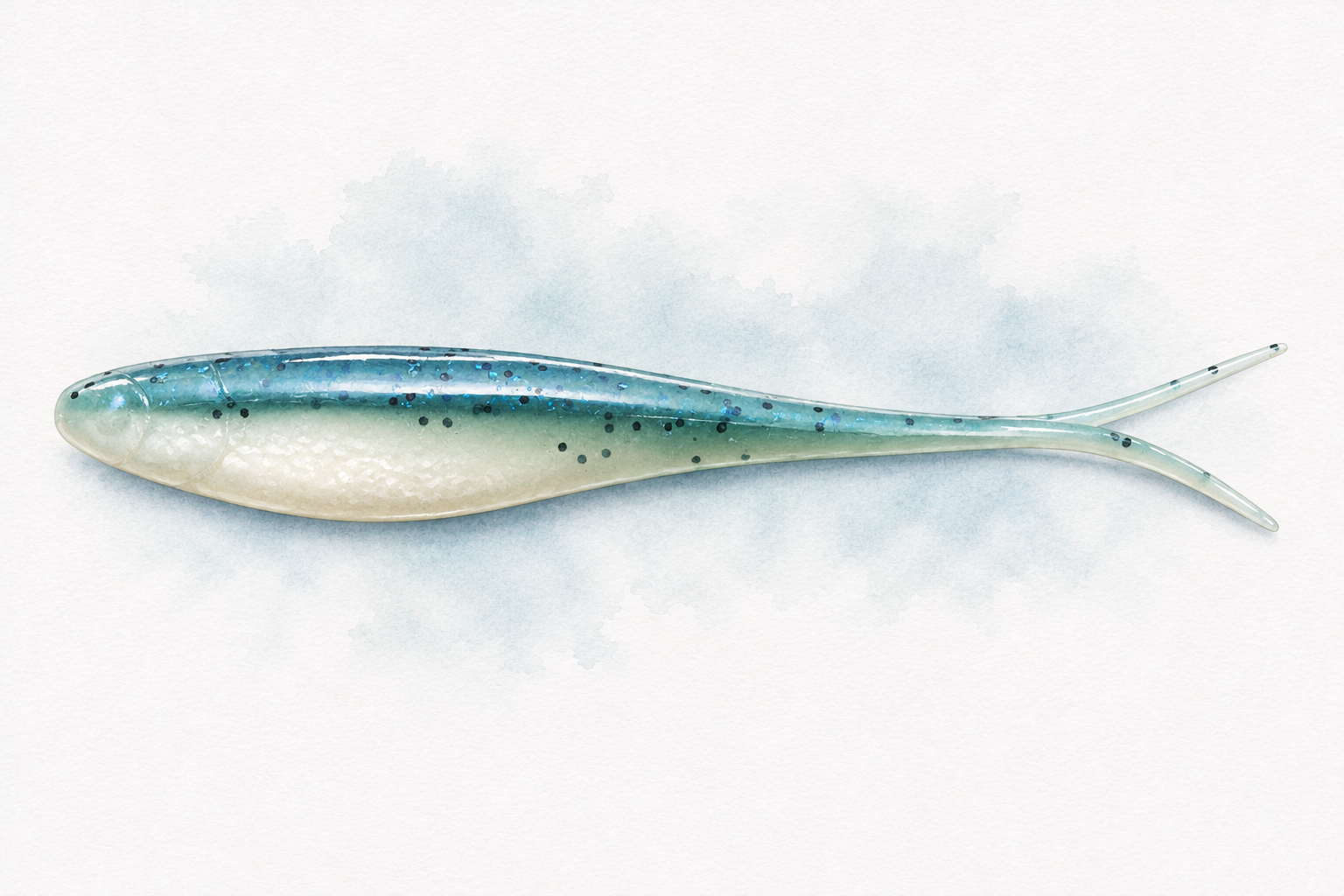
Soft plastic jerk shads are slender, flexible fishing lures designed to imitate baitfish through darting, gliding and irregular movements.
Unlike paddle tails, which generate much of their swimming action through a moving tail, jerk shads generally rely on rod movements, rigging and changes in line tension to produce their intended action.
Their narrow bodies and tapered tails allow them to move sharply from side to side, rise or fall through the water column, and glide during pauses.
Jerk shads can be rigged on conventional jigheads, weighted or unweighted weedless hooks and other suitable arrangements. This versatility makes them effective in shallow estuaries, along surf beaches, around coastal reefs and in freshwater environments.
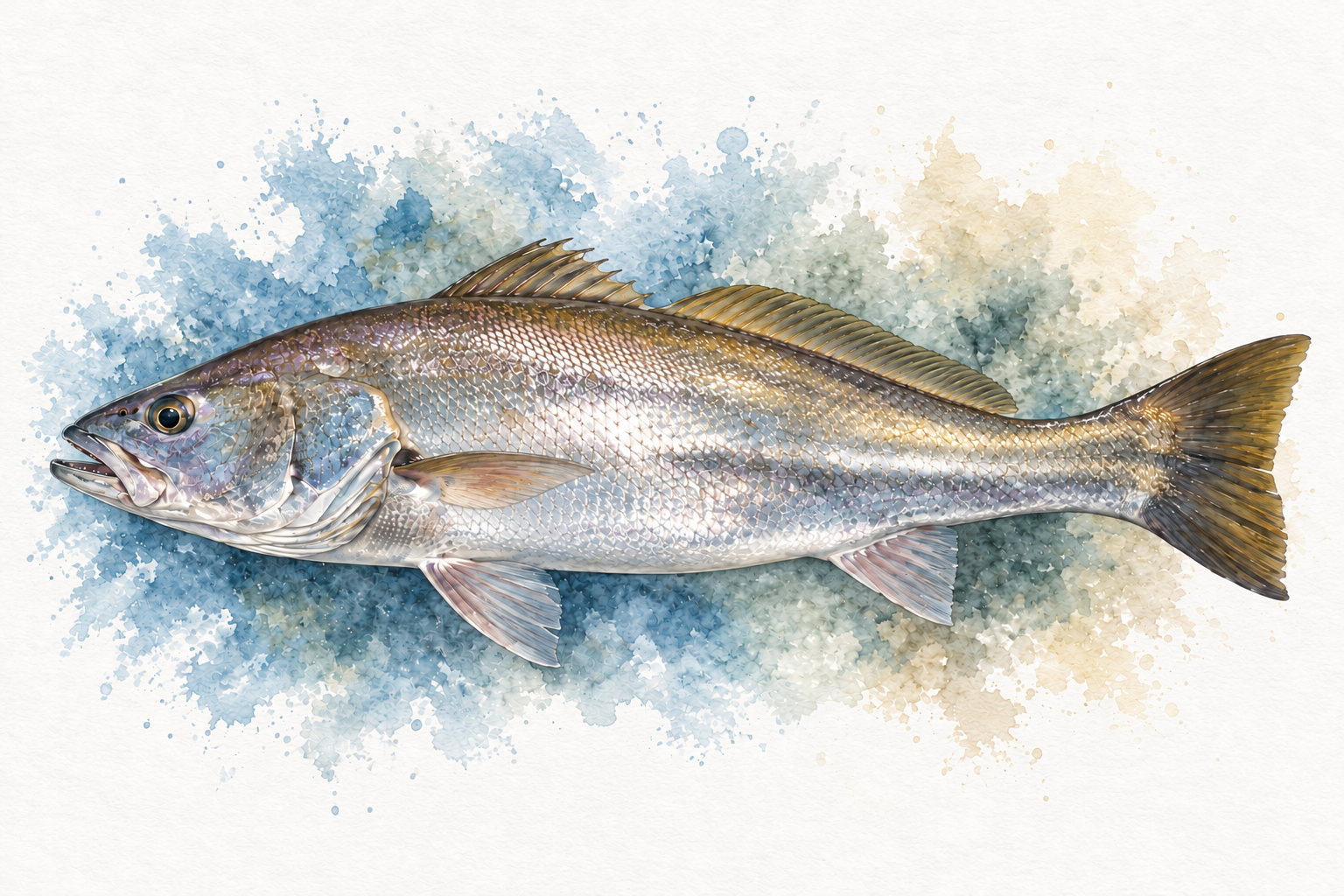
They are widely used for species including dusky flathead, mulloway, snapper, yellowtail kingfish, barramundi and Australian bass.
Successful jerk shad fishing depends on selecting the appropriate profile and rigging, then using controlled rod movements and pauses to keep the lure within the intended strike zone.
Understanding Soft Plastic Jerk Shads
Jerk shads are typically elongated soft plastic lures with a relatively narrow body and a tapered, forked or pointed tail.
Their design allows them to move with minimal water resistance and respond quickly to changes in rod position and line tension.
Unlike paddle tails, jerk shads generally do not have a large tail section that produces continuous swimming action during a steady retrieve.
Instead, their movement is created primarily through twitches, jerks, lifts and controlled descents.
Body Shape and Flexibility
A slender body allows a jerk shad to dart and glide with relatively little resistance.
More flexible designs may bend and undulate during movement, while firmer plastics can produce sharper directional changes.
Body shape also influences how the lure sinks and responds to different rigging arrangements.
A broad-bodied jerk shad may descend differently from a narrow model of similar length.
Tail Design
Jerk shads may have forked, pointed or other tapered tail shapes.
These tails generally produce less resistance than a paddle tail, allowing the lure to move freely during rod-driven presentations.
Some designs incorporate fine tail sections that flutter during descent.
The amount of movement varies between products and should be assessed with the lure rigged as intended.
Darting and Gliding Action
The characteristic jerk shad presentation involves sudden movement followed by a pause.
A rod twitch or jerk accelerates the lure, while the following reduction in tension allows it to change direction, glide or descend.
The result depends on lure shape, hook position, weight distribution and line tension.
Excessive tension can prevent the lure from moving freely, while uncontrolled slack makes strikes difficult to detect.
Choosing the Right Jerk Shad
Size and Profile
Select jerk shad size according to the intended target, available baitfish and fishing conditions.
Smaller profiles can be effective for estuary predators feeding on whitebait, anchovies and other small baitfish.
Larger jerk shads are commonly used for mulloway, snapper, kingfish, barramundi and other predators.
Matching the approximate size and shape of local baitfish is a useful starting point.
However, the lure must also be compatible with the intended hook and rigging arrangement.
Body Flexibility
Softer jerk shads may produce pronounced bending and fluttering movements.
Firmer designs can maintain their profile during aggressive retrieves and may produce more defined darts.
Neither construction is universally better.
Choose a lure that responds appropriately to the intended presentation and remains durable enough for the fishing conditions.
Colour and Finish
Natural baitfish colours, including pearl, silver, translucent grey and olive-backed finishes, are useful starting points.
Reflective glitter and contrasting body colours can create flashes as the lure changes direction.
Darker or more visible colours may be useful in discoloured water.
Lure profile, working depth and presentation should take priority over minor colour differences.
Scented and Unscented Plastics
Some jerk shads contain scent or flavour additives.
These may influence how fish respond after taking the lure, although results vary between products and fishing conditions.
Scent should be treated as a supplementary feature rather than a substitute for correct lure placement and presentation.
Rigging Soft Plastic Jerk Shads
Rigging has a substantial influence on jerk shad movement.
The weight, hook position and attachment arrangement determine how the lure sinks, darts and responds to rod movements.
Jighead Rigging
Jigheads provide a straightforward method of adding weight and controlling working depth.
A lighter jighead may allow the lure to glide or descend slowly between movements.
Heavier jigheads can improve casting distance and allow the lure to reach deeper water or maintain control in current.
However, excessive weight can produce a rapid, nose-down descent that reduces the time available for a controlled presentation.
Select jighead weight according to depth, current and the intended action.
Hook Size and Position
Hook size must suit the lure’s body length and thickness.
The hook should provide sufficient gape for effective penetration after the plastic compresses during a strike.
An excessively long hook can restrict the body’s flexibility and reduce darting action.
A hook that is too short may provide inadequate support or hook exposure.
Rig the jerk shad straight along its centreline.
A crookedly rigged lure may roll, spiral or track to one side.
Weedless Rigging
Weedless hooks can be useful around submerged timber, weed beds and other snag-prone areas.
These arrangements position the hook point close to or within the lure’s body.
The hook must still have sufficient clearance to expose its point when a fish compresses the plastic.
Weighted weedless hooks can also provide a controlled descent while reducing snagging.
Check that the hook arrangement does not restrict the lure’s movement.
Unweighted Rigging
Unweighted jerk shads are useful for shallow presentations where a slow descent or near-surface movement is desirable.
However, an unweighted soft plastic does not necessarily float.
Its behaviour depends on the plastic material, hook weight and any additional hardware.
Some unweighted jerk shads sink slowly, while others can remain close to the surface during retrieval.
Test the complete rig to establish its actual behaviour.
Surface Skipping
Some jerk shads can be worked rapidly across or immediately beneath the surface to imitate fleeing baitfish.
This specialised presentation generally uses suitable light or unweighted rigging and rapid rod movements.
The lure must be capable of maintaining a controlled skipping action without repeatedly spinning or tangling.
Surface skipping is not suitable for every jerk shad design.
Where to Use Jerk Shads
Estuaries and Shallow Flats
Jerk shads are effective around estuary channels, shallow flats, weed edges and other areas where predatory fish hunt baitfish.
Lighter rigging allows the lure to be worked through shallow water without sinking excessively.
Twitch-and-pause retrieves can produce short, irregular movements around structure.
In deeper channels, additional weight may be required to reach fish holding near the bottom.
Beaches and Surf Zones
Jerk shads can be cast into surf gutters, channels and areas where predators are feeding on baitfish.
Suitable jighead weight is important for maintaining casting distance and control in waves and current.
A combination of rod movements and controlled pauses can imitate an injured or disoriented baitfish.
Monitor the descent to avoid unnecessary contact with weed or debris.
Rocky Shores and Headlands
Larger jerk shads can be effective around rocky shores, headlands and deeper coastal structure.
They can be worked through current lines, along reef edges or beneath surface-feeding activity.
Rigging weight should provide sufficient control without causing the lure to sink uncontrollably into structure.
Maintain contact during pauses, particularly where fish may strike as the lure descends.
Coastal Reefs and Offshore Waters
Jerk shads are useful for targeting predators holding around reef edges, bait schools and other offshore structure.
Heavier rigging may be required to reach deeper water or maintain the intended working depth.
Lift-and-drop presentations can be effective when fish are holding beneath the surface.
In shallower conditions, lighter rigging allows a slower descent and more pronounced gliding action.
Rivers, Creeks and Impoundments
Jerk shads can be worked around submerged timber, rocky banks, weed beds and drop-offs in freshwater environments.
They are useful for Australian bass, barramundi and other predators feeding on baitfish.
Weedless rigging can reduce snagging around timber and vegetation.
Twitch-and-pause presentations are useful when fish are holding close to structure.
In open water, jerk shads can also be used to target schooling fish or predators suspended at particular depths.
Tackle and Line Selection
Rod Selection
Select a rod capable of casting the intended lure and rigging weight while producing controlled twitches and jerks.
A responsive rod helps transmit movements to the lure and maintain contact during pauses.
Lighter outfits suit smaller estuary and freshwater jerk shads.
Heavier tackle may be required for large plastics, deep-water applications or powerful predators.
Rod action should provide enough responsiveness to work the lure without unnecessarily overpowering it.
Reel and Main Line
Spinning outfits are widely used for jerk shad fishing, although baitcasting tackle is suitable for many freshwater applications.
Braided line provides direct contact and helps transmit rod movements to the lure.
Its low stretch also assists with detecting strikes during controlled descents.
Line strength and reel capacity should suit the intended target and surrounding structure.
Leader Selection
Leader strength should reflect the target species, fishing environment and abrasion risk.
Lighter leaders may be appropriate in open-water estuary applications.
Heavier leaders may be required around reef, rocks or submerged timber.
Toothy predators may require suitable bite protection.
Avoid unnecessarily bulky connections that interfere with the lure’s movement.
Jerk Shad Retrieve Techniques
Jerk shads respond to changes in rod movement and line tension.
Unlike paddle tails, their action is generally produced by the angler rather than continuous tail movement.
The objective is to create controlled directional changes while keeping the lure within the intended strike zone.
Twitch-and-Pause
Twitch-and-pause retrieves use short rod movements followed by brief pauses.
- Cast beyond the intended target.
- Allow the lure to reach the required depth.
- Apply one or two short rod twitches.
- Recover excess line.
- Pause and allow the lure to glide or descend.
- Repeat while varying the rhythm as required.
This technique is useful around estuary structure, shallow flats and freshwater cover.
The short movements can imitate a baitfish making sudden changes in direction.
Jerk-and-Pause
Jerk-and-pause retrieves use stronger or longer rod movements to produce more pronounced darts.
- Cast and allow the lure to reach the intended depth.
- Apply a deliberate rod jerk.
- Recover unnecessary slack as the lure moves.
- Pause to allow the lure to glide or descend.
- Repeat with controlled changes in direction and speed.
The movement should be strong enough to produce the intended action without causing the lure to spin or tumble uncontrollably.
This technique is useful when predators are responding to aggressive or erratic baitfish movements.
Lift-and-Drop
Lift-and-drop retrieves work the jerk shad vertically through part of the water column.
- Cast and allow the lure to reach the intended depth.
- Raise the rod to lift the lure.
- Lower the rod while recovering excess slack.
- Allow the lure to descend on a controlled, semi-slack line.
- Repeat along the intended area.
Some jerk shads flutter or glide during descent, while others fall more directly.
The action depends on the lure’s design and rigging.
Monitor the line carefully because strikes frequently occur during the fall.
Dead-Sticking
Dead-sticking involves allowing the lure to remain stationary or nearly stationary for a deliberate period.
- Cast to the intended area.
- Allow the lure to reach the required position or depth.
- Minimise rod movement.
- Maintain sufficient line contact to detect a strike.
- Resume the presentation with a controlled twitch or lift when appropriate.
This technique can be effective when fish are following the lure without committing or responding poorly to continuous movement.
Dead-sticking is most useful where the lure can remain in the intended strike zone without immediately sinking into unsuitable structure.
Managing the Fall and Line Control
Line control is particularly important when fishing jerk shads because their action depends on changes in tension.
After a twitch or jerk, a small amount of controlled slack may allow the lure to glide or change direction.
Maintaining constant tension can restrict these movements and cause the lure to travel directly towards the angler.
However, excessive slack makes strikes difficult to detect and reduces control over the lure’s descent.
Controlled Descent
Allow the jerk shad to descend towards the intended depth while monitoring the line.
A controlled, semi-slack line can permit a natural fall without pulling the lure unnaturally forward.
Watch for sudden acceleration, sideways movement or an unexpected stop.
These may indicate a fish taking the lure during the descent.
Working Around Structure
When fishing around timber, reef or weed, control the amount of slack and the duration of each pause.
A long uncontrolled descent can carry the lure into structure.
Adjust jighead weight, rod angle and pause duration to keep the lure within the intended strike zone.
Detecting Strikes and Hook-Setting
Jerk shad strikes may occur during a rod movement, immediately after a dart or while the lure is descending.
A strike may feel like a sharp impact, sudden increase in weight or interruption to the expected movement.
During the fall, the line may stop unexpectedly, accelerate or move sideways.
Recover unnecessary slack and apply firm pressure once contact is established.
When using weedless hooks, sufficient pressure is required to compress the plastic and expose the hook point.
Avoid striking aggressively against a completely slack line.
Maintain consistent tension during the fight, particularly around submerged structure.
Common Mistakes
| Mistake | Why It Matters | Better Approach |
|---|---|---|
| Using a continuous retrieve without producing the intended action | Many jerk shads rely on rod movements to dart and glide | Use controlled twitches, jerks or lifts |
| Selecting excessive jighead weight | Can produce an unnecessarily rapid descent | Match weight to depth, current and presentation |
| Using an excessively long hook | Restricts body flexibility and darting action | Match hook length to the lure |
| Using insufficient hook gape | May prevent effective hook exposure | Allow clearance for plastic compression |
| Rigging the lure crookedly | Can cause rolling or unnatural tracking | Align the body and hook carefully |
| Maintaining constant tension during pauses | Can restrict gliding and directional changes | Use controlled slack where required |
| Allowing excessive slack | Makes strikes difficult to detect | Recover unnecessary slack promptly |
| Assuming unweighted jerk shads float | Buoyancy depends on material and rigging | Test the complete rig |
| Using aggressive jerks with unsuitable rigging | May cause spinning or uncontrolled movement | Match rod action to lure design |
| Allowing long pauses around snag-prone structure | Increases the likelihood of snagging | Control descent and pause duration |
Care, Maintenance and Storage
Cleaning: Rinse saltwater-exposed hooks and jigheads with fresh water and dry thoroughly.
Plastic Condition: Inspect jerk shads for tears, deformation and damage around the hook entry and exit points.
Body Alignment: Check that the lure remains straight on the hook. Repeated strikes can enlarge rigging holes and cause the plastic to slip.
Tail Integrity: Inspect thin and forked tail sections for damage that may alter the lure’s movement.
Hooks and Jigheads: Check hook points, shanks and attachment eyes for damage or corrosion. Replace compromised components.
Storage: Keep soft plastics in suitable packaging or compartments that prevent bending and deformation.
Material Compatibility: Some soft plastic formulations react with other plastics or tackle-box materials. Store incompatible materials separately and follow manufacturer recommendations.
Heat Exposure: Avoid prolonged exposure to excessive heat, which can deform the lure and affect its action.
The Bottom Line
Soft plastic jerk shads are versatile baitfish imitations that produce darting, gliding and irregular movements in response to rod action and changes in line tension.
Unlike paddle tails, they generally rely on the angler to create their intended swimming action.
Their effectiveness depends on selecting the appropriate profile, rigging weight and hook configuration, then using controlled twitches, jerks, lifts and pauses.
Maintaining suitable line tension, monitoring the descent and keeping the lure within the intended strike zone are central to fishing jerk shads effectively.